It can be done: the Hòn Khói salt pans at first light, Dốc Lết while the sand is still empty, nem nướng in Ninh Hòa, the lobster rafts from the shore road at Vạn Giã, an hour on Đại Lãnh beach under the Cả pass, and QL1 home. Dai Lanh is 80 km from Nha Trang and about two hours each way, the beach detour adds about 26 km, and the whole thing comes to around 186 km by addition. Leave at five and you are home at dusk. Leave at seven and you are choosing what to drop before you have started.
I have ridden this day in both directions and more than once, and the order below is the one that worked. The cuts, for people who are not leaving in the dark, are at the end.
Why this order?
Because the salt decides it. The Hon Khoi workers are on the pans in two shifts, 04:00 to 09:00 and 15:30 to 19:00, and the photographs everyone wants, lines of women with shoulder poles in low light, happen between first light and about eight. By eight the glare off the pans is severe and by nine the morning shift is over. So the pans come first, and everything else follows from where they are: about 1 km before Doc Let beach, on the road east from Ninh Hoa.
Doc Let is next because it is a kilometre away and because it is a different beach at eight in the morning from the one it is at two on a Sunday. Ninh Hoa is third because the road back to QL1 goes through it anyway and it is lunchtime. Van Gia and Dai Lanh are the afternoon, north up the highway, and Dai Lanh is last because it is the far end and the turnaround. Every distance below is from a published source; the legs between them are subtraction.
| Leg | Distance | Where it comes from |
|---|
| Nha Trang to Ninh Hoa | 33 km | Vietnamese Wikipedia |
| Ninh Hoa to the salt pans and Doc Let | About 13 km | Doc Let is 46.3 km from the city, minus 33 |
| Doc Let back to Ninh Hoa | About 13 km | Same road |
| Ninh Hoa to Van Gia | About 27 km | Van Gia is about 60 km from the city, minus 33 |
| Van Gia to Dai Lanh | About 20 km | Dai Lanh is 80 km from the city, minus 60 |
| Dai Lanh to Nha Trang | 80 km | A 2025 travel listing, which allows about two hours |
| The day | About 186 km | By addition |
The morning: salt and sand
QL1 in the dark is trucks and not much else, and it is the only part of the day I dislike. Ninh Hoa comes up in well under an hour at that time, the turn east is signed for Doc Let, and the pans open out on both sides of the road before the beach. About 400 ha of them, worked from March to September with the heaviest harvest in the hottest months, April to July. They are private working land with no visitor set-up of any kind, so you stop on the road, you ask before you point a camera at anyone, and you stay off the pans themselves. The whole why and how of that hour is in Hon Khoi salt fields at dawn; in the wet months the pans are flooded and there is nothing to see, which is one reason this day belongs to the dry season.
Doc Let is a kilometre on. The gated resort section charged 50,000 VND per adult and 25,000 VND per child under 1.3 m in 2025, with a chair and a freshwater shower, and there is free sand outside the gates. The water is shallow a long way out, which makes it the family beach of the north and the reason to be there on a weekday before the families arrive. I swim, I rinse off, and I leave by half past ten, which feels early and is the whole trick. Doc Let on a weekday covers the beach on its own terms.
Lunch in Ninh Hoa
Back through the pans to Ninh Hoa, 33 km from the city and the town that gave the province its best-known dish. Nem nuong is grilled pork on skewers, rolled at the table in rice paper with herbs and a thick sauce, and the Nha Trang shops all trade on this town’s name. An October 2025 listing gives Quán Nem Bà Năm at 142 Nguyễn Thị Ngọc Oanh, open 08:00 to 22:00, as the traditional place. I have not found a published price for a set in Ninh Hoa itself; the Nha Trang yardstick is 50,000 to 132,000 VND a set at the famous city shop in 2026, and the town is cheaper than that in my experience. Nem nuong in its home town is the long version. Eat by noon and fill the tank before leaving: the next fuel that matters is at Van Gia.
The afternoon: Van Gia and Dai Lanh
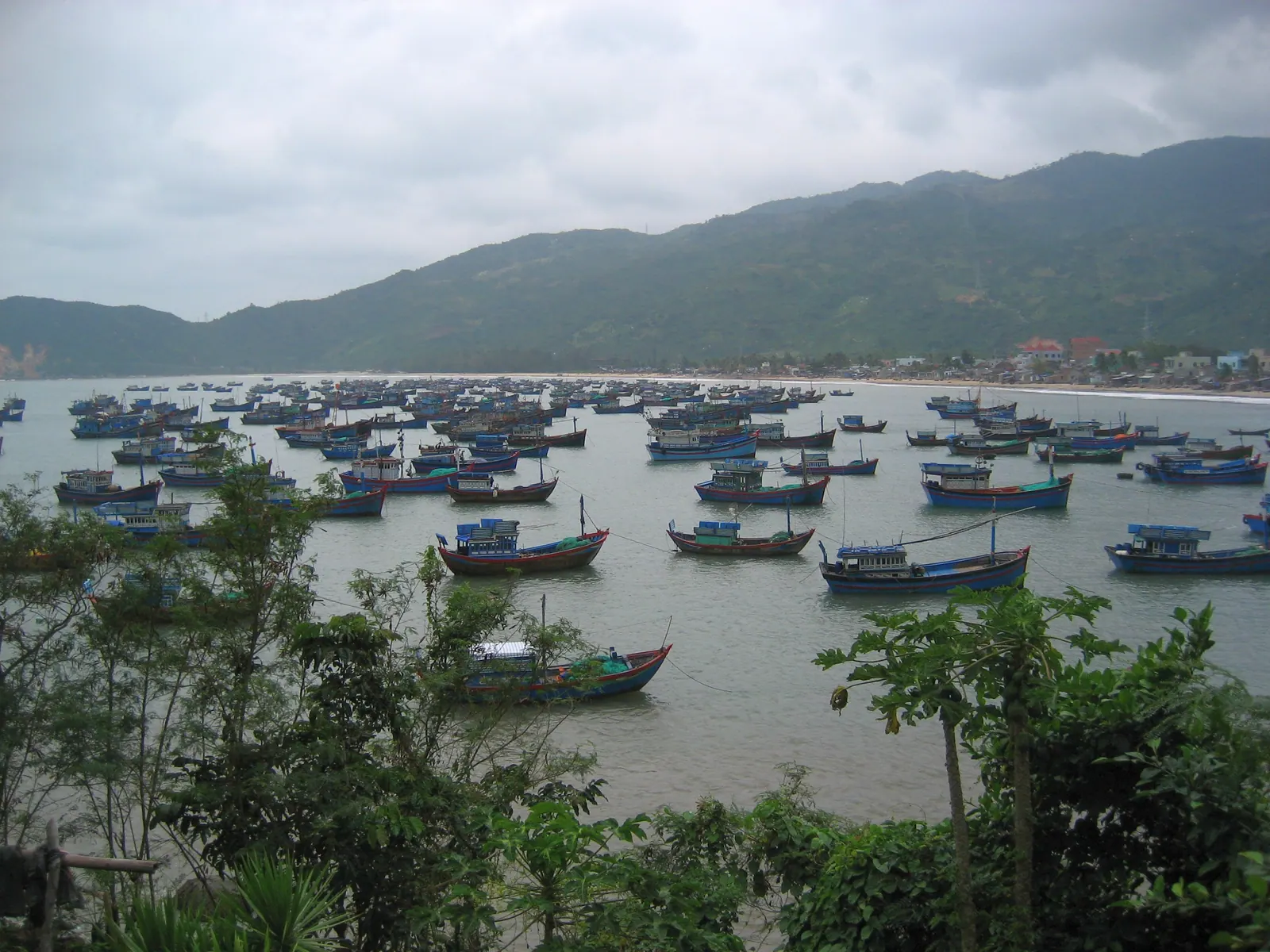
North on QL1 for about 27 km to Van Gia, the old district town of Vạn Ninh and now the centre of Van Ninh commune. The stop here is not the town. It is the shore road towards Vạn Hưng, where the lobster rafts sit in the bay in their thousands; an April 2024 report counted about 35,000 cages in the northern part of Van Phong Bay. You look from the road. The rafts are working property and the Diep Son boats, the other reason people come to Van Gia, leave only from about 07:00 to midday, so they are not on this day. Diep Son’s path through the sea needs a day of its own and the right tide.
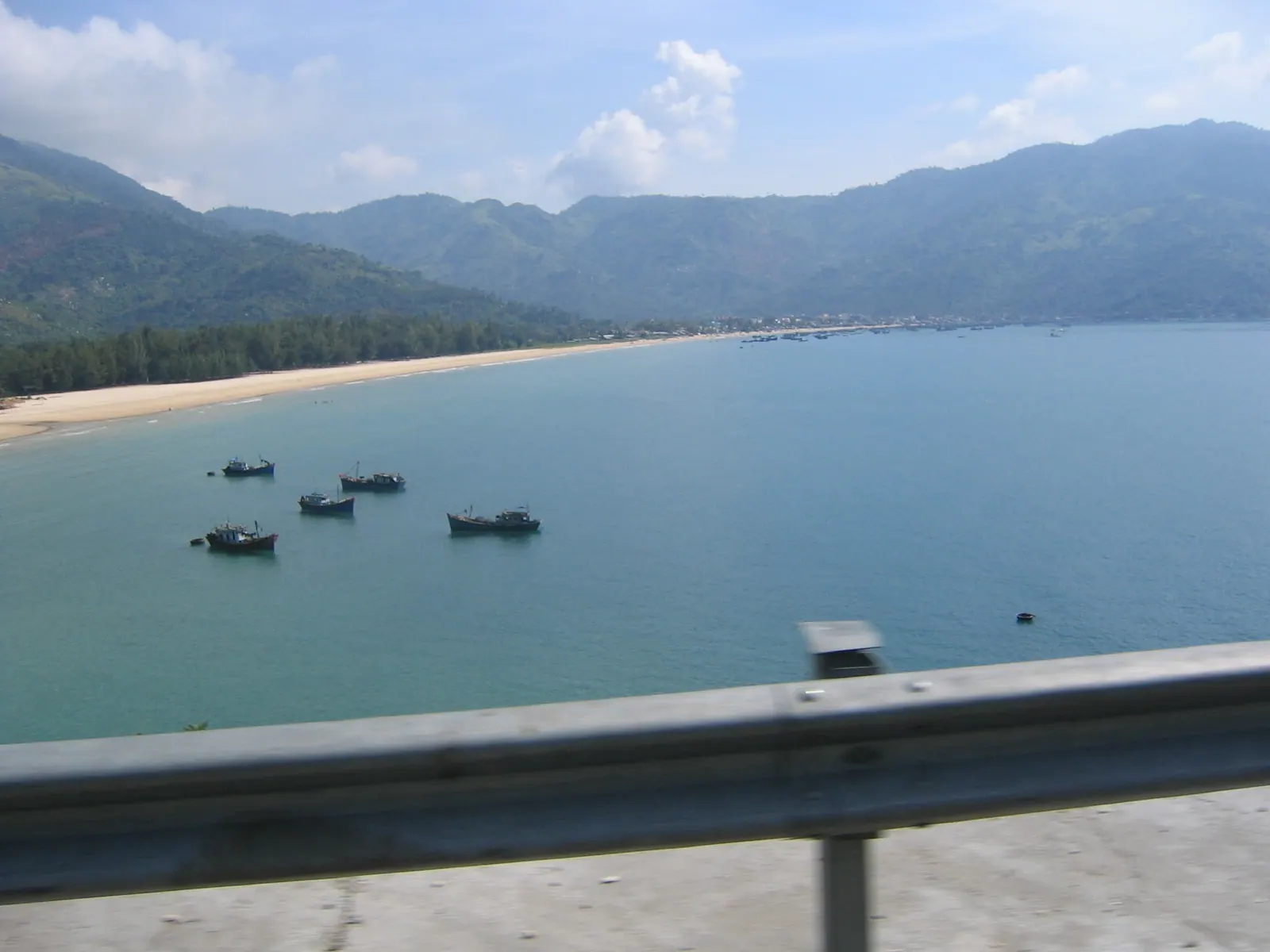
Then about 20 km more to Dai Lanh, the last beach in the province, 80 km from Nha Trang with the Ca pass climbing away behind it. Its managed section charged 20,000 VND per person with a freshwater shower in 2025; the village end costs nothing. It gets an hour on this day, which is unfair to it, and Dai Lanh beach and the Ca pass is the argument for coming back with a tent. The pass itself, 12 km and about 30 minutes each way, is not on this day either; on a bike you would ride it, and you would ride QL1 home in the dark, and I have done that once and will not again.
Field note: from Dai Lanh the return is 80 km of highway with the sun going down on your right. It is the same road as the morning and it feels twice as long. Leave the beach earlier than you want to.
What to cut if you start late
| You leave Nha Trang at | Drop | Keep |
|---|
| Before five | Nothing | The whole day |
| Six to seven | The salt pans (the shift ends at nine and the glare is up by eight) | Doc Let, Ninh Hoa, Van Gia, Dai Lanh |
| Eight to nine | The salt pans and Dai Lanh | Doc Let, lunch in Ninh Hoa, the rafts at Van Gia, home by mid-afternoon |
| After ten | Everything north of Ninh Hoa | Doc Let and lunch, or the Hon Heo peninsula road instead of the beach |
Turning round at Van Gia instead of Dai Lanh saves about 40 km and more than an hour. Dropping Doc Let and going straight up the highway to Dai Lanh saves the 26 km detour but loses the swim you actually want, because Dai Lanh’s water is steeper and rougher.
Which months?
April to July is the sweet spot: salt at its peak, the coast dry, and all three beaches in season by their own listings, Doc Let from January to September, Dai Lanh from March to August. January to March works for the beaches but the pans are only starting. From September to December the north-east monsoon floods the pans, puts surf and rips on Dai Lanh and rain on the highway, and the typhoon window on this coast runs from early September to about 10 December. I do not ride this day then.
What I’d do
- 04:45, leave Nha Trang with a full tank, QL1 north. In the dark, ride like the trucks cannot see you, because some cannot.
- About 05:45, Ninh Hoa; turn east for Doc Let. On the salt road by six, and stay until the light goes hard, around eight.
- Doc Let by a little after eight. Swim, shower, leave by 10:30.
- Ninh Hoa by eleven: nem nuong, fuel, and out of town by noon.
- Van Gia around 12:45, the shore road towards Van Hung for the rafts, then on to Dai Lanh by two.
- An hour on the sand, and leave by 15:30 at the latest. Two hours of highway puts you in Nha Trang around dusk.
The times are mine, on a scooter, in the dry season, and they are not generous. If you would rather not ride QL1 twice in a day, the sister guide’s page on car rental in Nha Trang covers a car with a driver, which changes the day less than you would think: the salt still wants you there at six. Done as two days instead of one, with a night at Dai Lanh, it becomes the northern end of the seven-day Khanh Hoa motorbike loop, and that is the version I would actually recommend.