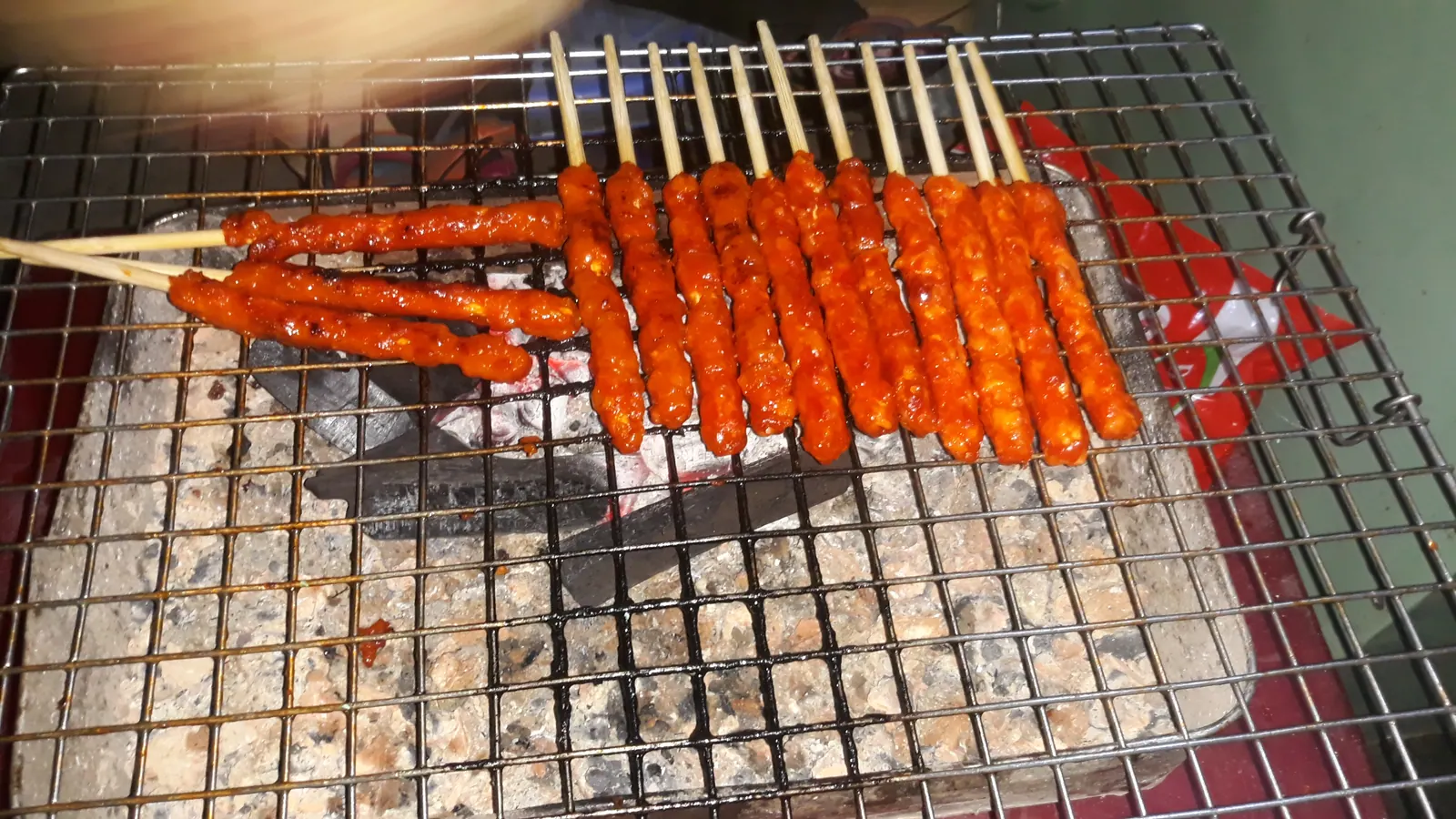
Nem nướng is named for Ninh Hòa, the market town 33 km north of Nha Trang by road, and the honest argument for eating it there is not a secret recipe. I have found no source that documents any difference between the town’s nem and the city’s beyond the sauce each shop guards. The argument is the setting: small family shops at local prices, a few streets from the market, instead of the plated sets at the famous addresses in Nha Trang.
The one shop in the town I can give you with an address is Quán Nem Bà Năm at 142 Nguyễn Thị Ngọc Oanh, in what is now Ninh Hòa ward, open 08:00 to 22:00 as of October 2025. I have no published price for a set there and I am not going to invent one; in the city, the benchmark is 50,000 to 132,000 VND a set at Đặng Văn Quyên in 2026.
Why is the dish named for Ninh Hoa?
Because it comes from there. VnExpress put it plainly in 2015: the dish belongs to Ninh Hòa, about 30 km north of Nha Trang, and the city’s well-known shops all trade on the town’s name. Local accounts, carried by the shops themselves, trace the recipe to migrants from Thanh Hóa who came south under the Nguyễn dynasty with their own way of preparing pork, and it has since been listed by the Asia Record Organisation among Vietnam’s recognised regional specialities, for whatever such lists are worth.
The city’s most famous address tells the same story in miniature. Đặng Văn Quyên inherited a family nem recipe and opened at 15 Lê Lợi in 1987, moved to 16A Lãn Ông three years later, and now has a second branch at 2 to 4 Phan Bội Châu; the long-established shops cluster on Lãn Ông, Lê Lợi and Nguyễn Thị Minh Khai, and every one of them says Ninh Hòa on the sign. The Nha Trang Guide food page covers the city end.
What is actually in it?
Pork thigh, pounded fine with scraped pork skin, seasoned with sugar, pepper and fish sauce, moulded in long rolls onto bamboo skewers and grilled over charcoal until the outside catches. That is the nem. Around it comes the rest of the table: sheets of rice paper, which are supposed to come from the Diên Thủy craft village; a plate of lettuce, fish mint, chives, basil and perilla; cucumber, green banana, carrot and star fruit; and a deep-fried stick of rice paper for crunch.
Then the sauce, which is where the shops differ and where the secrets are. The good ones build it from twenty or more ingredients, sticky rice, fermented soybean, tomato, shrimp, lean pork, minced liver, sugar, garlic and chilli among them, into something thick, sweet, savoury and slightly grainy that has nothing to do with the clear fish-sauce dip most visitors expect. The city shops serve it in a large bowl with a plated set; the town shops put it on the table in whatever bowl they have.
| Place | Where | Hours | Price |
|---|
| Quán Nem Bà Năm | 142 Nguyễn Thị Ngọc Oanh, Ninh Hòa ward | 08:00 to 22:00 (October 2025) | Not published; I have no figure |
| Nem Nướng Đặng Văn Quyên | 16A Lãn Ông, Nha Trang | 07:00 to 21:00 daily | 50,000 to 132,000 VND a set (2026) |
| Đặng Văn Quyên, second branch | 2 to 4 Phan Bội Châu, Nha Trang | Not in my notes | Not confirmed separately |
How is the Ninh Hoa version different?
I want to be careful here, because this is where travel writing usually invents something. The construction is identical in the town and the city: the same skewers, the same paper, the same herbs, the same crunch. No fetched source describes a recipe difference between them beyond the sauce, and every shop’s sauce is different from every other shop’s anyway. What I can say from eating it in both places is that the difference I taste is freshness rather than formula: in a small shop the skewers come off the charcoal as you sit down, and the herbs were picked that morning. Whether that is the town or the size of the shop, I cannot separate.
The other difference is the room. In Nha Trang you are one of a busload; in Ninh Hòa you are the only foreigner in a family front room, the television is on, and someone’s grandmother is turning the skewers.
Field note: the fried rice-paper stick is not garnish. Break it into each roll. Without it the roll is soft on soft; with it there is a snap in the middle, and that snap is the whole texture of the dish.
How do you assemble a roll?
Take a sheet of rice paper and dampen it if the shop gives you water; some serve it soft already. Lay on a leaf of lettuce, a few herbs, a piece of the fried stick and a length of pork slid off the skewer. Add cucumber or green banana or star fruit, sour against the sweet meat. Roll it tight from the bottom, tucking the sides in halfway, and dip the end in the sauce. Eat it in two bites, then build the next one while the skewers are still warm. It is slow food that eats fast, and a table of four goes quiet for the first ten minutes.
Where do you eat it in Ninh Hoa?
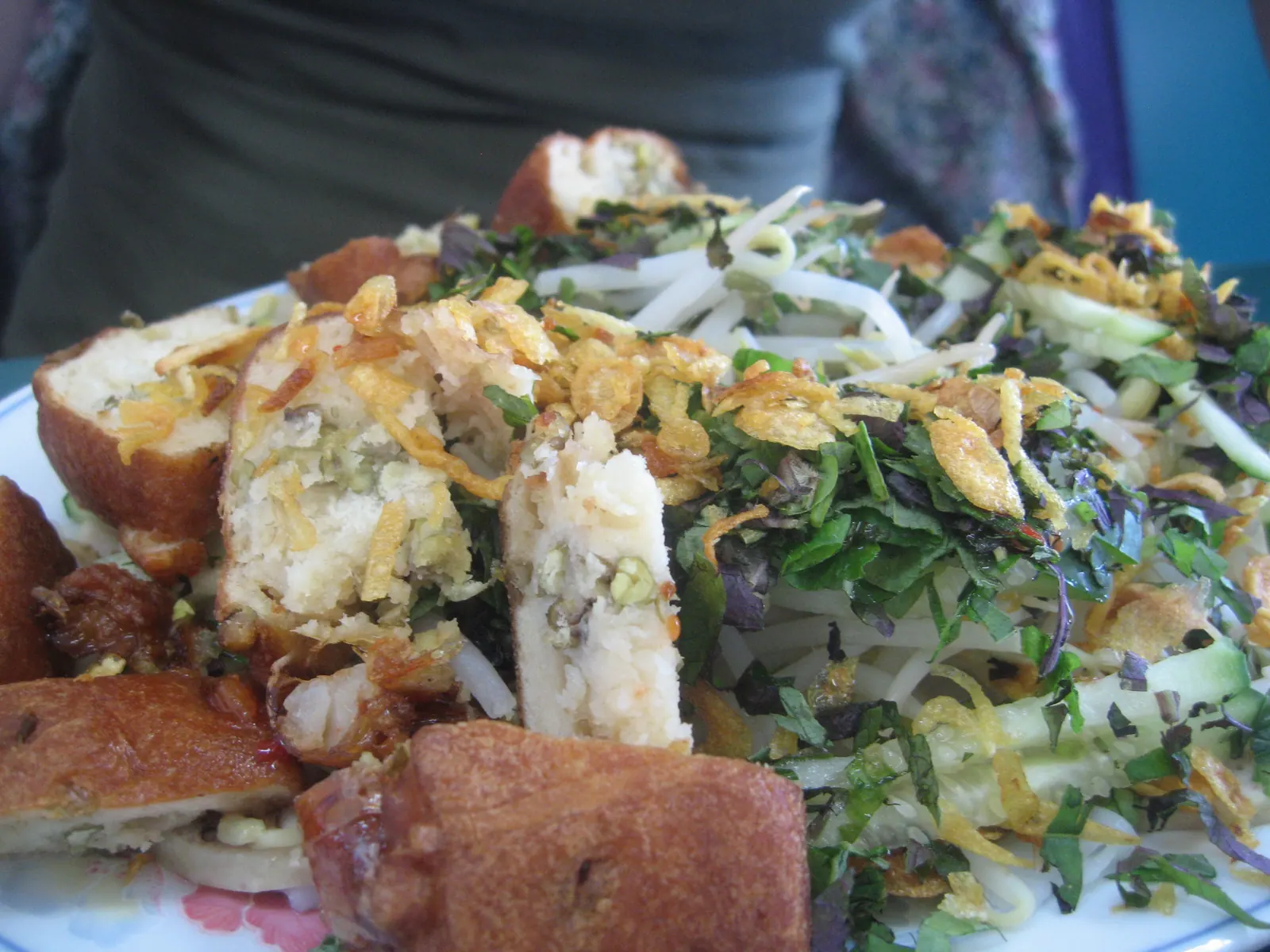
The town centre is where National Route 26 leaves Route 1 for the Central Highlands, at Km 1420 of Route 1, and the nem shops are in the streets around Trần Quý Cáp, near the market. Bà Năm is the address I have. The October 2025 list I rely on also gives the town’s other specialities with hours, and I pass them on as published: bánh canh Vạn Giã on Hai Tháng Tư street (08:00 to 21:30), bánh ướt Cô Mỹ in alley 610 Trần Quý Cáp (05:30 to 11:30 and 15:00 to 20:00), bánh canh cua Hồng Hạnh at 74 Trần Quốc Tuấn (06:00 to 19:30) and cơm vịt Liễu, duck rice from 20,000 VND (17:00 to 21:00). Bún cá, nem chua and fish sauce are the town’s other names on Vietnamese Wikipedia, along with the salt.
How do you make a day of it?
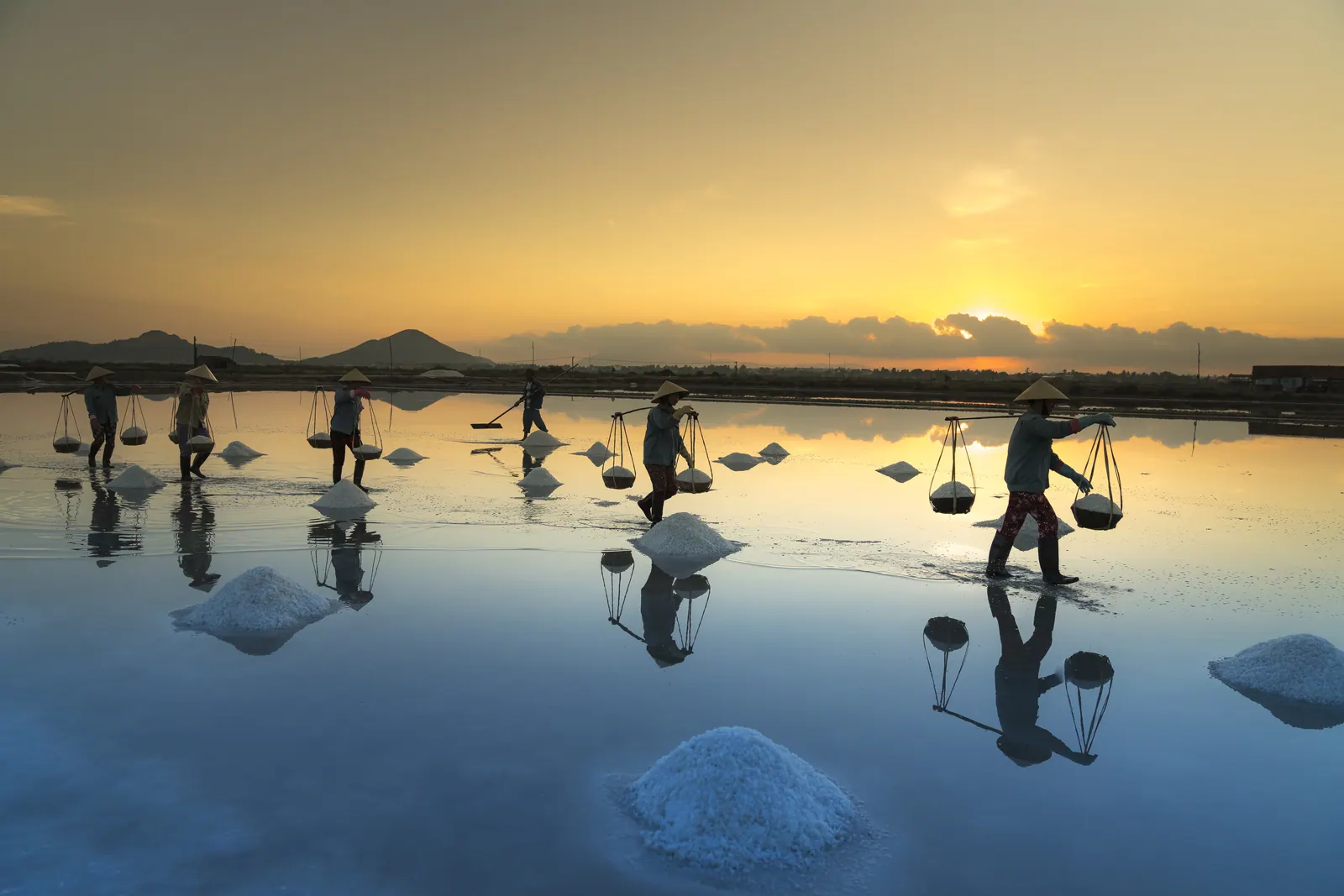
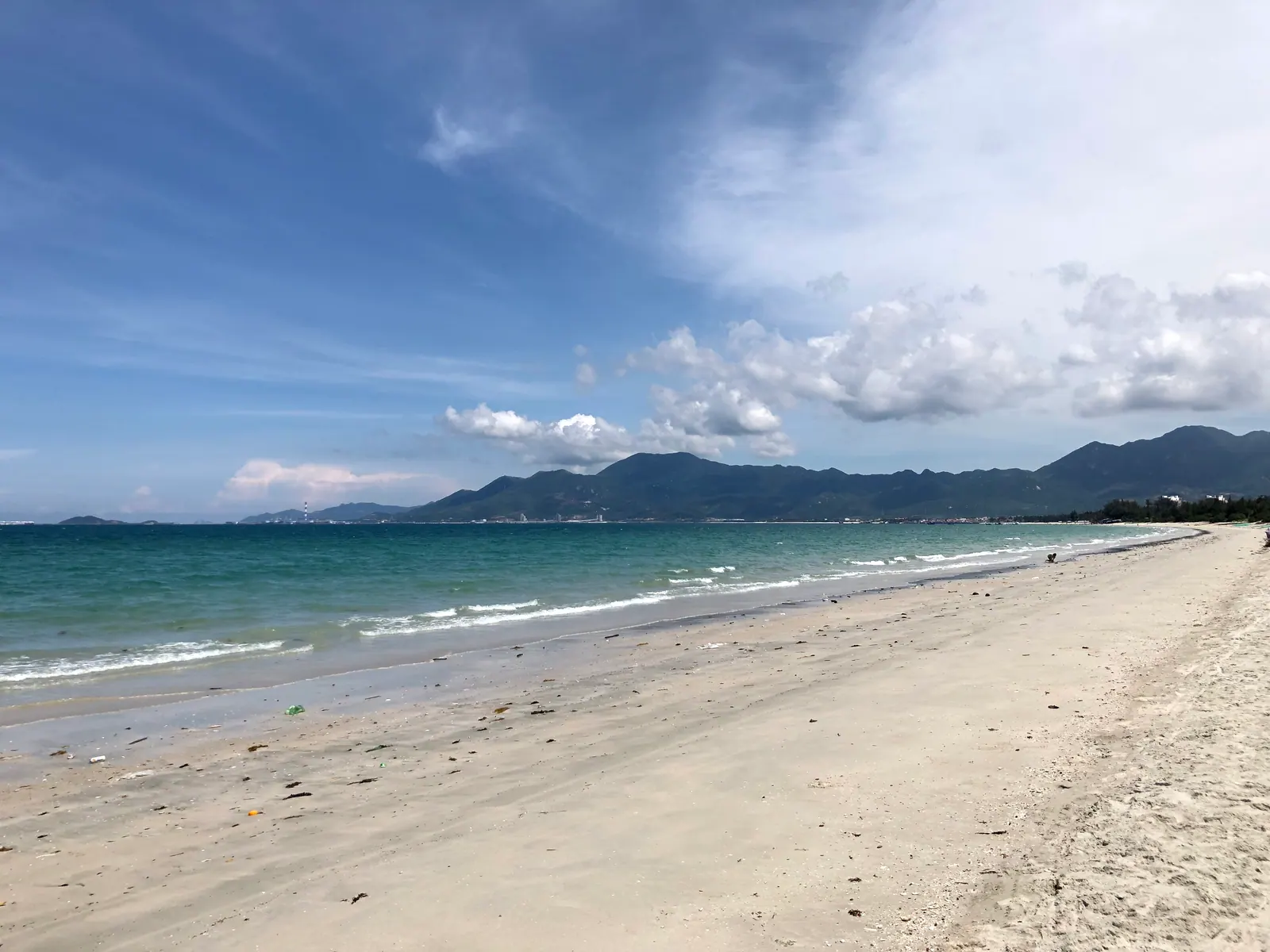
Ninh Hòa is a lunch stop on the way north rather than a destination on its own, and that is how I use it. The salt pans at Hòn Khói are worked from before dawn in season, so Hon Khoi salt fields at dawn is the early half; Dốc Lết, 46.3 km from Nha Trang, is the beach for the afternoon, and Doc Let on a weekday explains why the day of the week matters. Ba Hồ, the waterfall 25 km north of the city, is the other combination, and I end the Ba Ho post the same way, with nem in the town.
It also belongs with the other dish in this province that is better in the town it is named for, and that one is a breakfast: bánh ướt in Dien Khanh, ten kilometres the other way.
What I’d do
- Leave Nha Trang before five for the salt pans if it is April to July; otherwise leave at seven and skip them.
- Ninh Hòa town by mid-morning, 33 km on Route 1. Coffee on Trần Quý Cáp.
- Bà Năm when it opens at eight, or for an early lunch: one set each and one more than you think.
- Dốc Lết for the afternoon, and the seafood market beside the resort strip if there is room left.
- Route 1 home before dark; the trucks own it after that.
If you only do one thing on this list, do the nem, and do it in the town.