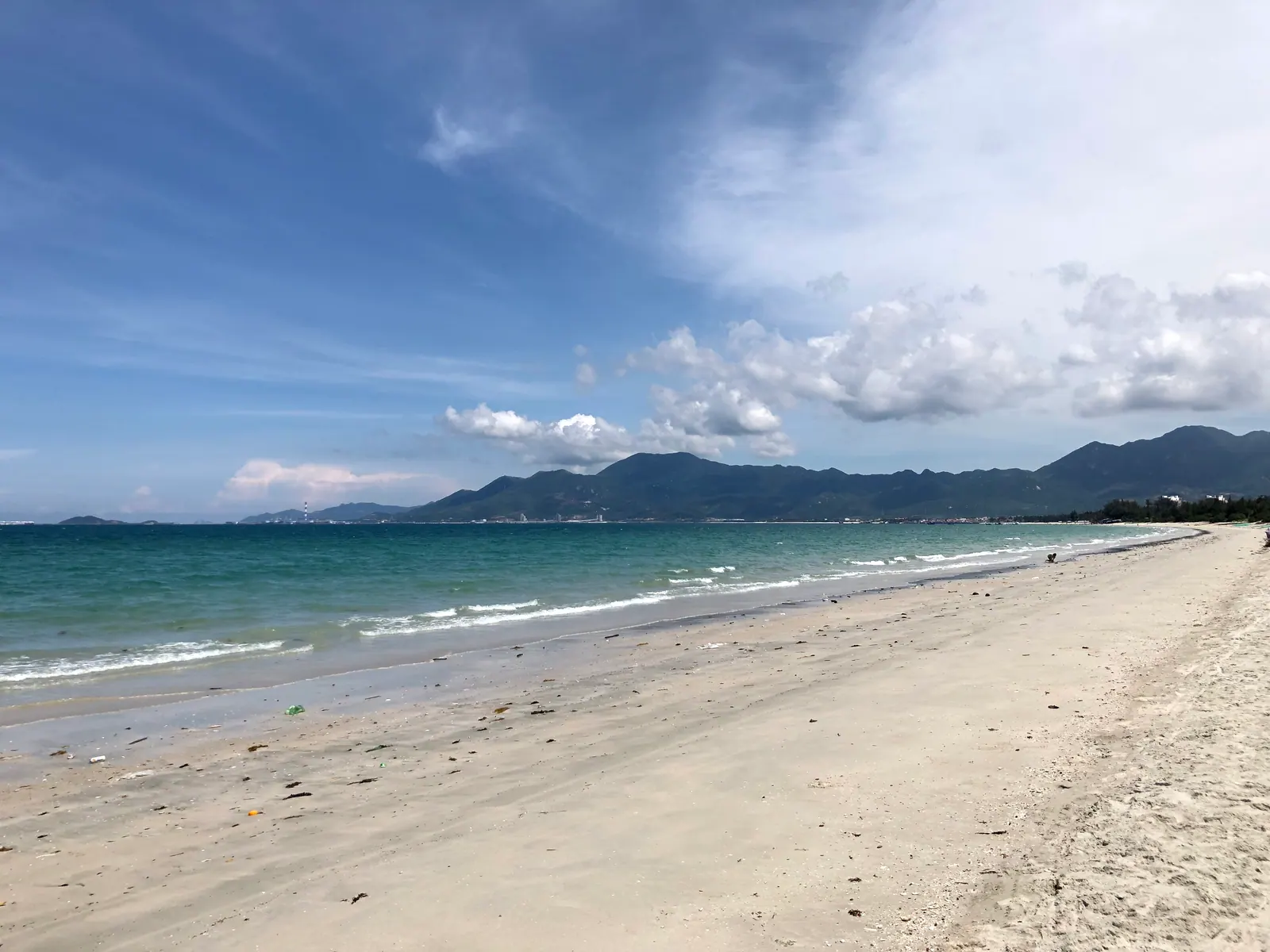
Dốc Lết on a weekday is the best easy day out from Nha Trang, and the weekday is the condition. The beach is 46.3 km north along Highway 1, about an hour by motorbike, long, white and so shallow that you wade a long way out before it is deep enough to swim; on a Tuesday in April there is almost nobody on it. On a Sunday the resort strip fills with Vietnamese families from the city and the point is lost.
The gated resort section on the best stretch charged 50,000 VND an adult and 25,000 VND a child under 1.3 m in 2025, free under 1 m, chair and freshwater shower included. There is ungated sand outside it, and I have not found a published name for where it begins, so I describe below how I find it.
Where is Doc Let, and how do you get there?
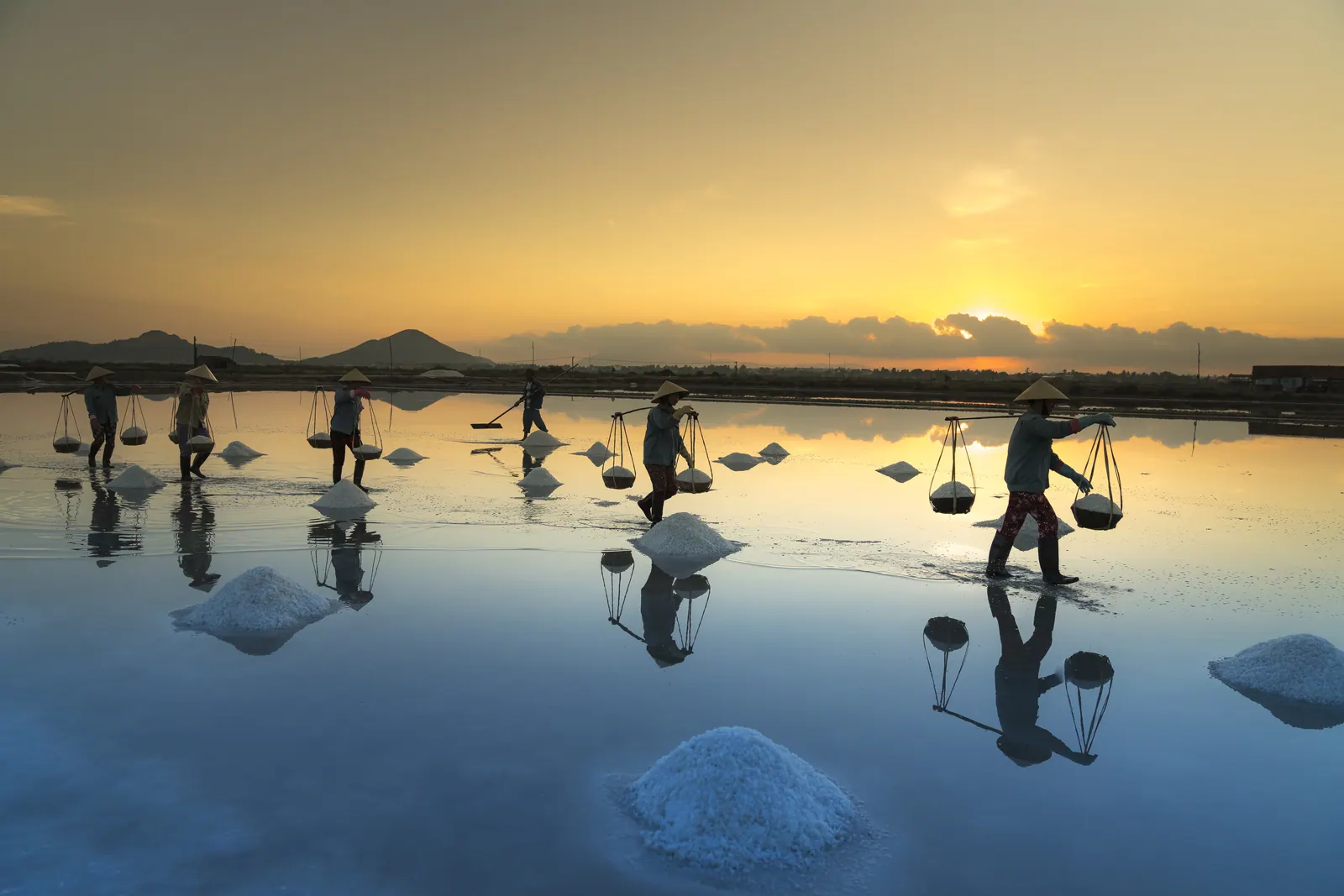
On the Hòn Khói headland in Đông Ninh Hòa ward, which was Ninh Hải ward until the July 2025 reform folded Ninh Diêm, Ninh Hải, Ninh Thủy and Ninh Phước together. Vietnamese Wikipedia gives 46.3 km from Nha Trang along Highway 1; a 2025 travel site says about 49 km and about an hour by car, and the difference is where in the city you start. The route is Highway 1 north 33 km to Ninh Hòa, then east through Ninh Diêm past the salt pans to the headland; the pans are the last kilometre and the beach is at the end of the road.
The name is said to come from the steep, slippery slope people once had to crawl over, lết, to reach the sand. There is no slope now; there is a car park.
City bus route 3 runs from Nha Trang to Dốc Lết. The sister guide lists the fare as 24,000 VND, which I have not confirmed for 2026, and I have not taken it, because the motorbike is the whole point of a weekday: you leave when the trucks are asleep and come back before they wake. Highway 1 north of the city carries heavy truck traffic all day, and that is the one warning I would give anyone on a rental scooter.
Which part is public and which is the resort?
The best stretch is behind a gate: Khu du lịch Dốc Lết, with pools, shops, restaurants and a cheap seafood market beside it. The 2025 published prices are below, and they are the only Dốc Lết prices I have from a source.
| Item | Price (2025) |
|---|
| Resort day entry, adult | 50,000 VND, chair and freshwater shower included |
| Resort day entry, child under 1.3 m | 25,000 VND |
| Child under 1 m | Free |
| Jet ski | 450,000 to 600,000 VND per 15 minutes |
| Parasailing | 600,000 to 800,000 VND per round |
| Camping plot | 100,000 to 150,000 VND per guest |
| Tent hire | 200,000 to 400,000 VND |
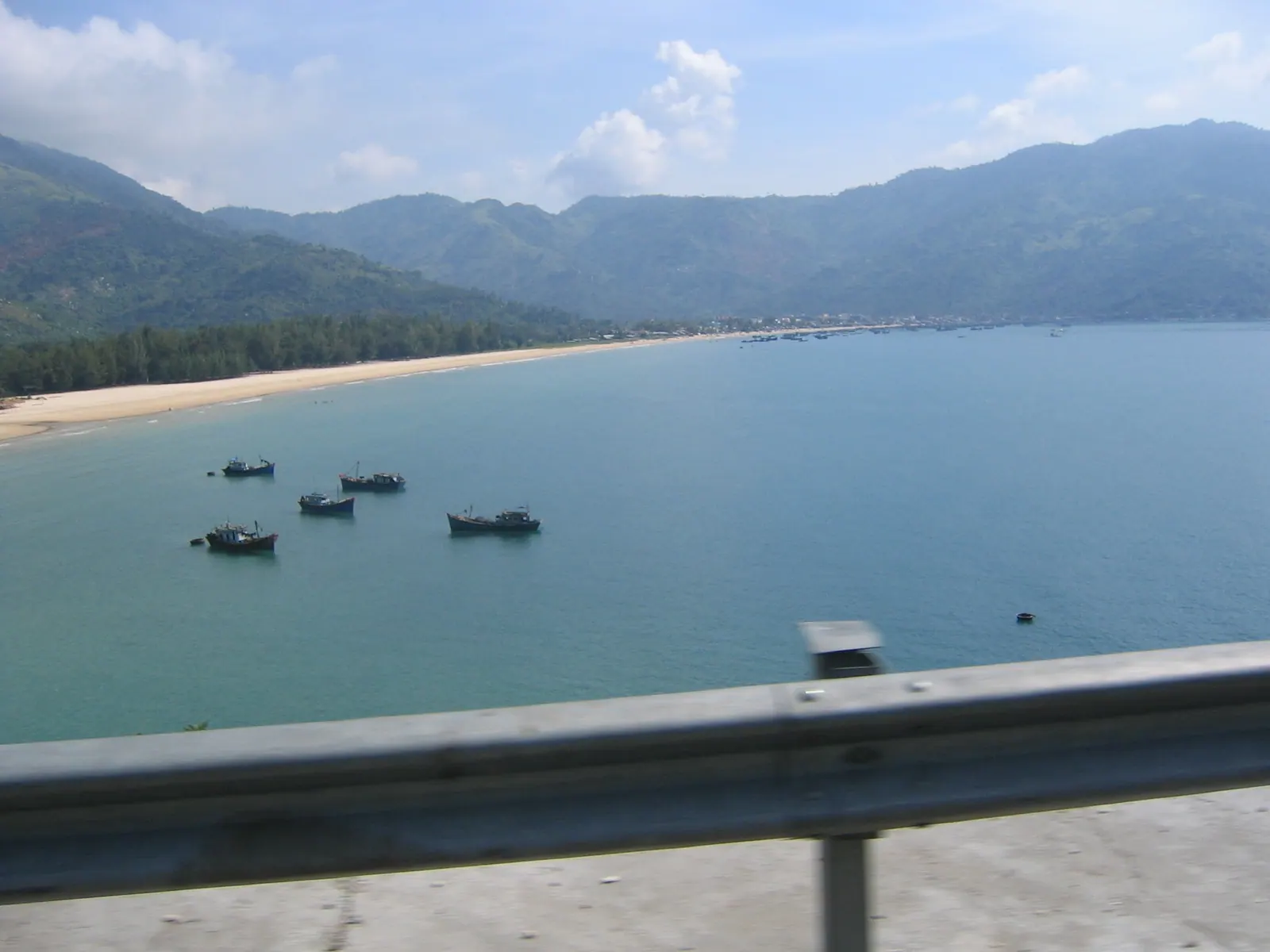
Outside the gate the beach continues, with fishing villages alongside, and the sand there is free. The sister guide’s source records a free public stretch; no page I have fetched names an access point, so here is mine: follow the shore away from the gate on foot, or take the lanes through the village on the bike, and you are on the same sand without the chair. On a weekday I pay for the gate more often than not, because the shower is worth it after the salt pans and because 50,000 VND is not the kind of money that changes a day.
Why a weekday?
Because the beach is a family beach for the city, and the city arrives on Saturday. The shallow water that makes Dốc Lết the best beach near Nha Trang for anyone who does not swim well makes it the best beach for children too, and on a weekend the resort strip is full of them, with the music that goes with it. I have nothing against any of that; it is just a different beach. On a weekday the same sand is a long white line with the sea flat on one side and the casuarinas on the other, and you can pick a spot by how far you feel like walking.
The other reason is the salt. The Hòn Khói pans are about 1 km from the beach and worked from 04:00 in season, and Hon Khoi salt fields at dawn is the first half of my Dốc Lết day; the beach is the reward for the early start, and the shower at the gate is where the salt comes off.
Field note: the shipyard is the honest note. From the northern end you can see the cranes and hulls of the HD Hyundai yard at Mỹ Giang, the largest in Vietnam, which delivered 710,369 gross tonnes of ships in 2025. No source I have found reports it affecting the water here, and I swim at Dốc Lết; I would rather you knew it was there.
Which months?
The dry months. One 2025 travel source gives January to September; the sister guide narrows it to March to August, and I side with the narrower one, because January and February can be windy and grey on this coast and September is when the rain starts in earnest. The Nha Trang station figures are the nearest I have:
| Month | Sea, Nha Trang | Rain, Nha Trang station | My verdict |
|---|
| January to February | 25.5 C | 38 mm, 16 mm | Swimmable, sometimes grey |
| March to April | 26.5 to 28 C | 31 mm, 35 mm | The best of it |
| May to June | 29 C | 70 mm, 59 mm | Hot, still good |
| July to August | 28.5 C | 36 mm, 50 mm | Good, salt harvest winding down |
| September | 29 C | 159 mm | Ending; typhoon window opens |
| October to November | 28.5 to 27 C | 302 mm, 332 mm | No |
The typhoon window on this coast runs from early September to about 10 December. The beaches of the province ranked puts Dốc Lết second, behind Đại Lãnh, and the reasoning is the same as here: easy, shallow, and empty on the right day.
What do you eat, and where do you stay?
The seafood market beside the resort strip, which Vietnamese Wikipedia describes as cheap and which is where I eat after the water: pick, weigh, wait. On the way back, Ninh Hòa town is 33 km from Nha Trang and the home of nem nướng, and nem nuong in its home town is the lunch I plan a Dốc Lết day around.
I do not review hotels. If you want to sleep by the beach rather than day-trip it, the resort strip has its own places, and the Nha Trang Guide’s hotel pages are where the network keeps the rates and the scores for the city end. There is little natural shade on the sand, so an umbrella from the strip or a hat is not optional in April.
What I’d do
- Leave Nha Trang at 04:00 in salt season, April to July, for first light on the Hòn Khói pans; otherwise leave at 06:30 and be on the beach by 07:30.
- Pay the gate, take the shower, and walk north along the sand until the last family is behind you.
- Swim while the sea is flat, which on this coast means before the wind gets up late in the morning.
- Seafood at the market by the strip at eleven, then an hour under a casuarina.
- Back through Ninh Hòa for nem, or, with the whole day, over the Hòn Hèo pass to Ninh Vân and back; the Hon Heo peninsula road explains why that road is worth the detour and what it does to a rental scooter.
Home on Highway 1 by mid-afternoon, before the trucks and the heat, with salt in your hair from two different sources.