Kitesurfing season in Phan Rang: My Hoa and the wind months
The season is the north-east monsoon, roughly November to March, with the strongest and steadiest wind in December and January. My Hoa, a flat beach over 4 km long on DT702 north of Ninh Chu, is the established spot, with four kite centres counted there in 2019. No My Hoa lesson price is published anywhere I could find.
The wind season here is the north-east monsoon, roughly November to March, and it blows hardest and steadiest in December and January, the months the Vietnamese call the gió bấc, the north wind. Ninh Thuan television counts up to six consecutive months of stable wind at Mỹ Hòa, and Dan Tri calls the north-wind season the strongest on this coast. That beach, on the DT702 coast road north of Ninh Chử, is the place: over 4 km of flat sand, about waist-deep at high tide, with rock outcrops that take the gusts and the swell out of the water.
What I cannot give you is a price. Dan Tri counted four kite centres in My Hoa hamlet in 2019, staffed by internationally certified instructors and using imported gear, with 96 percent of the riders foreign, but no lesson price for any of them is published anywhere I could find. The only local figure is the InterContinental Nha Trang’s 2026 guide at USD 50 an hour for Bai Dai, which is a hotel’s number for a different beach.
Why is the driest corner also the windiest?
I am not a meteorologist, so here is what the station tables show rather than a theory. The same north-east monsoon that drops 332 mm on Nha Trang in November leaves Phan Rang with 171 mm, and by February the Phan Rang figure is 2.8 mm, the driest month in the country, on a plain that gets 838.5 mm a year and 3,029 hours of sun. The wind arrives; most of the rain does not. On the beach that means a season with the kites up and the sky still blue, which is not how the kite months feel at Nha Trang. Khanh Hoa month by month has the whole province’s tables side by side.
Month
Rain at Phan Rang
Rain at Nha Trang
Sunshine at Phan Rang
Wind, from the kite sources
November
171.0 mm
332 mm
189.7 h
Season starting; typhoon window open until about 10 December
December
83.6 mm
153 mm
189.4 h
North wind, the strongest of the year
January
8.8 mm
38 mm
241.7 h
North wind, the strongest of the year
February
2.8 mm
16 mm
255.2 h
Still steady
March
12.0 mm
31 mm
278.5 h
Tailing off
Where exactly is My Hoa?
In My Hoa hamlet of Vĩnh Hải commune, on DT702 between Ninh Chu and the Thái An grape village, which puts it on the southern part of the Nui Chua coast road. The kite centres are on the beach road. The beach is long and flat, and shallow enough that a learner can stand a long way out at high water, which is why the schools chose it; the rock formations block the gusts and the offshore waves, which is why the wind stays usable. The Kiteboard Tour Asia association has said the beach could host international-class events, and the provincial television station reported in February 2024 that an international competition has been held here. I have watched from the sand more than I have ridden, and on a good December morning there were more kites in the air than people on the beach.
What do the schools charge?
I do not know, and I would rather say so than guess. The centres Dan Tri counted in 2019 were there when I last rode past; whether all four still operate, and under what names, I could not confirm from any published page, so write to one before you fly in with kiting as the whole plan. A USD 350, 17-hour course price that search results attach to My Hoa comes from an article about a Mũi Né school, so ignore it. For a sense of scale, the only local figure is the InterContinental Nha Trang’s 2026 guide, which puts lessons at Bai Dai on the Cam Ranh coast from around USD 50 an hour including equipment; that is a hotel’s marketing number for another beach, not a school’s price list. I have written that beach up in Bai Dai in the wind season. If you have your own gear, My Hoa is a free public beach.
What about Ninh Chu itself?
Ninh Chu is the town beach of Phan Rang, about 8 km east of the centre, and the southern end of the kite coast that runs north to My Hoa. I never found kiting at Ninh Chu itself separately confirmed, and the schools are at My Hoa. What Ninh Chu has is the beds and the food. It is a domestic-resort beach with hotels along the front and seafood restaurants serving the day’s catch at roughly 50,000 to 150,000 VND a dish by Wikivoyage’s figure. Wikivoyage lists the Sai Gon-Ninh Chu Hotel as the established four-star at roughly USD 50 to 200 a night, and there are cheaper places behind the front. On weekdays it is quiet; at weekends Phan Rang comes out to it. In the wind months the sea here is rough and swimming is poor, so think of it as the base, not the beach.
Ninh Chu has been a ward of its own since 1 July 2025, under the resolution signed on 16 June, formed from Van Hai ward and Khanh Hai town, and the merged province’s strategy names it, with the North Cam Ranh peninsula, as a national tourism zone. Nothing of that shows on the sand yet.
What does a non-kiter do in the wind months?
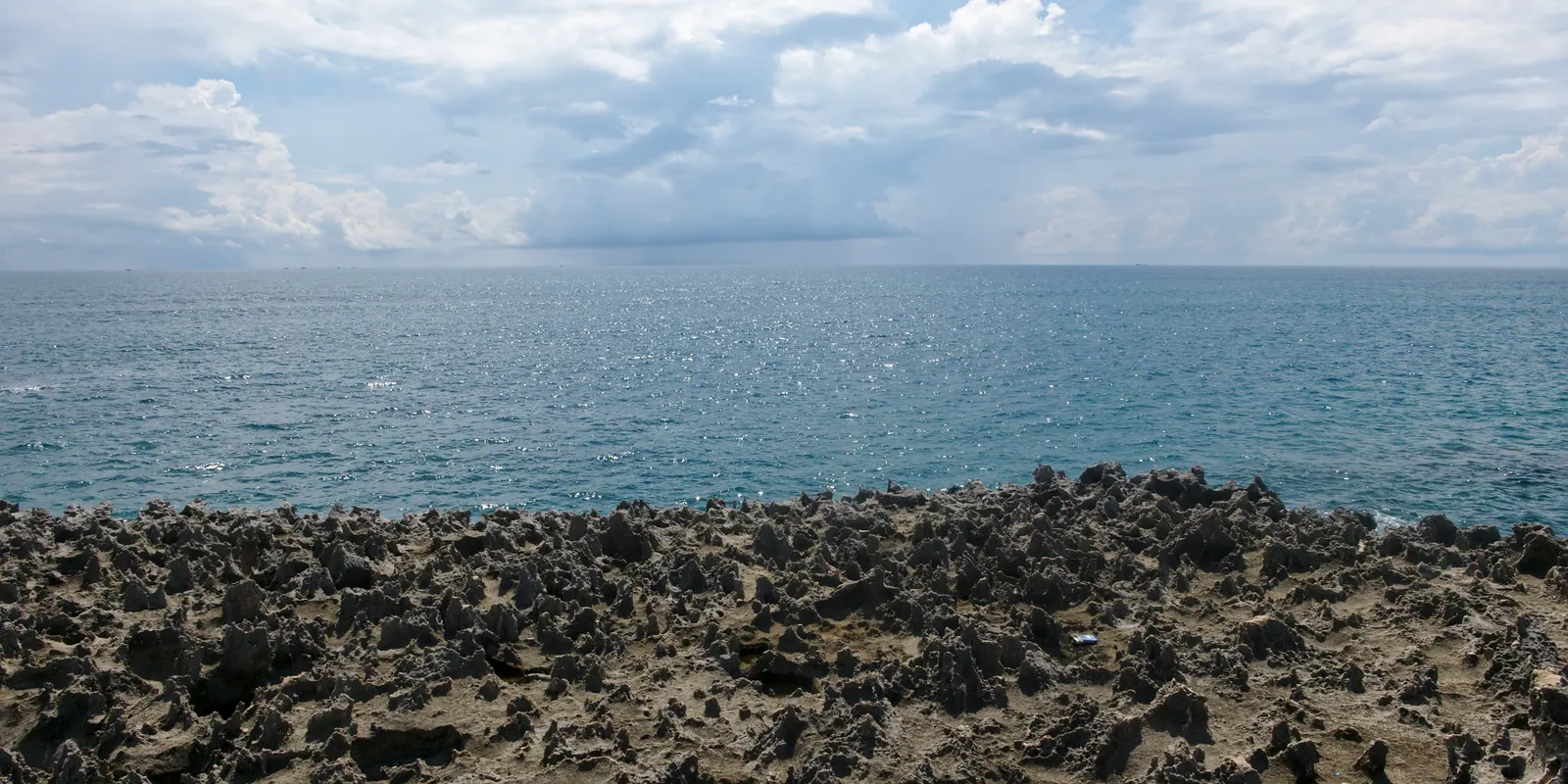
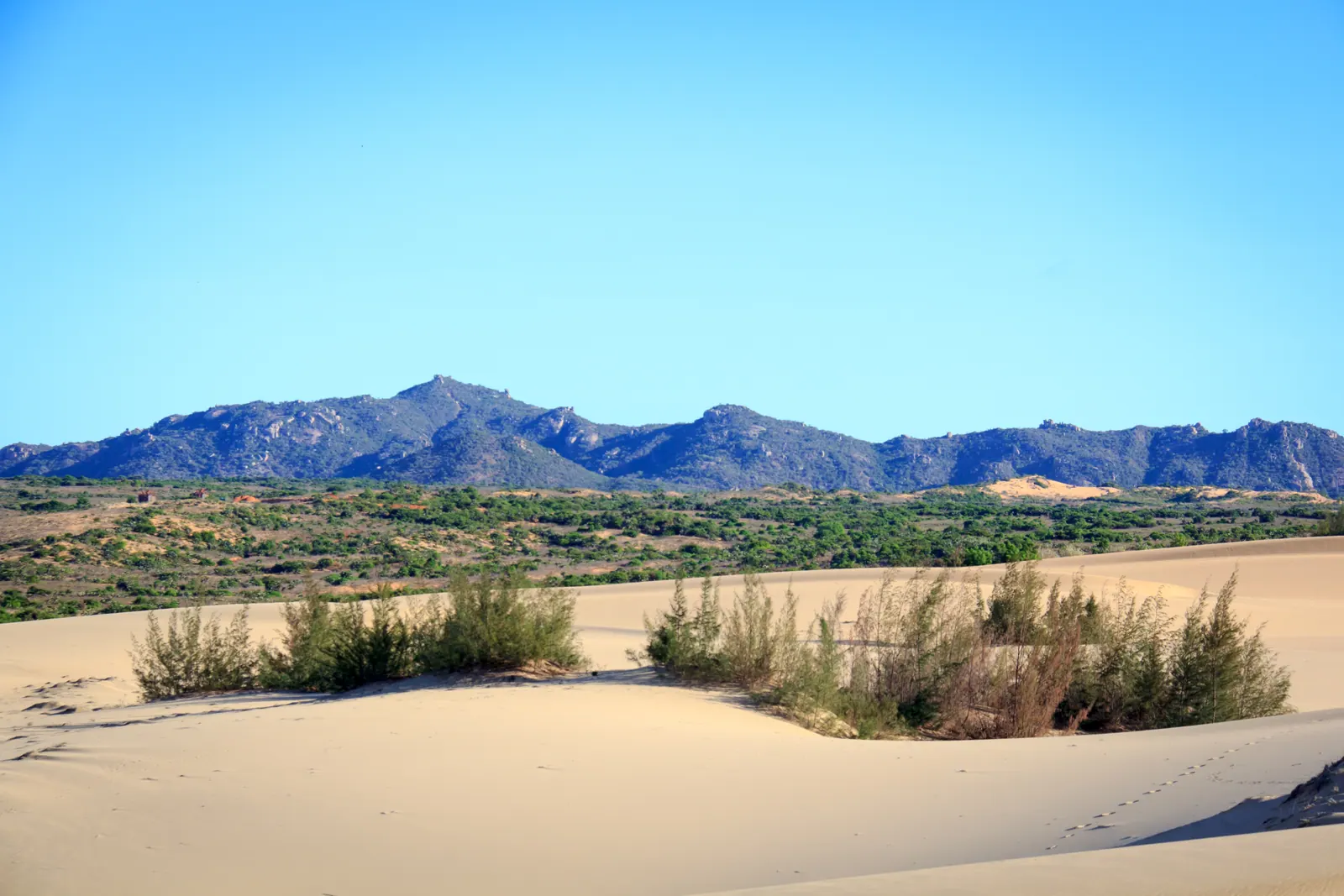
More than in Nha Trang, because it is dry. The same months are the moss season at Hang Rai, further up DT702, where the coral shelf goes green from December to about March and the north wind sends the swell over it for the waterfall photograph. The grape gardens crop again in December to January for Tết. The Cham towers at Po Klong Garai are best in the cool early mornings these months give. And the dunes at Nam Cương and Mui Dinh are walkable in the mornings when they are punishing in May. The one caution is at the front end of the calendar: the typhoon window runs from early September to about 10 December, so a November trip can meet a storm that a January one will not.
Field note: the wind at My Hoa starts before the light and does not stop for lunch. The restaurants on the Ninh Chu front are where the riders end up at dusk, salt-stiff and hungry, and the seafood there is cheap by any coast’s standard.
What I’d do
Come between mid-December and February, on weekdays, and sleep at Ninh Chu.
Write to a My Hoa centre before booking flights, because the prices are not published and I cannot confirm which schools are open in a given season.
Ride out to My Hoa on DT702 each morning; kite, or watch.
Hang Rai at sunrise on the calmest morning of the stay, on a low tide, for the moss.
One inland day: the Cham towers early, the grape gardens after, goat hotpot in Phan Rang at night.
If your dates fall before about 10 December, watch the typhoon forecast; after that, the wind is the only weather you are likely to get.
Questions I get asked
When is kitesurfing season in Phan Rang?
With the north-east monsoon, roughly November to March. Ninh Thuan television counts up to six consecutive months of stable wind at My Hoa, and Dan Tri names December and January, the north-wind season, as the strongest on this coast.
Where is the best kitesurfing beach near Phan Rang?
My Hoa, in My Hoa hamlet of Vinh Hai commune on the DT702 coast road north of Ninh Chu: over 4 km of flat beach, about waist-deep at high tide, with rock outcrops that block the gusts and the swell. The kite centres are on the beach road.
How much does a kitesurfing lesson cost in Phan Rang?
I could not find a published price for any My Hoa school; the USD 350 figure that circulates online belongs to a Mui Ne school. The only local number is the InterContinental Nha Trang's 2026 guide quoting lessons at Bai Dai from around USD 50 an hour with equipment.
Can you swim at Ninh Chu in the kite season?
Poorly. The months that bring the wind bring the rough sea, and Ninh Chu is a beach for January to August rather than for the monsoon. Come for the wind or for the dry inland sights, not for swimming.
Is Ninh Chu or My Hoa better for kitesurfing?
My Hoa is the spot the sources and the schools describe; I never found kiting at Ninh Chu itself separately confirmed. Ninh Chu is where you sleep and eat, about 8 km east of Phan Rang, and My Hoa is where you ride.
Sources
Read on 15 September 2026. Prices, hours and rules change; these are the pages the figures came from.
Hang Rai is a raised shelf of fossil coral on the DT702 coast road, run as the visitor site of Nui Chua National Park, and it is not for swimming. Go at first light on a falling tide for the water sheeting off the terraces, and between December and March for the green moss. I never found an official fee; travel sites quote 30,000 to 35,000 VND.
Walk it. The 1904 lighthouse on its 178 m hill is about 1.5 km from the car park across sand and rock, and the lift to the top by jeep, 20,000 to 30,000 VND a trip on a 2026 travel-agency page, is a different product from the 700,000 VND dune tour. There is no entrance ticket, only parking. Go at first light; there is no shade and no water on the walk.
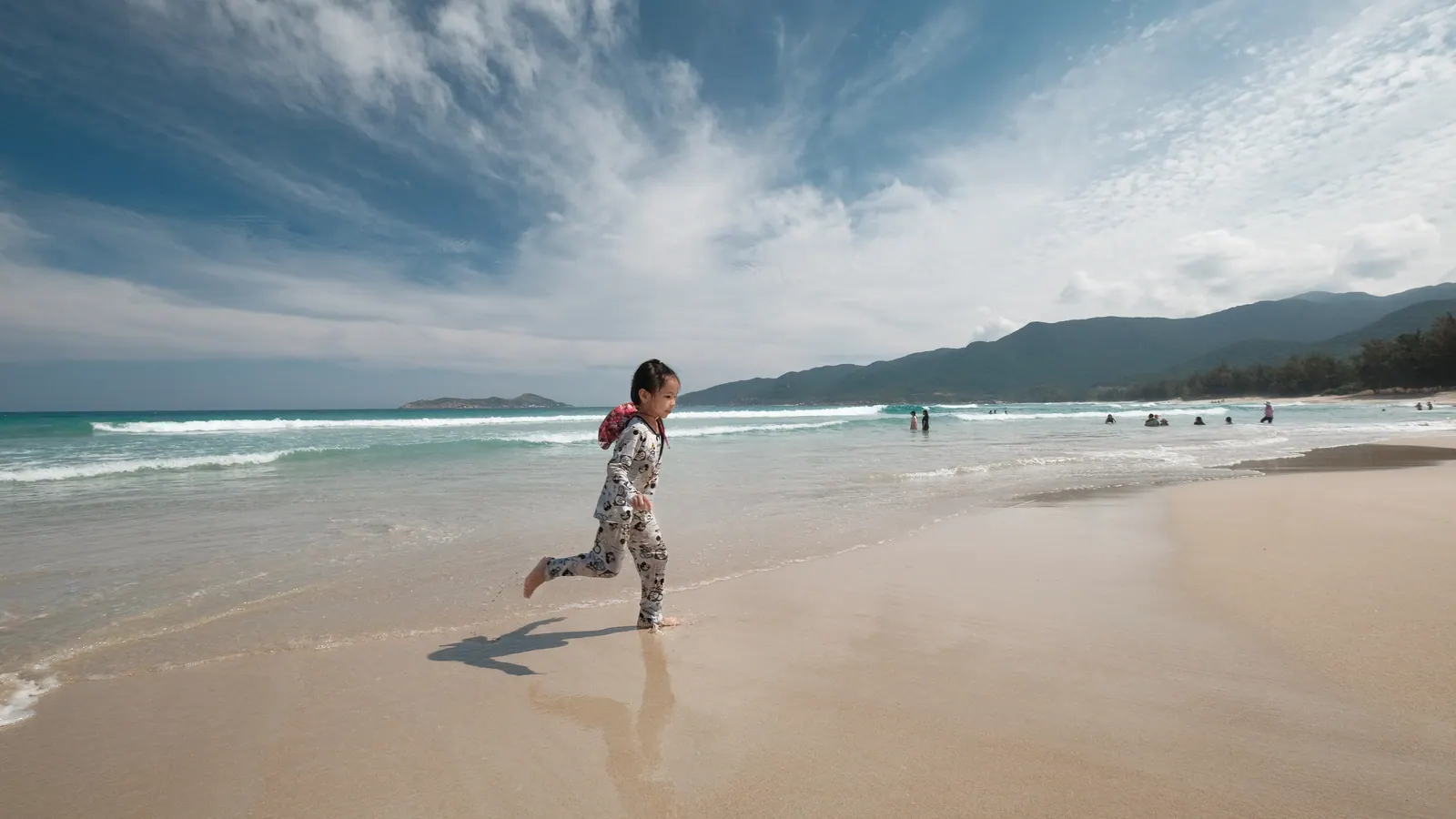
Between November and March Bai Dai is windy, mostly unswimmable and nearly empty, and it is the season I like it best. The beach is public and free from the gaps between the resorts, the tide covers the bathing areas for about half the year, and the kite riders rig at the windy northern end. This is the beach from the public access points, not from a resort.
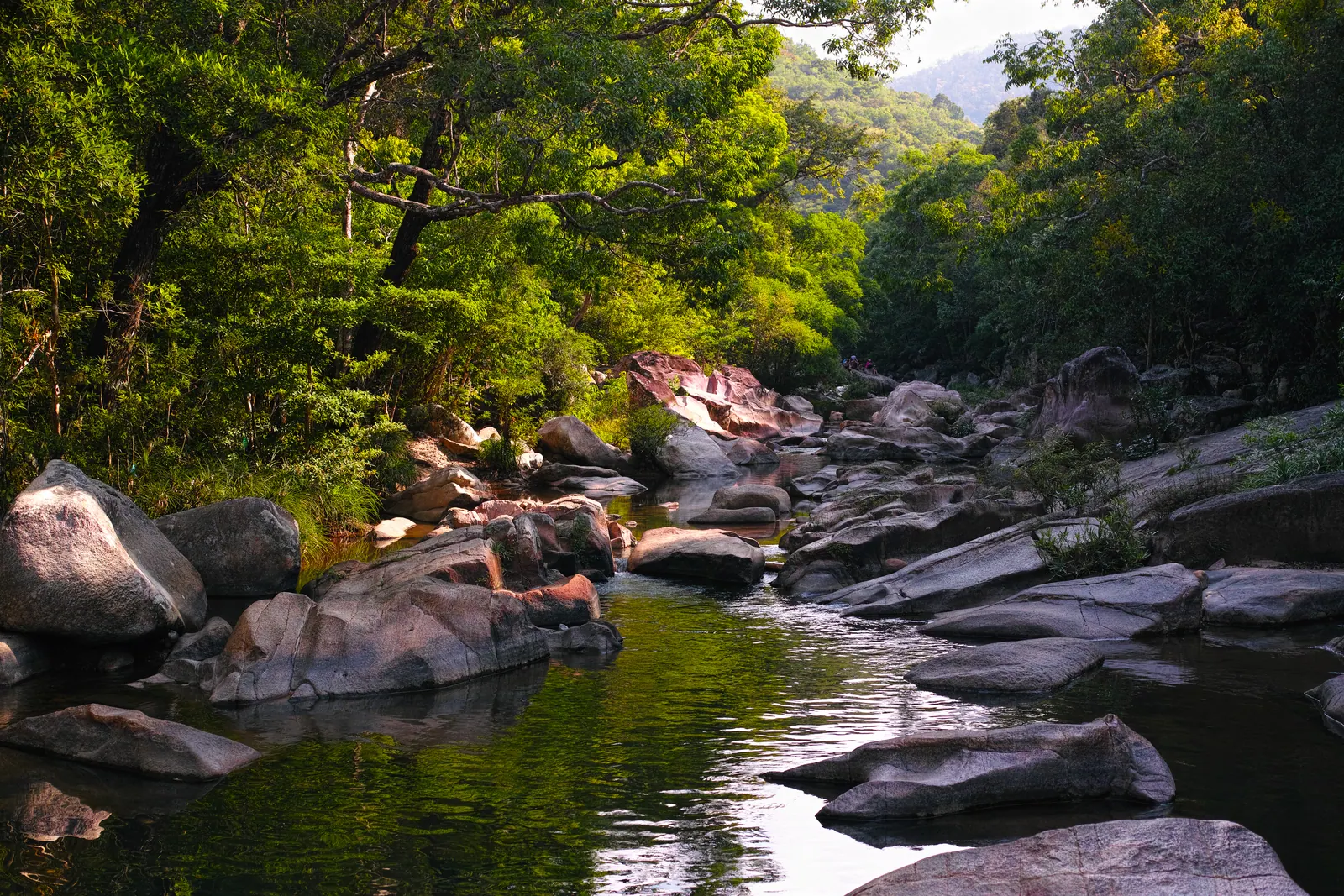
Ba Ho is three pools on a forest stream 25 km north of Nha Trang, reached by about a kilometre of boulder scrambling. From January to May the water is clear and the granite is dry enough to trust; from October to December the same rocks are wet and the stream can flood. The official adult ticket was 135,000 VND in September 2026.