Mango in April and May in Cam Lâm, durian in late July and August in Khánh Sơn, grapes in three crops around Phan Rang with the sweetest in August and September, green apples from March to May, and green-skin pomelo from late July in Khánh Vĩnh. The wet months, October to December, are the gap, with only the Tet grapes coming on at the end of them. That is the gap on the grape account this calendar follows; the other account I found runs April to June, August to October and November to January, and leaves no gap at all.
Everything below comes from the growers’ own seasons as reported in the provincial press, not from a menu. Prices are given only where a source gives one, with the year, and they are mostly farm-gate, which is not what you will pay at a stall in Nha Trang.
The calendar
| Month | In season | Where |
|---|
| January | Tet grapes (December to January crop) | Thai An, Ninh Phuoc |
| February | The tail of the Tet grapes; little else | Phan Rang plain |
| March | Green apple from March to May; mango orchards flowering mid-March | Phan Rang; Cam Lam |
| April | Mango harvest begins; main grape crop; green apple | Cam Lam; Thai An |
| May | Mango peak, picking from late May in 2026; grapes; green apple | Cam Lam; Thai An |
| June | Last mango; Lam Son durian, mangosteen and rambutan; end of the spring grapes | Cam Lam; Lam Son |
| July | Lam Son durian (festival 17 to 19 July 2026); Khanh Son durian starts; pomelo picking from late July | Lam Son; Khanh Son; Khanh Vinh |
| August | Khanh Son durian peak (pass-top market 14 to 15 August 2026); pomelo; second grape crop, the sweetest | Khanh Son; Khanh Vinh; Thai An |
| September | Pomelo; grapes; the last durian | Khanh Vinh; Thai An; Khanh Son |
| October | Autumn grapes by one account; the rains begin | Thai An |
| November | The wet gap; winter grapes coming on by one account | Thai An |
| December | Tet grapes | Thai An, Ninh Phuoc |
Mango: Cam Lam, April to June
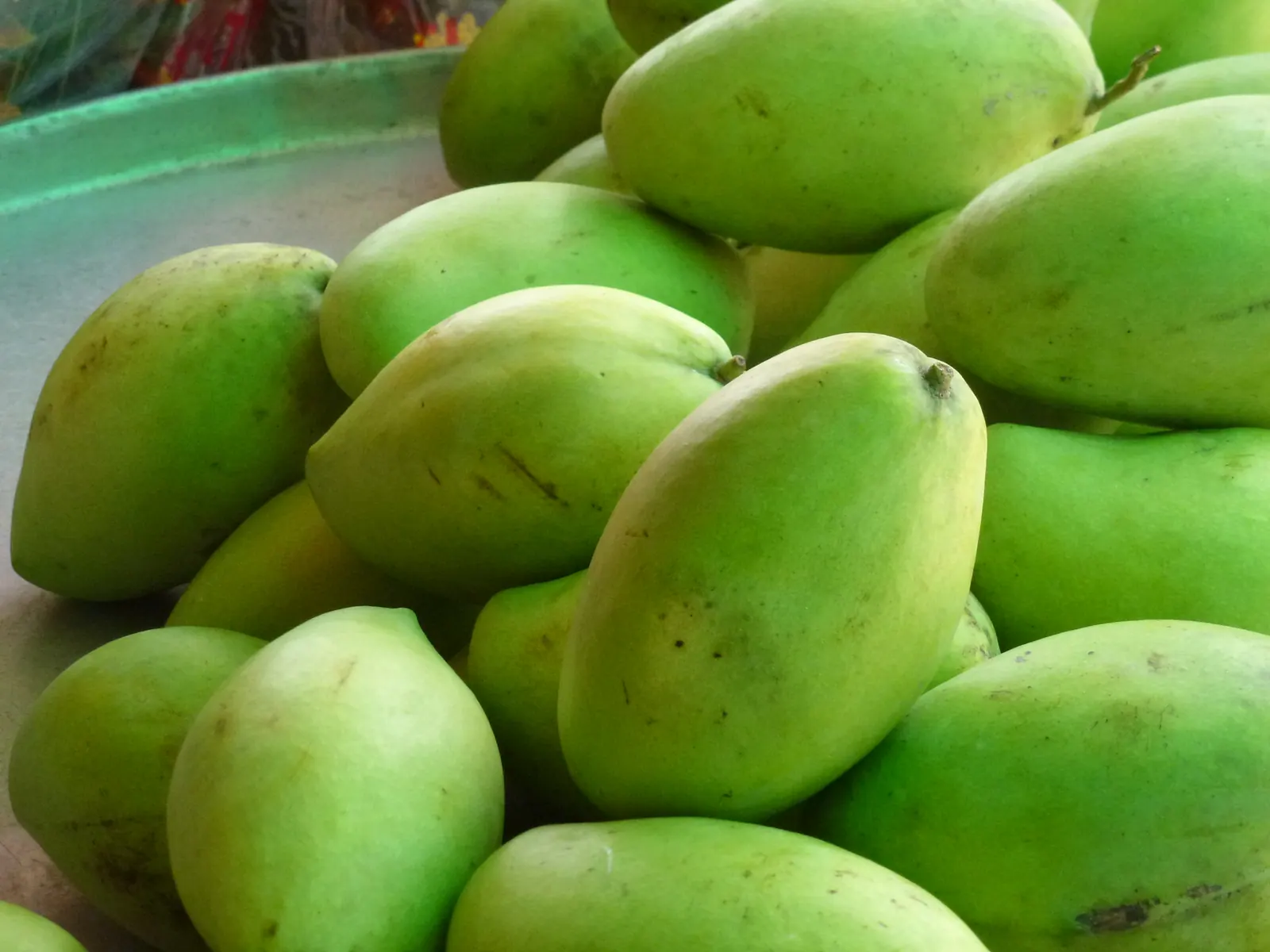
Cam Lam is the flat country between Nha Trang and the airport, and it is the province’s mango capital: 9,059 ha of mango in Khanh Hoa in 2026, of which 7,808 ha were bearing, for over 53,000 tonnes a year. The Australian variety, xoài Úc, arrived in 2015 and covered about 4,500 ha of the former district by 2025, alongside cát Hòa Lộc, Canh Nông, Đài Loan and tứ quý, and the native Thủy Triều. The main harvest runs from April to June: picking began in late May in 2026, and in earlier years the press reported orchards in full harvest in mid-May and end-of-season picking on 22 May. The orchards flower around mid-March, which is the prettiest fortnight on the back roads.
Orchards in Tân Hải hamlet of Cam Lam commune, some with trees decades old, now take visitors to pick and eat under the trees, arranged through the orchards or a local company rather than walk-in. What I cannot give you is a sourced roadside price: the figures in the press are farm-gate, and they have collapsed for three seasons running, from 30,000 to 50,000 VND a kilo in good years to 1,000 to 3,000 VND a kilo in 2026, with about 1,800 tonnes left unsold across the former district in May 2025. The stall price is a different number, and the gap is the grower’s problem. Cam Lam mango country is the day out.
Durian: Khanh Son, late July to August
Khanh Son ripens one to two months after the Mekong Delta and about a month before the Central Highlands, so the harvest runs from about July to the end of August with the peak in August, and the fruit sells at a premium for the timing. The plateau had 2,600 ha of durian with 1,600 ha bearing in July 2024, for about 17,000 tonnes; by August 2026 it was over 3,800 ha with over 2,600 ha in production and a forecast of 40,000 to 41,000 tonnes from more than 4,600 households, over 2,500 of them Raglai and other minority growers. The varieties are Monthong and Ri6.
Prices are the best documented in the province. In July 2024 Ri6 was 55,000 to 60,000 VND a kilo wholesale and Monthong 75,000 to 85,000 VND, with grade-one Monthong retailing at 98,000 to 103,000 VND; in August 2026 the farm-gate price was about 50,000 VND a kilo. The orchards line the valley around Tô Hạp and Sơn Bình, and I buy from the roadside stalls or the market at the pass-top rest stop. The fruit festival was last held on 10 to 13 August 2024, with about 20,000 visitors; in 2026 the harvest event was a market and cultural space at the Đông Khánh Sơn rest stop on 14 and 15 August, produce from 06:00 to 10:00 on the second morning. Khanh Son in durian season is the trip, and the Khanh Son pass is the only road in.
Grapes and green apples: the dry south
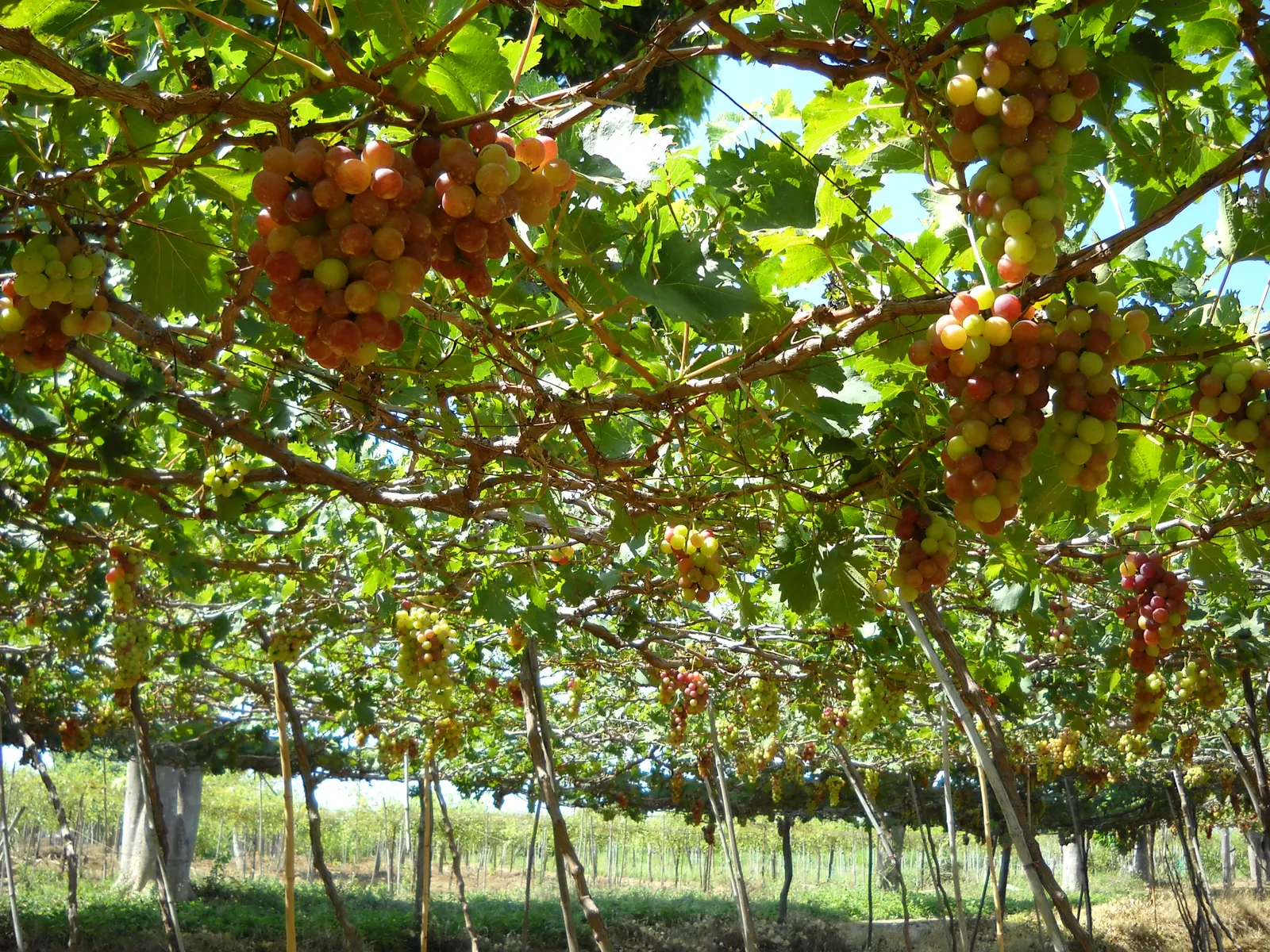
The former Ninh Thuận is Vietnam’s grape country, over 1,000 ha producing 26,000 to 28,000 tonnes a year by a 2026 report, with an older figure of about 2,200 ha in 2020. Vines crop several times a year, and the sources disagree on the edges: one names April to May, August to September and December to January, another April to June, August to October and November to January, with the sweetest fruit in August and September after the summer sun. Red Cardinal is the traditional red; NH01-48 the green; NH01-152 a pink seedless.
Thái An hamlet, on the coast road just before Vĩnh Hy, is the garden village: about 200 ha, rows open free of charge from 07:00 to 18:00, grapes at 40,000 to 50,000 VND a kilo at the gate in 2025, and syrup, raisins and a farm-made grape wine sold alongside. Ba Mọi’s farm in Ninh Phước, south of Phan Rang, is the other stop, free to enter with 13 varieties. About 40 ha of true wine grapes were being grown for Lam Dong wineries in 2021; the bottle in the garden is a souvenir, not a claim. The small crisp green apple, táo xanh, grown under nets around Phan Rang, at Thai An and along provincial road 703, has its main season in the second to fourth lunar months, usually March to May; one guide quoted 25,000 to 30,000 VND a kilo for the common táo gió and 35,000 to 50,000 VND for the larger táo bom. Ninh Thuan grapes and wine has the gardens.
Pomelo in Khanh Vinh, and the Lam Son orchards
The Raglai and Kinh farmers west of Nha Trang on the Da Lat road grow about 600 ha of green-skin pomelo, bưởi da xanh, of which about 330 ha was bearing in July 2025. Picking starts in late July, yields average nearly 4.5 tonnes a hectare for over 1,400 tonnes a year, and the farm-gate price was 20,000 to 40,000 VND a kilo. The orchards are along QL27C and the side valleys between Khanh Vinh town and Khánh Phú, and August and September are the months. The collective trademark has been in use since 2019.
Lâm Sơn, in the hills of the former Ninh Sơn on the road from Phan Rang up to Da Lat, is the south’s orchard belt: durian, mangosteen, rambutan, mango and pomelo ripening from June into July, and a fruit and food festival held for the second time on 17 to 19 July 2026, timed to the durian.
How I buy it
Roadside, at the source, in the month the table says. The one exception is the city: the markets in markets I actually use in Nha Trang carry all of it in season at a markup I have never seen published, so I have no fair-price figure for a Nha Trang stall and will not invent one. Weigh it, ask the price per kilo before it goes on the scale, and buy the ugly durian; the price is by weight and the sellers know which ones are good.
What I’d do
Mid-March, a morning on the Cam Lam back roads for the flowering, and again in the second half of May for the picking. Late July, the ride to To Hap for durian at the stalls, with a night on the plateau. Mid-August, the pass-top market, then Khanh Vinh for pomelo on the way home. Any dry month, Thai An on the coast road for grapes at the gate, best in August or September. And in October and November, nothing: the rain in Khanh Hoa month by month is the reason the table goes quiet.