Shopping like a resident: Nha Trang markets I actually use
I shop at Xom Moi on Ngo Gia Tu for the daily basket, Vinh Hai in the north of the city when I want seafood at boat prices, Dam Market for dried goods and gifts, and Lotte Mart or Co.opmart for packets. The three night markets on Tran Phu are for visitors. One rule covers all of them: agree the rate and the weight before anything is cooked.
Xóm Mới for the daily shop, Vĩnh Hải when I want seafood at its cheapest, Đầm when I have visitors or need dried squid as a present, and Lotte Mart or Co.opmart for everything that comes in a packet. That is the whole rotation. The night markets on Trần Phú are for visitors, and there are three of them, which is why people keep getting sent to the wrong one.
Two years of shopping here has taught me one rule that covers all of them: the price is the weight times the rate, and you settle both before anything goes on a scale or a grill.
Xom Moi: the market I actually use
Chợ Xóm Mới is at 49 Ngô Gia Tự, a little way inland from the beach and about ten minutes from anywhere in the tourist quarter on a motorbike. It is more than sixty years old, has more than 1,000 traders, and opens at about 05:00 and runs to 18:30, with the crush from 05:00 to 08:00 and again from 15:00 to 17:00. It sells what a household needs: live and fresh seafood, dried seafood, fruit and vegetables, prepared food, and the everyday groceries. Prices are local-facing and noticeably below the beachfront.
The seafood counters are the reason to know it. If you want to buy a fish and have it cooked somewhere else, this is the market for it, and the published advice is the advice I follow: ask at two or three stalls before you buy. The Bún Cá Nguyên Loan noodle shop is on the same street, which is how a shopping trip turns into breakfast. If you are up early enough to see the market at its busiest, Nha Trang at five in the morning covers what else that hour holds.
Vinh Hai: where the seafood is cheapest
Chợ Vĩnh Hải is the main market of the north of the city, on Đường 2 Tháng 4 in what is now Bắc Nha Trang ward. It moved to the present site in 1984 from a smaller market on Mai Xuân Thưởng and has grown to over 940 stalls, of which around 120 sell live seafood and 48 are cooked-food stalls. It has some of the cheapest seafood in the city because the catch comes straight off the boats in the morning, and the morning is when to go. I could not find reliably published opening hours; I have never arrived after seven and found it anything but open.
It is further from the hotels than Xom Moi and there is nothing in it for a souvenir hunter, which is precisely its appeal.
Dam Market: the one visitors see
Chợ Đầm is the city’s central market, about 2 km north of the 2 Tháng 4 square, open 05:00 to 18:30, and it is where every guide and every cruise-ship bus sends people. A market has stood on the site, once a 7-hectare lagoon, since about 1908. After a fire on 16 September 1968 destroyed 126 buildings, the lagoon was filled with 350,000 cubic metres of sand and the round, lotus-shaped hall, 66.5 m across, was built, reopening on 3 February 1980. Its demolition was announced in 2013 and fought by the traders in 2015; in March 2021 trading moved into a new building next door, and the round hall survives as the city’s most distinctive piece of 1970s architecture.
I still use it, for two things. Dried and salted seafood, nem chua from Ninh Hòa, bird’s nest and dried squid as presents, because the choice is widest here and the stallholders are used to packing for a flight. And the food stalls, which are fixed-price and cheap, and include a proper bún sứa. Bargaining is expected on souvenirs and dried goods, and the published rule is to aim for 10 to 20 percent off the first price; the Nha Trang Guide page on Dam Market suggests opening lower still. Keep your bag in front of you, carry small notes, and never accept a price in dollars; it is always worse than the one in dong.
The three night markets, sorted out
There are three things in Nha Trang called the night market, and listings mix them up.
Name people use
Where
Hours
What it is
The municipal night market
Seafront park on the north side of the Trần Phú bridge
17:30 to 24:00 daily
65 cart-style stalls opened on 31 January 2024, cashless, Khánh Hòa specialities and handicrafts
The Tran Phu night market
46 Trần Phú and Hùng Vương, a block back from the beach
Roughly 18:00 to 23:00
The older tourist stall strip, over 100 stalls along about 500 m
The new covered market
96 Trần Phú
Evenings
A commercial night market that opened in early 2026
None of the three is where I shop, but all three are fine for what they are: grilled seafood eaten standing up, dried squid and cashews in gift packs, and souvenirs at prices that start high because the first customers of the evening are cruise passengers. Souvenir prices are negotiable at all three; food is fixed-price. If you eat grilled seafood there, fix the price by weight before it goes on the grill, not after. The Nha Trang Guide page on the night market covers the Tran Phu strip in detail.
How pricing works, and what a fair markup looks like
Everything in a seafood tank is priced per kilogram and the bill is the weight times that rate, so “market price” with no number on the menu is where visitors get hurt. Restaurants are legally required to display prices: in June 2026 a floating restaurant in the bay that charged 2.9 million VND a kilo for a boxfish was cited for three administrative violations, one of them failing to post its prices. Ask for the per-kilo rate in writing, watch the fish go on the scale, and agree the weight before it goes to the kitchen.
The sanity check comes from the market. Restaurateurs interviewed after that case said wholesale grouper runs 1.2 to 1.5 million VND a kilo and that a retail price of roughly double is normal once transport, tank losses and staff are covered. So a quote far above double the rate on the Xom Moi or Vinh Hai counters is a negotiation, not a price list. I go and look at the counters now and then for exactly this reason, even when I am not buying.
One more thing changed in 2025. On 1 July the old central wards were merged into Phường Nha Trang, with the rest of the city becoming Bắc, Tây and Nam Nha Trang. Market listings and business cards still carry the old ward names, and will for years. Navigate by street number and street name, which did not change.
Supermarkets for the rest
Co.opmart at 02 Lê Hồng Phong, on the western side of the city, is the big everyday supermarket: about 10,000 m2, more than 30,000 lines, opening at 07:30, fixed prices and receipts. I could not confirm its closing time from a primary source. Lotte Mart on the 2nd and 3rd floors of the Gold Coast building at 01 Trần Hưng Đạo is the convenient one for anyone on the beach strip, open 08:00 to 22:00, with the Korean groceries that the Korean market has brought with it; there is a second, larger Lotte at 58 Đường 23/10. I buy packaged coffee, fish sauce and anything with a use-by date at one of these, and I buy fruit at the markets by season, which is a subject of its own in the Khanh Hoa fruit calendar.
Field note: the stallholder I buy vegetables from at Xom Moi rounds my total down every time, and I have stopped arguing. The market’s prices are the argument.
What I’d do
Xom Moi at 49 Ngo Gia Tu before 08:00 for the daily shop, then breakfast at the noodle shop on the same street.
Vinh Hai on Duong 2 Thang 4 in the morning when you want seafood at boat prices, and a restaurant that will cook what you bring.
Dam Market for dried goods and gifts, aiming for 10 to 20 percent off the asking price, and a bowl of bun sua from the fixed-price stalls.
The municipal night market north of the Tran Phu bridge, 17:30 to midnight, if you want one night market; skip the other two unless you are already on Tran Phu.
Lotte Mart at 01 Tran Hung Dao or Co.opmart at 02 Le Hong Phong for anything in a packet.
Whatever you buy alive: rate in writing, weight on the scale, both agreed before it is cooked.
Questions I get asked
Which market do locals use in Nha Trang?
Xom Moi at 49 Ngo Gia Tu, over sixty years old with more than 1,000 traders, open about 05:00 to 18:30 and busiest 05:00 to 08:00; and Vinh Hai on Duong 2 Thang 4 in the north, with over 940 stalls and the cheapest live seafood. Dam Market is the one visitors are sent to.
What time does Xom Moi market open?
About 05:00, running to around 18:30 daily. The busy periods are 05:00 to 08:00 and 15:00 to 17:00; go early for seafood and fruit, and ask at two or three stalls before buying.
Which is the real Nha Trang night market?
There are three. The municipal one, 65 stalls in the seafront park north of the Tran Phu bridge, runs 17:30 to midnight; the older tourist strip at 46 Tran Phu and Hung Vuong runs about 18:00 to 23:00; a newer covered market at 96 Tran Phu opened in early 2026.
How do I avoid being overcharged for seafood in Nha Trang?
Get the per-kilo price in writing, watch the weight go on the scale, and agree both before cooking. Wholesale grouper was 1.2 to 1.5 million VND a kilo in 2026 and roughly double is a normal retail price; compare with the Xom Moi or Vinh Hai counters.
Can you bargain at Dam Market?
On souvenirs and dried goods, yes: aim for 10 to 20 percent off the first price, and pay in dong, never in dollars. The food stalls inside are fixed-price and cheap.
Sources
Read on 15 September 2026. Prices, hours and rules change; these are the pages the figures came from.
At five in the morning Nha Trang is the town its residents use: exercise groups in the sea by half past five, fishing boats landing under the Xom Bong bridge below the Po Nagar towers, Dam and Xom Moi markets trading from five, and the first coffee on the pavement. By nine it has handed itself back to the hotels. Set one alarm.
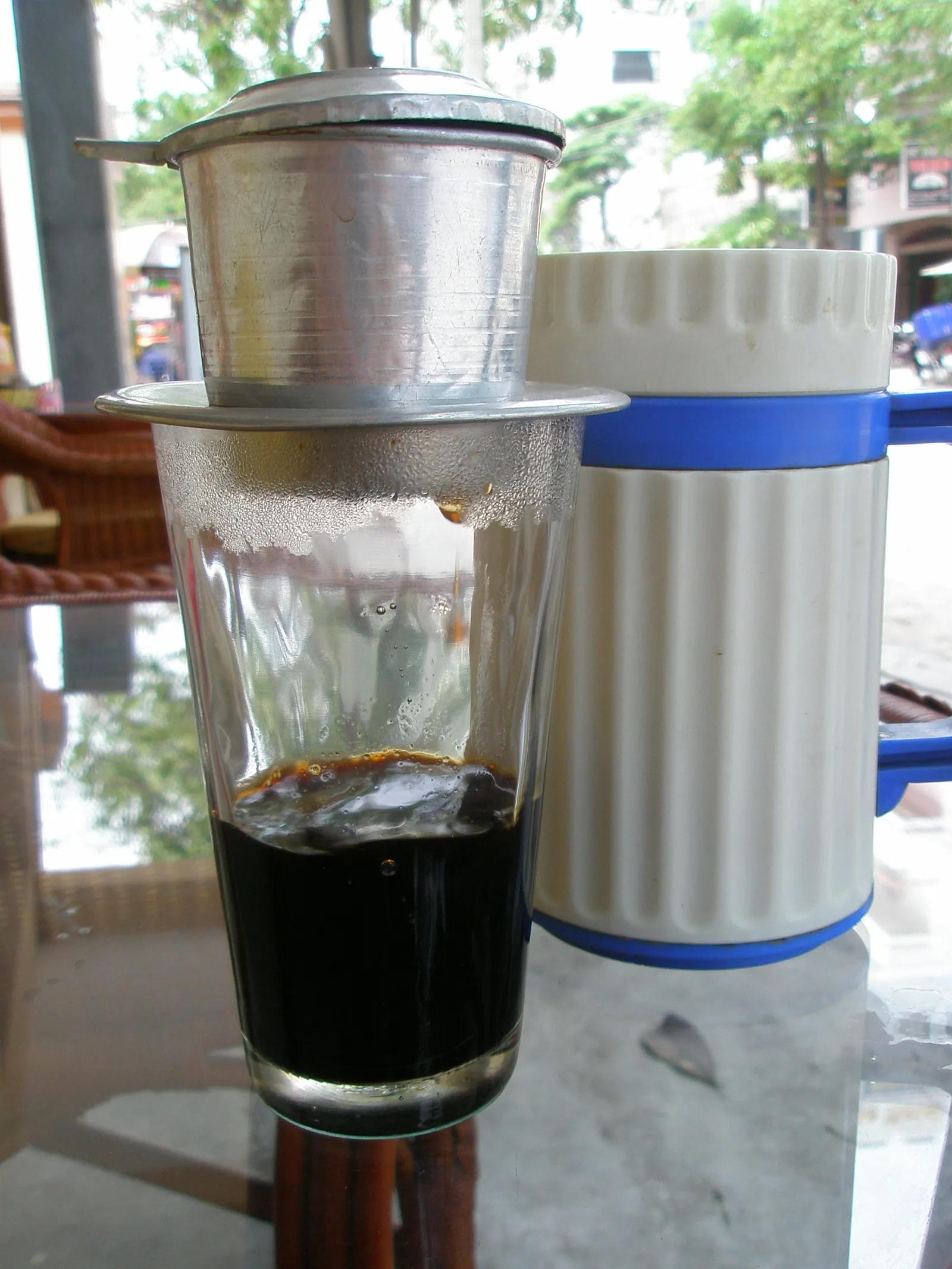
Coffee in Nha Trang is a morning habit before it is a drink: a phin filter on a plastic stool, before work, for 15,000 to 25,000 VND at a pavement stall in 2026. The chains and the garden cafes charge more and open later. This is how to order, what each tier costs, and the four cafes in my rotation.
Yes on the beach road and the four or five streets behind it, no almost everywhere else. The province took more than 18 million visitors in the first eight months of 2026, but the tourist city is about a kilometre deep, and the markets, the noodle streets and the early mornings two streets inland belong to residents. Use it as a base.
A cafe, a beach hour and a gym gave me a week here before I knew anyone, and the people came out of the routine. The foreign communities are large and mostly passing through: South Korea sent 616,000 visitors in the first quarter of 2026 and Russia nearly 620,000 in the first half, but nobody has published a count of the residents.