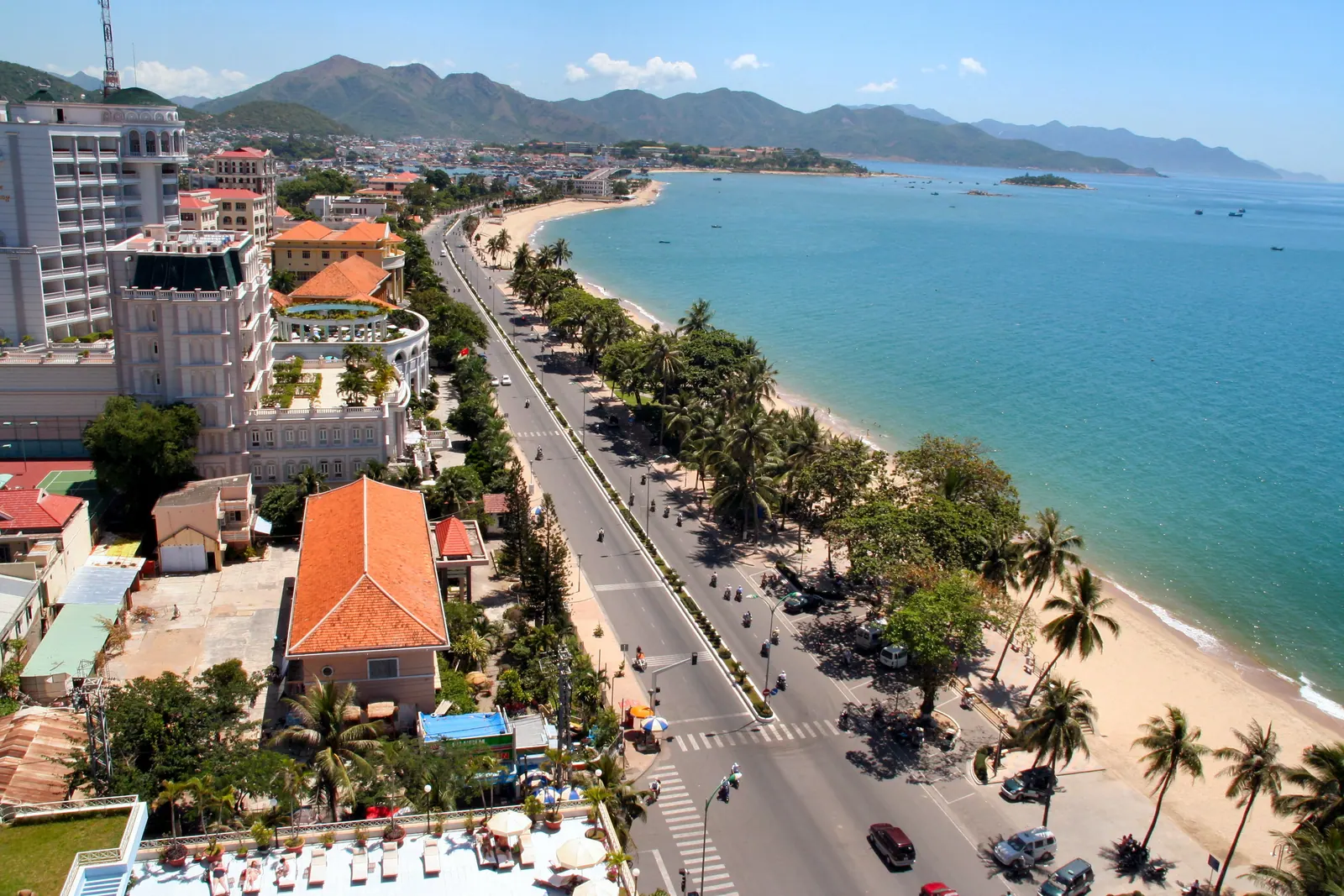
Yes on the beach road and the four or five streets behind it. No almost everywhere else. Nha Trang’s tourist city is about a kilometre deep, from the sand to roughly Ngô Gia Tự, and the rest of the city, which is most of it, is a working provincial town of markets, noodle shops and motorbike repair yards that does not notice the visitors at all.
That is my answer after two years of living a short ride from the beach. The numbers below say how big the tourism is; the streets and the hours say where it is; and the last section is the argument for coming anyway, which is that the city is the best base in the province for everything that is not the city.
How big the numbers are
The province counts visitors, not the city, and since 1 July 2025 the province includes the former Ninh Thuận, so the later rows cover more ground than the first.
| Period | Visitors | International | Revenue |
|---|
| 2024 | More than 10.8 million overnight, up 49% | 4.8 million, almost double 2023 | 53.1 trillion VND |
| 2025 | 16.4 million, up 14.4% | 5.5 million, up 13.4% | About 66.7 trillion VND |
| January to June 2026 | About 11.9 million, up 41.6% | More than 4.6 million, up 66.1% | 42.502 trillion VND |
| January to August 2026 | More than 18 million | 6.3 million, up 67.9% | 60.893 trillion VND |
The 2024 row counts overnight stays and the rows below it count all visitors, so the percentages compare each year with its own basis and not with the row above. The August figure had already met the province’s full-year international target of 6.3 million. At the end of 2025 there were 1,441 registered places to stay with more than 70,500 rooms, of which 107 three-to-five-star hotels held 28,296 rooms, about 40 percent. Average occupancy in the first half of 2026 was near 60 percent, which is the number I point to when someone says the city is full. It is full on the beach road on a Saturday in April. It is not full.
Who comes, and where they go
South Korea is the largest market, with 616,000 visitors in the first quarter of 2026. Russia became the second, with 250,000 in that quarter, up more than 454 percent, and nearly 620,000 in the first half of the year after direct flights resumed in March 2025. China was third with 215,000. Before the pandemic Russia dominated: 442,982 Russians came to Khánh Hòa in 2018, 7 percent of the province’s 6.2 million visitors that year.
These groups go to specific places. The Russian-speaking quarter, which residents call phố Nga or phố Tây, is the western blocks behind the beach along Hùng Vương, Nguyễn Thiện Thuật, Biệt Thự and Trần Quang Khải, with menus and prices in Russian. Korean demand shows in more than twenty Korean restaurants, clustered inland on the same streets and in the newer VCN Phước Hải district rather than on the beach road, and in the gold shops on Ngo Gia Tu where Korean guides send people to change won. Cruise ships add a third pattern: 26 international calls were projected for 2025, and each one sends a wave of tour buses to Po Nagar and Dam Market for a few hours.
No published estimate of the resident foreign population exists that I could find. The Thanh Niên reporting describes a mix of short stays, repeat visitors and people who winter here and go home in summer, which matches what I see on my street.
Which streets are which
A resident’s map of the city has three zones, and they do not overlap much.
| Zone | Streets | Who is on them |
|---|
| The beach road | Trần Phú and the sand | Visitors, sunbed renters, tour buses |
| The western quarter | Hùng Vương, Nguyễn Thiện Thuật, Biệt Thự, Trần Quang Khải | Visitors and the businesses that serve them, in Russian and Korean |
| The rest | Ngô Gia Tự and Xóm Mới market, Đường 2 Tháng 4 and Vĩnh Hải, everything west of the railway | Residents |
The food follows the map. The beach road is the tourist-facing strip; the food locals queue for is inland and north, around Ngo Gia Tu and Xom Moi market for noodle soups and along the embankment north of the Cái river for cheap seafood. Guides consistently warn against asking a taxi or cyclo driver to recommend a seafood restaurant, because many take a commission from the places they deliver you to. Dam Market is the market visitors are sent to; Xom Moi, with more than 1,000 traders, and Vinh Hai, with over 940 stalls, are the ones residents use, and nobody has ever tried to sell me a fridge magnet in either.
Which hours are which
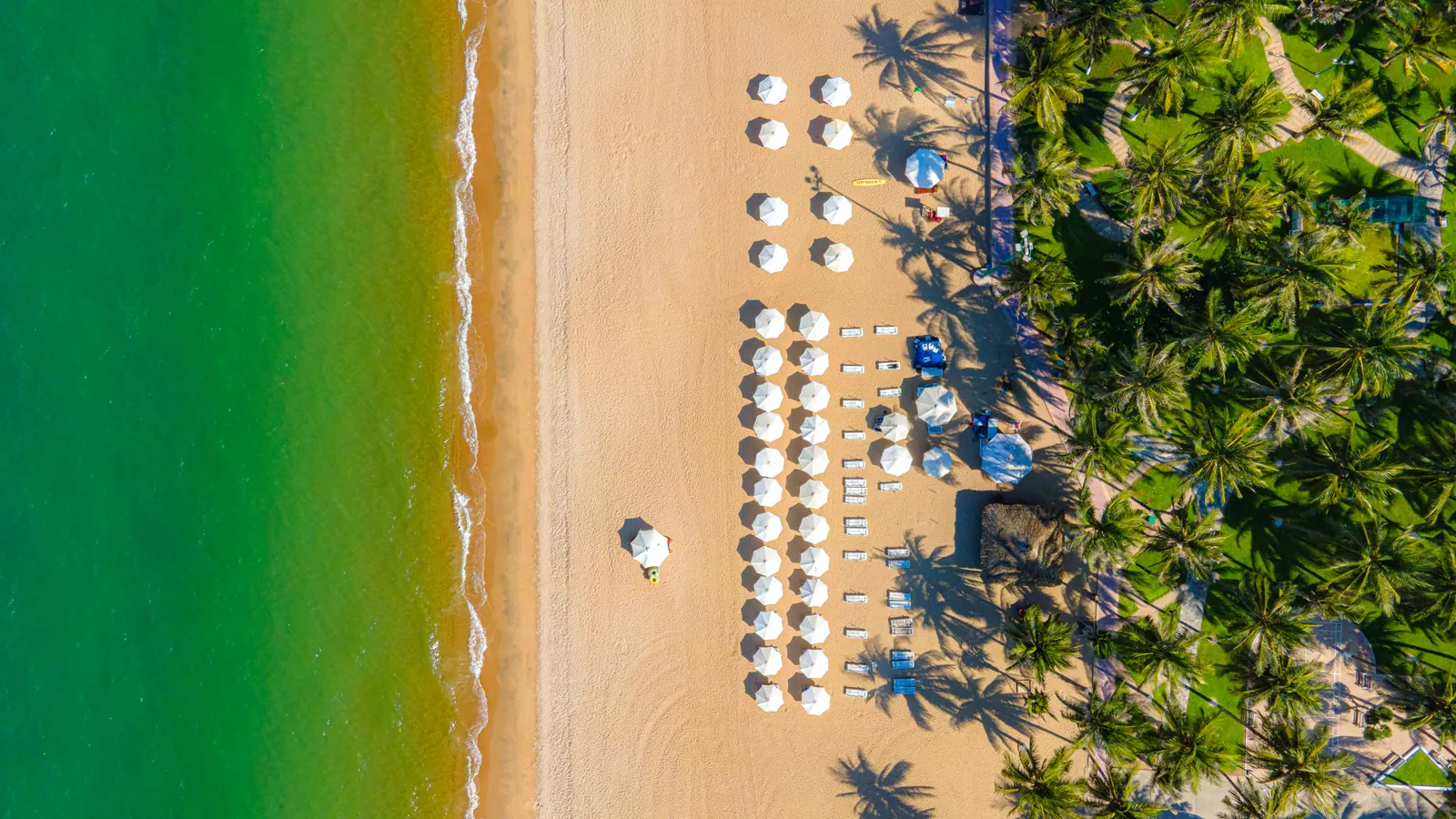
The beach belongs to residents from about 05:30 to 08:00, when the exercise groups and the regular swimmers are in the water and the sand is otherwise empty; I have written that hour up in Nha Trang at five in the morning. By nine the sunbeds are out and it is a resort beach until dusk. In the evening the tourism concentrates again: the municipal night market north of the Tran Phu bridge runs 17:30 to midnight, the older stall strip near 46 Tran Phu runs roughly 18:00 to 23:00, and a third opened at 96 Tran Phu in early 2026. Three night markets on one road is a fair measure of where the visitors are after dark. Two streets inland it is a Tuesday.
Which months are which
February to May is the beach season, with under 70 mm of rain a month, and it is when the beach road is at its most crowded. October and November are the wettest months, the ones when hotel rates fall and the sunshine hours are lowest; the trade-off is the typhoon window, which runs to about 10 December. If the question is really about crowds, the answer is that they are concentrated in one kilometre of one road and they peak in the dry months. A wet Wednesday in November on Tran Phu is quiet enough to hear the sea.
So is it overrated?
The beach road is. It is a generic resort strip that could be several places in Asia, and the thing most people come for on the water, the four-island boat trip, has had its best stop closed for years: swimming and diving at Hòn Mun were suspended in June 2022 to let the coral recover and were still suspended in the strict protection zone as of May 2026. The seafront is improving. The Ana Mandara resort that fenced off the sand was demolished in 2024 and 2025, and the province is turning the 16.4 km seafront into a chain of public parks. But nobody should fly across the world for Tran Phu.
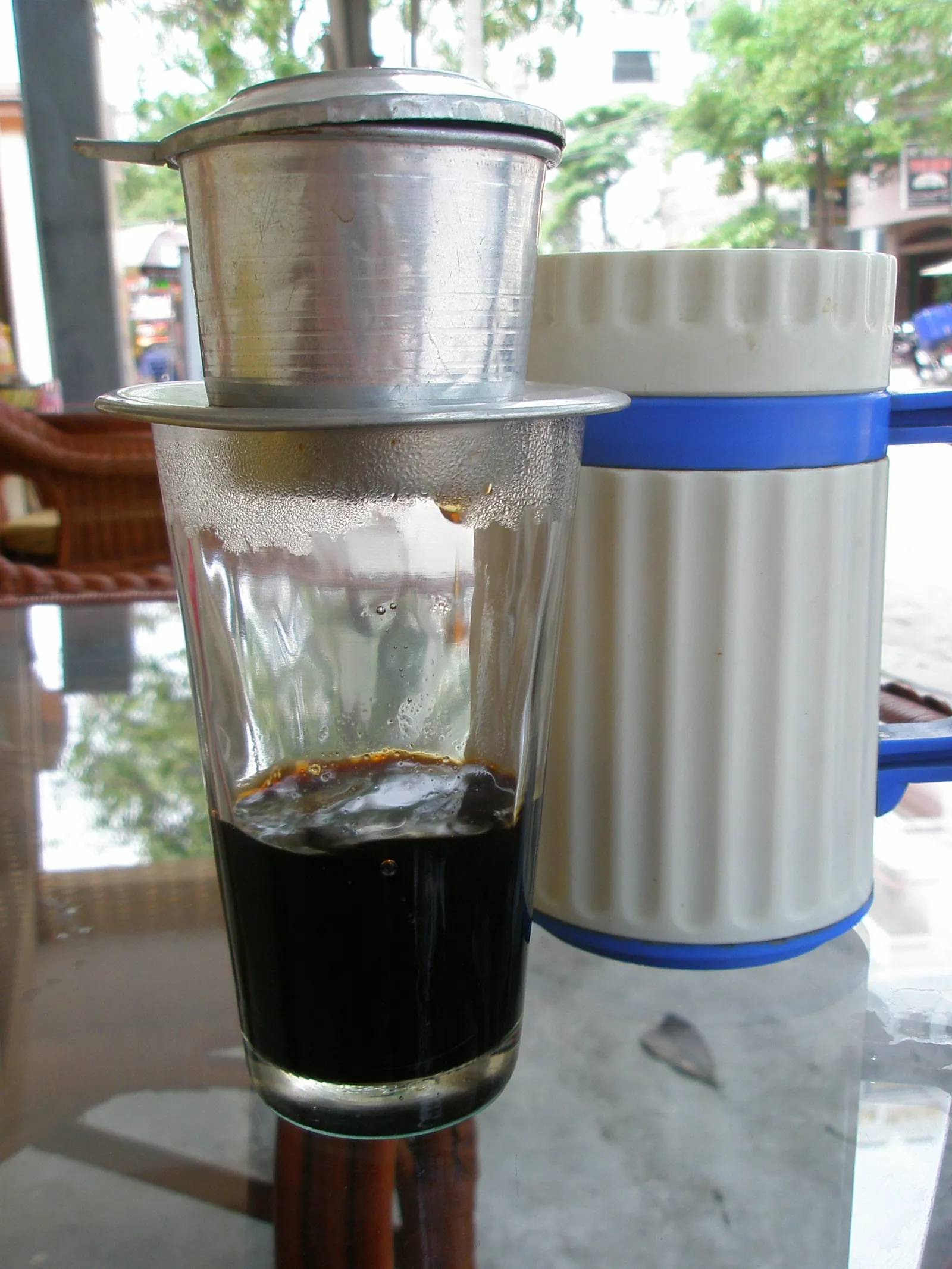
The city behind it is not overrated, because nobody rates it. The markets, the noodle streets, the early mornings and the coffee habit are as good as any provincial town in Vietnam and better than most, and they are two streets from the hotels. The Nha Trang Guide covers the hotels and the logistics; what I try to do here is the part the hotels do not sell.
The case for the city as a base
The real argument for Nha Trang is the province around it, and the city is the only place in the province with an airport 30 to 35 km away, a railway station, a bus station in each direction and a hotel at every price. From the centre it is 10 km west to the Diên Khánh citadel, 46.3 km north to Dốc Lết beach, and 134 to 140 km over the Khánh Lê pass to Da Lat. I have built a seven-day Khanh Hoa motorbike loop out of the city and a half-day Dien Khanh countryside loop for people with less time, and both leave Tran Phu within ten minutes of starting.
Living here is a different question, and I answer it in making a life in Nha Trang. The short version is that the tourist city is a place I ride through, not a place I am in.
Field note: the sunbed renters on the central sand fold their chairs at dusk, and by half past five the next morning the same sand is full of people in tracksuits. In two years I have never seen the two crowds meet.
What I’d do
- Stay one street back from Tran Phu rather than on it: the western quarter for convenience, or further inland for quiet.
- Use the beach before 08:00 and after 16:00, and use the road in between to get somewhere else.
- Eat where the residents eat: Ngo Gia Tu around Xom Moi market in the morning, the embankment north of the river at night. Never let a driver choose the restaurant.
- Give the boat trip one day if you must, knowing the Hon Mun stop is a look rather than a swim.
- Spend the other days out of the city: Dien Khanh in an afternoon, Doc Let on a weekday, the pass to Da Lat on a dry morning.
- Come in February to May for the sea or in October and November for the rates, and know which one you chose.