At five in the morning Nha Trang is the town its residents use: exercise groups in the sea by half past five, fishing boats landing under the Xom Bong bridge below the Po Nagar towers, Dam and Xom Moi markets trading from five, and the first coffee on the pavement. By nine it has handed itself back to the hotels. Set one alarm.
At five in the morning Nha Trang is a different town, and it is the town the people who live here actually use. The exercise groups are on the sand and in the water by half past five, the fishing boats are coming up the Cái river under the Xóm Bóng bridge, Đầm and Xóm Mới markets have been trading since five, and the first phin filters are dripping on the pavement. By nine the city has handed itself back to the hotels.
If you set one alarm on a Nha Trang holiday, set it for this. It costs nothing, it is the coolest hour of the day, and it is the only time the city beach is empty of everyone but the swimmers.
The beach before the sun
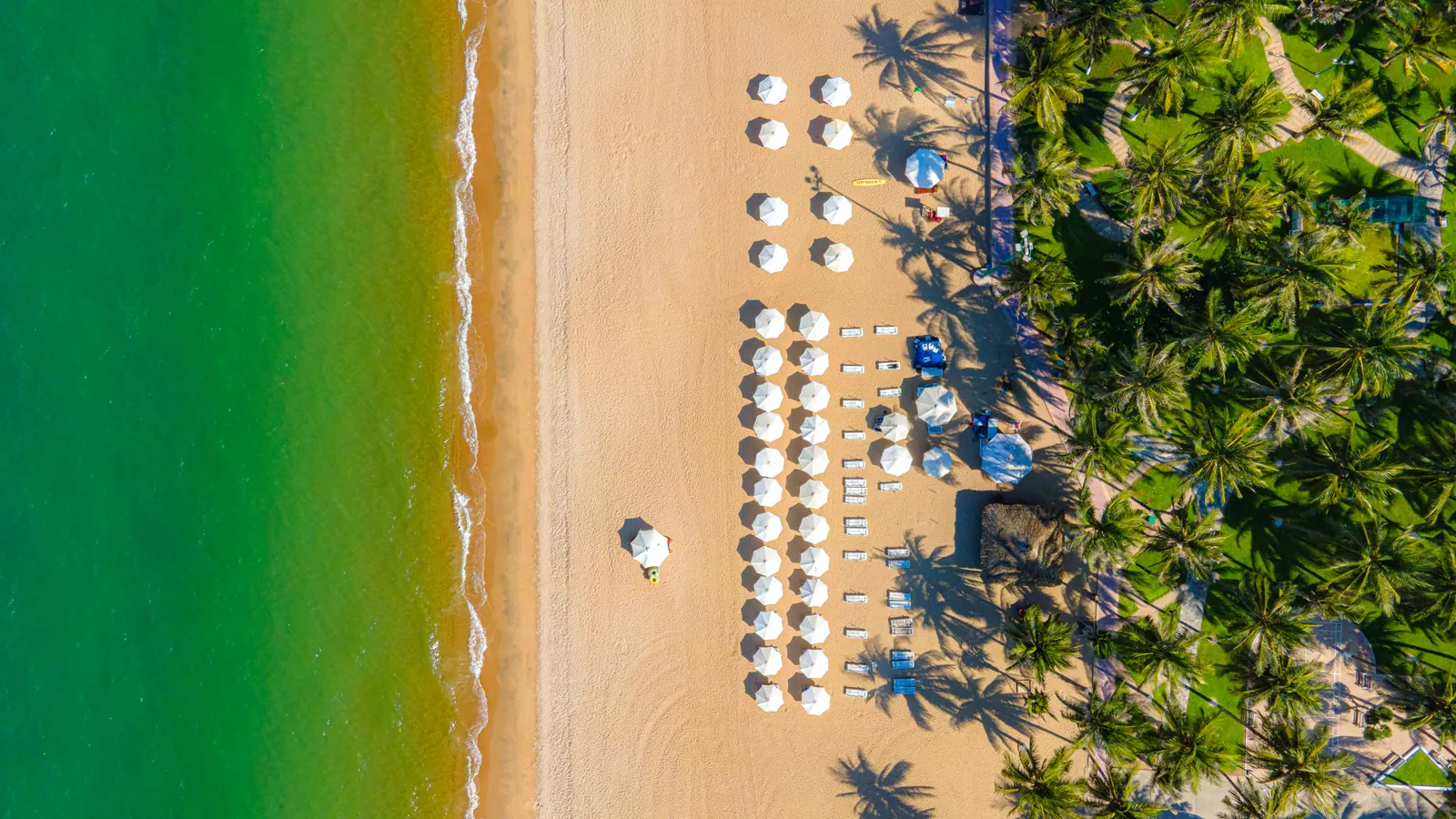
I live a short ride from the sand, and most mornings I am on it while the sky is still grey. The regulars are already there. There are groups doing stretches in rows, a man with a loudhailer counting for them, women walking the promenade in pairs at a pace I cannot match, and the swimmers, who go in at the same spot every day and swim the same slow line parallel to the shore. The published window for this is 05:30 to 08:00, and in two years I have not seen a morning, wet or dry, when the beach was empty at six.
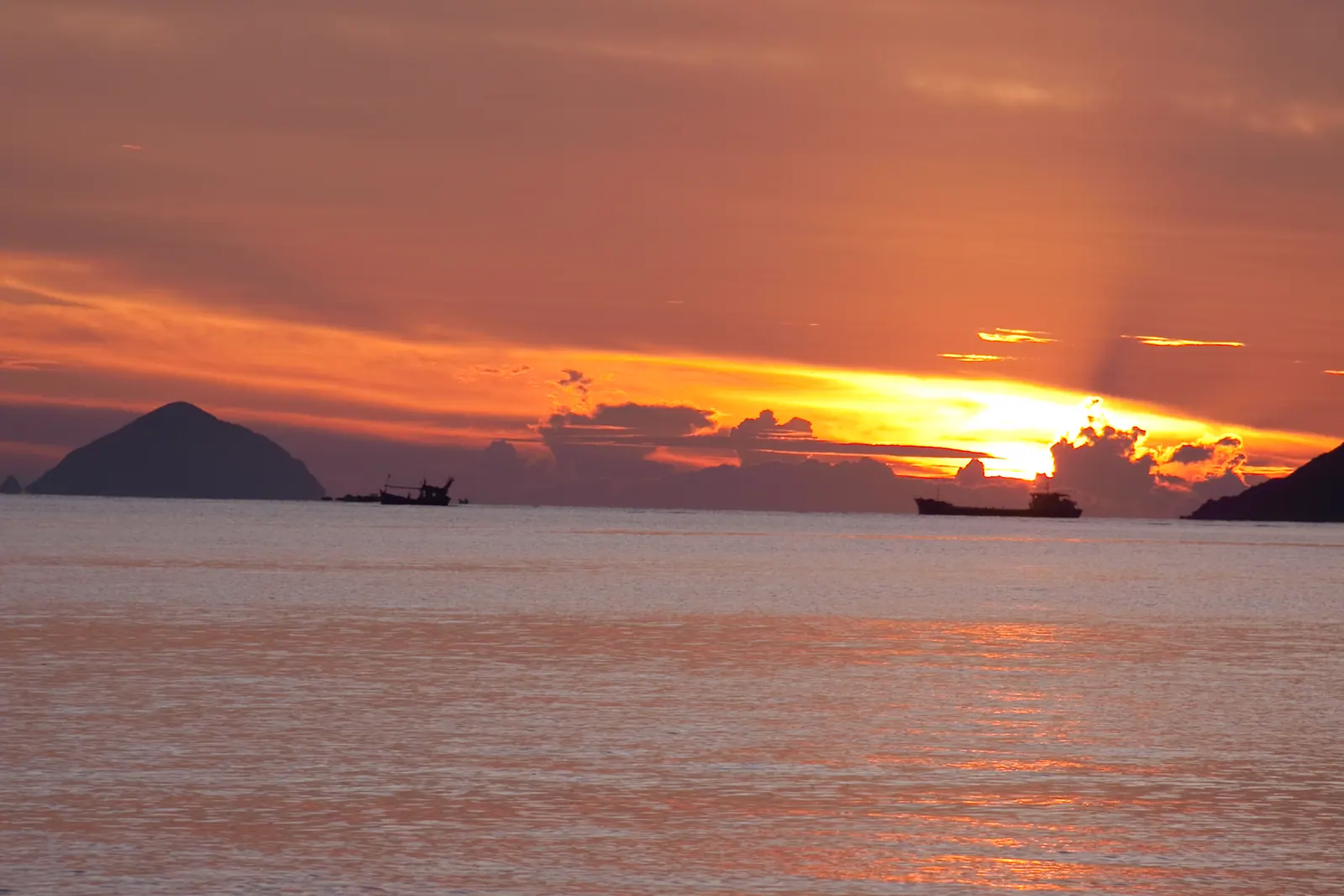
The sun comes up over the bay with Hòn Tre on the horizon, and for a few minutes the water goes copper. Then it is simply daylight and hot. The 32 foot-washing stations along the park strip are the sign that the beach is built for this crowd, not for the sunbed crowd: they are for people who swim, rinse and go to work. I go in only when the flag is green and a rescue tower is in sight, which I explain in where I actually swim in Nha Trang. Lifeguard cover is daytime only, so at first light you are on your own judgement, and the regulars are the best guide to what the sea is doing.
The boats at Xom Bong
Two kilometres north of the centre the Cai river meets the sea under two bridges. The newer, wider Trần Phú bridge carries the traffic; the old Xóm Bóng bridge beside it was for a long time the only crossing between the two halves of the city, and it was so narrow and jammed that the People’s Committee decided in 1999 to build the new one alongside. The old bridge is now mostly a viewpoint, and the view is the reason to be up: the blue and red boats of the Xóm Bóng fishing community moored on the river, the Po Nagar towers on the hill directly above them, and the mountains behind catching the first light.
The boats land here every morning. Stand on the old bridge, not the new one; it has the angle on the towers. By mid-morning the bridge carries real traffic and is unpleasant to be on, which is another argument for the hour. The lanes of the fishing village below are residential, and the people unloading fish are working, so ask before you photograph anyone up close. On the north bank the embankment restaurants that sell cheap seafood at night are shuttered at this hour, and the fish going past you on the backs of motorbikes is on its way to Vĩnh Hải market.
The markets open before the shops
Dam Market, the big one, opens at 05:00 and runs to 18:30, and it is at its busiest and freshest first thing. The souvenir stalls do not matter at this hour; the produce and the fish do, and the noodle stalls inside are serving breakfast to the traders. Xóm Mới market, a little way south on Ngô Gia Tự, keeps about the same hours and is busiest from 05:00 to 08:00, then again in the late afternoon. It is the market residents actually shop at, and at six it is all residents.
Vinh Hai, the market of the north of the city, has no reliably published opening hours that I could find, but its live seafood arrives with the morning catch, and that is the market the Xom Bong boats feed. Which of the three to use, and for what, is a post of its own: the Nha Trang markets I actually use.
The first coffee
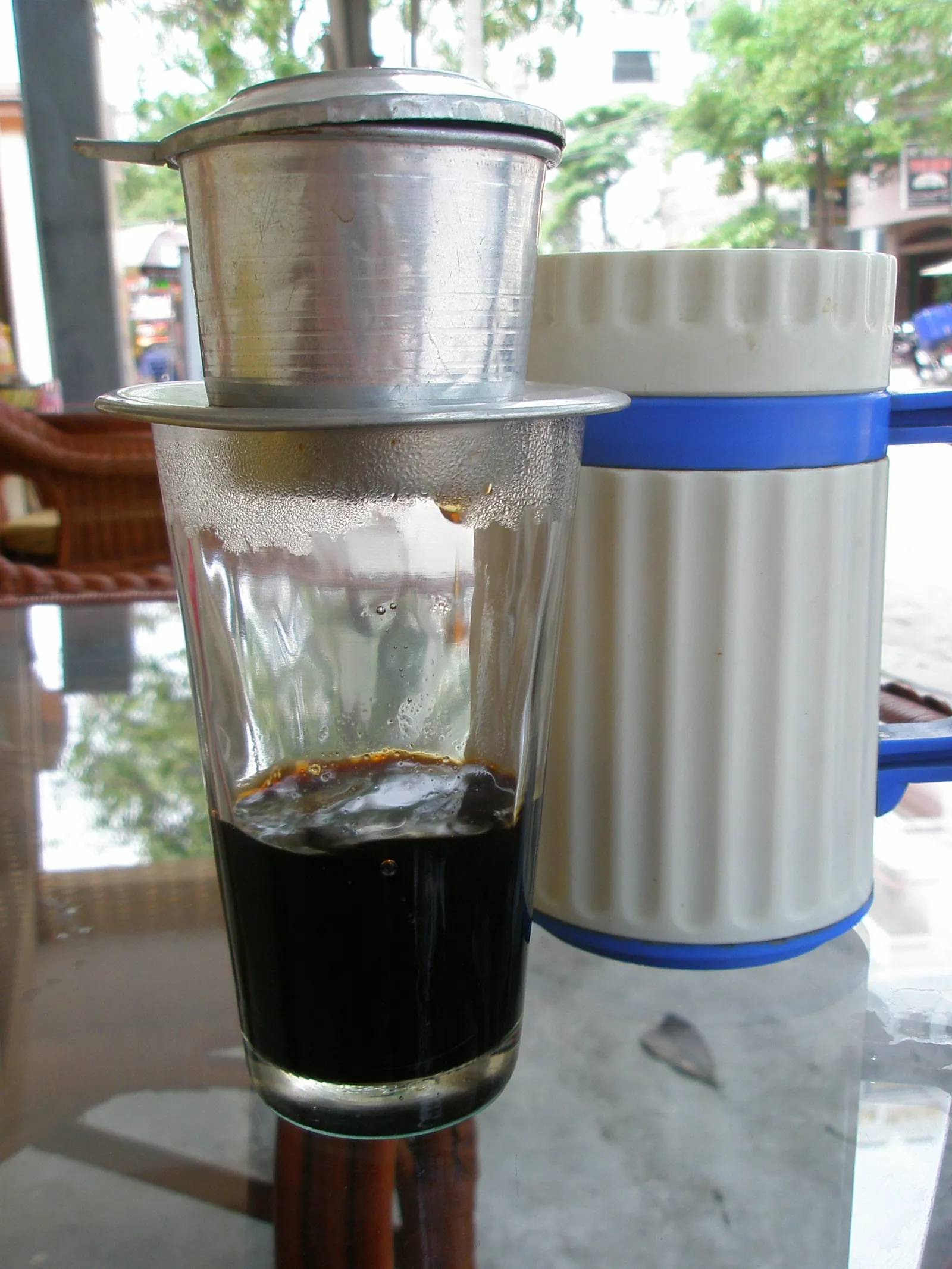
The pavement stalls are pouring before any cafe has opened its door. The rhythm is fixed: beach or market first, then a stool, then a cà phê sữa đá and the free glass of iced tea, then work. Of the proper cafes, Iced Coffee at 146 Hùng Vương is the earliest I know, opening at 06:30; the rest open at seven or later. I have written up the whole habit, the ordering and the four cafes I rotate between in how Nha Trang coffee mornings work. At five the only thing to know is that the stall with the older men on the stools is the right one.
What the hour gives a visitor
Three things that are not available later in the day.
The first is the city beach without the sunbeds, which is the beach as it was built to be used. The second is the light at Xom Bong, which is gone by seven. The third is a run of places that open early and are empty when they do: the Institute of Oceanography opens at 06:00, and that is genuine; Hòn Chồng opens its gate at 07:00 and is quiet for the first hour, with the boulders giving the sunrise a foreground the main beach lacks; and Po Nagar, 30,000 VND an adult in 2026, is best before 08:30, when the tour buses from the cruise terminal start arriving. String those together and you have seen more of Nha Trang by breakfast than most people see in a day.
The cost is one early night. The reward is a city that is not performing for anyone.
Field note: the loudhailer man on the central sand counts to eight in Vietnamese, over and over, for the stretching rows. After two years I can count to eight faster than I can do anything else in the language.
What I’d do
Alarm at five. Walk or ride to the central park strip of the beach and be on the sand by 05:30, when the regulars go in. Swim only under a green flag with a tower in sight.
Watch the sun come up over Hon Tre, rinse at a foot-washing station, and ride north over the Tran Phu bridge.
Stand on the old Xom Bong bridge for the boats and the towers while the light is still low.
Drop down to Dam Market before seven for the fish hall and a bowl of something from the stalls inside.
Coffee on a stool on the way back, or Iced Coffee at 146 Hùng Vương from 06:30 if you want a table.
If you still have appetite for it, Po Nagar before 08:30, then back to the hotel for the breakfast you are now too late for.
Questions I get asked
What time do locals swim at Nha Trang beach?
From about 05:30 to 08:00. The exercise groups and the regular swimmers use the central stretch of the city beach in that window, in every season, and the sand is otherwise empty. Lifeguard cover is daytime only, so swim in front of a rescue tower.
Where can you see the fishing boats come in at Nha Trang?
On the Xom Bong bridge over the mouth of the Cai river, directly below the Po Nagar towers, about 2 km north of the centre. The Xom Bong fleet lands there every morning; go early, because the bridge carries real traffic by mid-morning.
What time does Dam Market open?
05:00, and it runs to 18:30 daily. Xom Moi market on Ngo Gia Tu keeps roughly the same hours and is busiest from 05:00 to 08:00. Vinh Hai market in the north of the city has no reliably published hours, but the boat catch arrives in the morning.
Is sunrise at Nha Trang beach worth getting up for?
Yes, and it is free. The sun comes up over the bay with Hon Tre island on the horizon. Hon Chong, 4 km north, is better still because the boulders give the picture a foreground, but its gate does not open until 07:00.
Sources
Read on 15 September 2026. Prices, hours and rules change; these are the pages the figures came from.
I swim on the central city beach in front of a rescue tower, early in the morning, from February to August, and only under a green flag. I do not swim at the north end near Hon Chong, at the harbour end by Cau Da, or from November to January, when the winter swell runs and the rip currents form.
Coffee in Nha Trang is a morning habit before it is a drink: a phin filter on a plastic stool, before work, for 15,000 to 25,000 VND at a pavement stall in 2026. The chains and the garden cafes charge more and open later. This is how to order, what each tier costs, and the four cafes in my rotation.
Since 1 July 2025 Ninh Thuan is the south of Khanh Hoa, there are no districts or provincial cities, and 194 communes, wards and towns became 65. Streets kept their names and numbers, plates 79 and 85 are both valid, and old addresses still work. This is the page that keeps the dates and the new ward names straight.
A cafe, a beach hour and a gym gave me a week here before I knew anyone, and the people came out of the routine. The foreign communities are large and mostly passing through: South Korea sent 616,000 visitors in the first quarter of 2026 and Russia nearly 620,000 in the first half, but nobody has published a count of the residents.