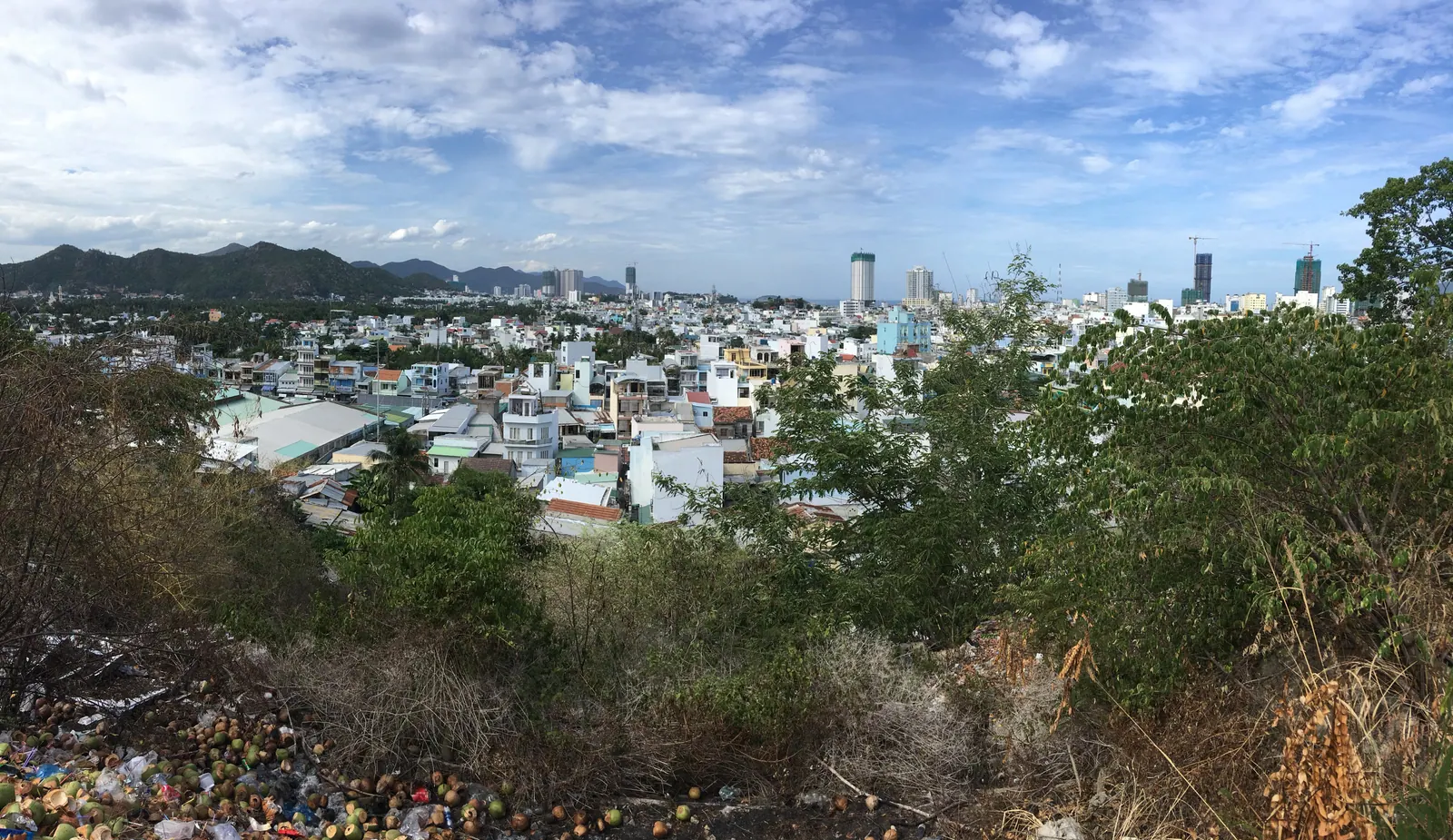
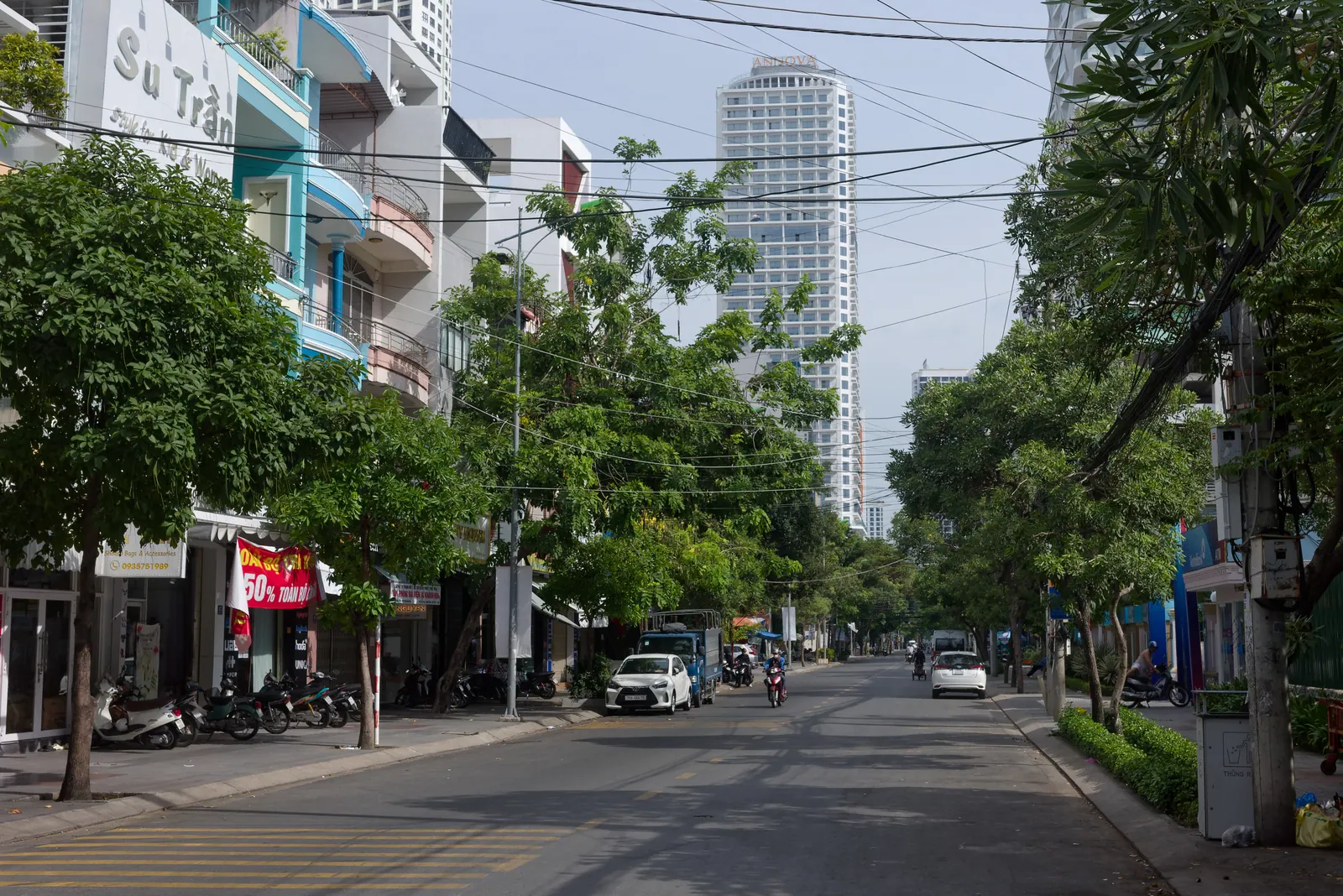
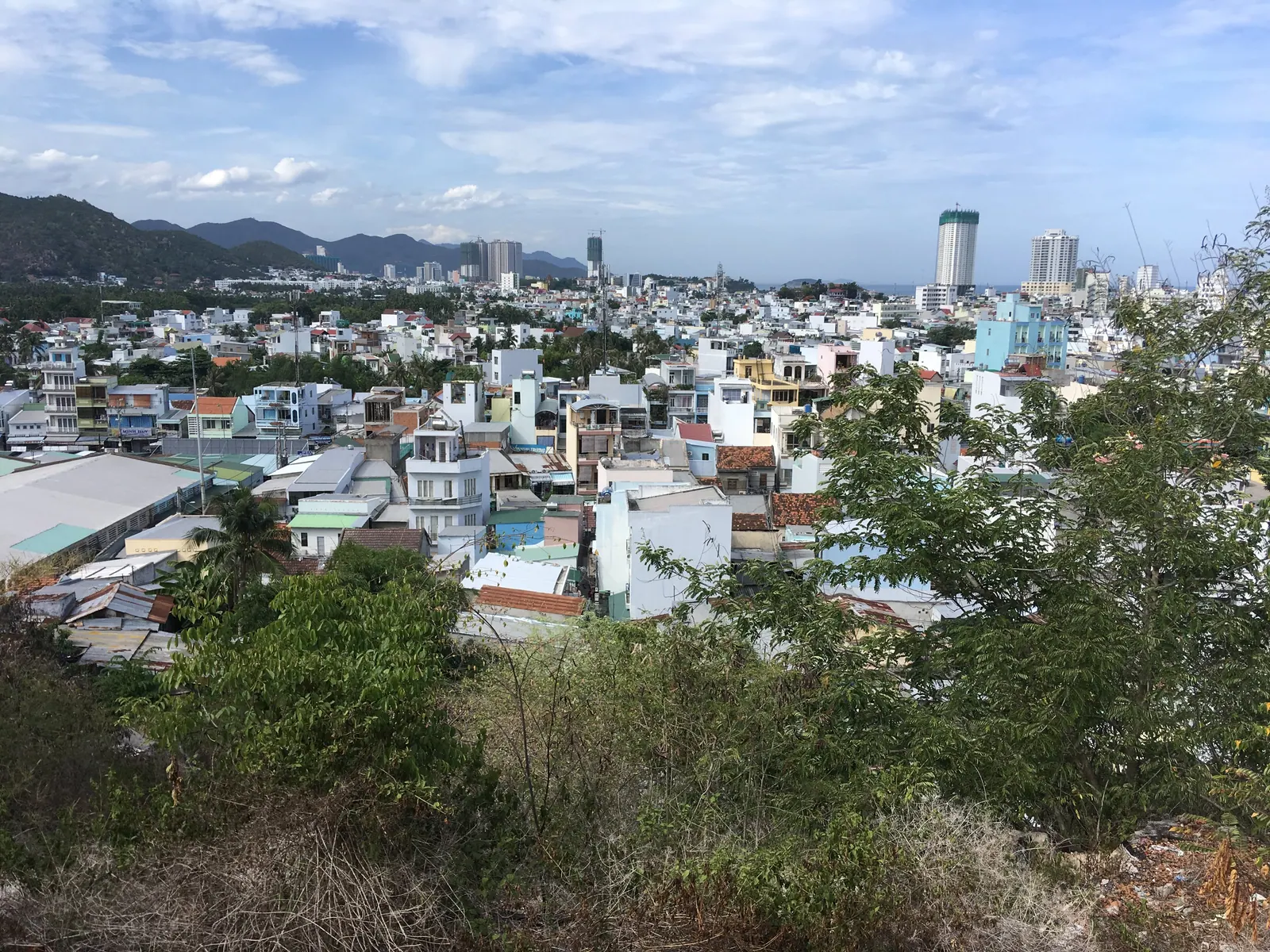
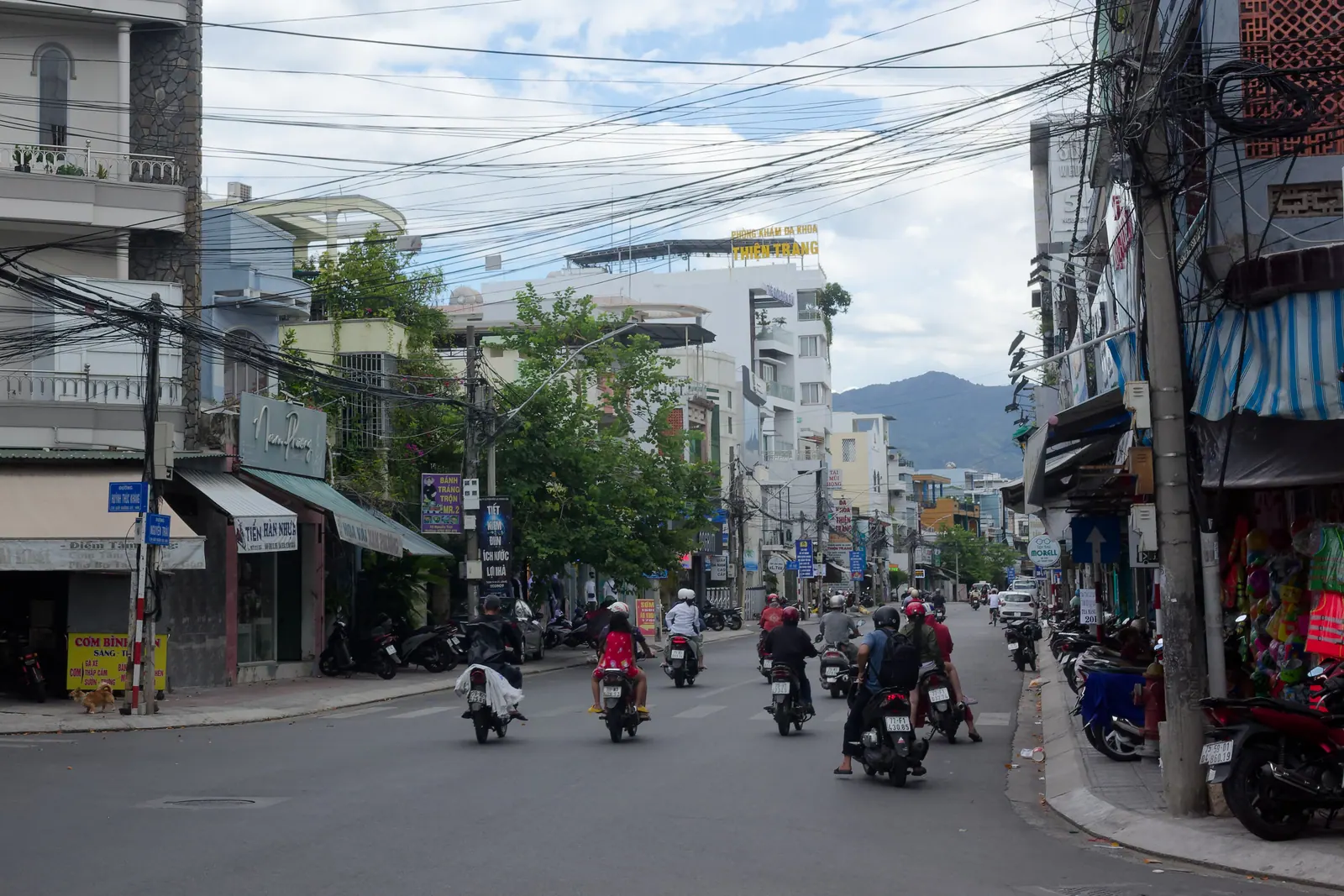
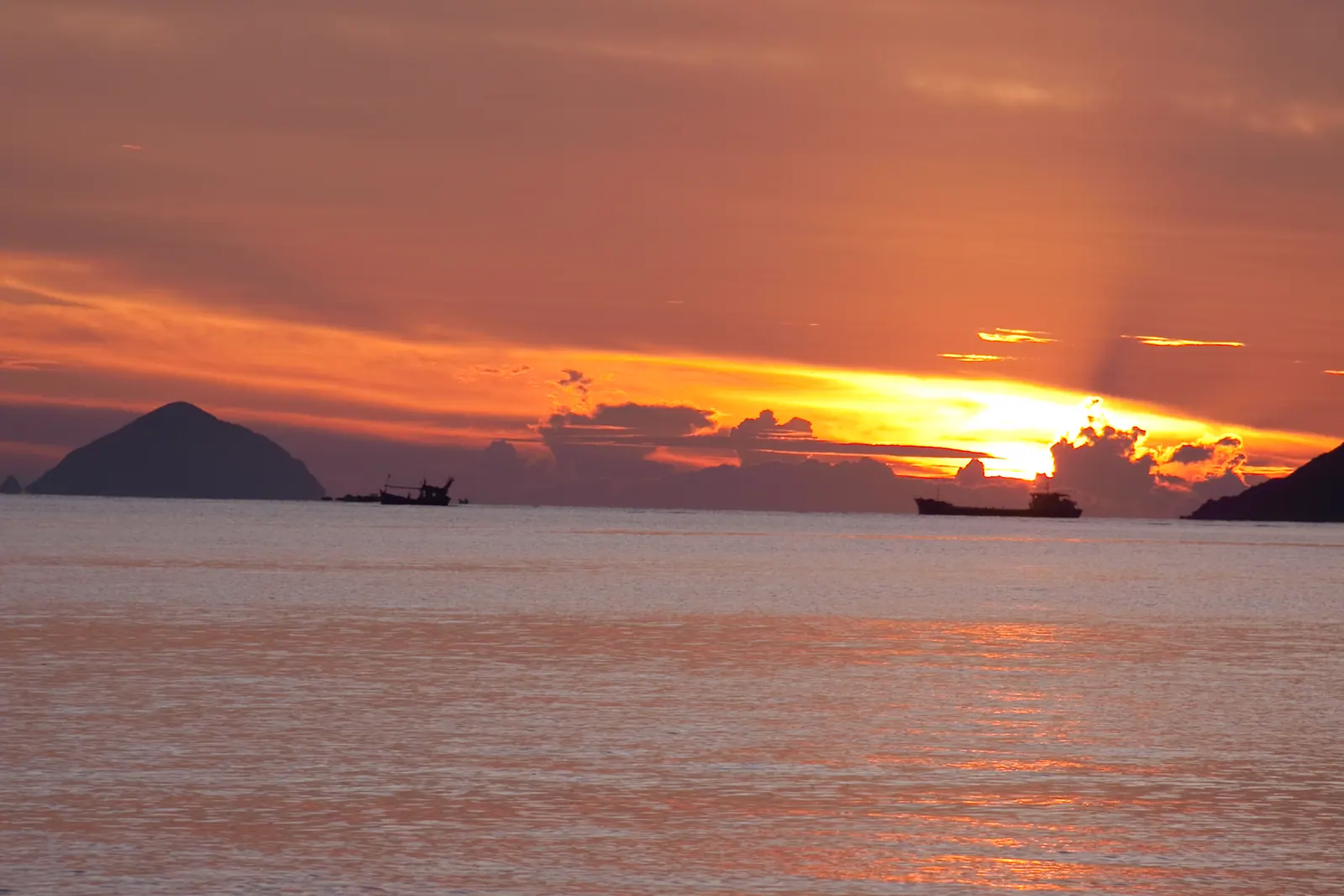
Most of what I got wrong in my first months here comes down to five mistakes: I trusted the brochure on the weather, I rented on the wrong side of the beach road, I treated the motorbike licence as a formality, I let the visa dates creep up on me, and I assumed Nha Trang was the province. It is not, and it was not even before the 2025 merger. Two years on, this is the list I would hand to anyone landing at Cam Ranh with a suitcase and a lease in mind.
Every number below comes from a published page, listed at the foot of the post. The rest is what I saw from a motorbike seat.
1. October and November are rain months, not “the odd shower”
I arrived in September 2024, which is the start of the wet season, and spent my first two months wondering whether I had moved to the wrong coast. The Nha Trang station normals explain it: 302 mm of rain in October and 332 mm in November, against 1,280 mm for the whole year. Those two months alone carry about half the annual total. February, by contrast, averages 16 mm.
The typhoon window on this coast runs from early September to about 10 December. None of this means the city shuts; it means the sea turns brown, the beach empties and the commute gets wet. I have made my peace with it in the month-by-month post, and October and November get a post of their own.
2. The beach road is a barrier, not a doorstep
Trần Phú, the seafront boulevard, is six lanes wide and always sits between the buildings and the sand. Living “on the beach” here means living across a road that takes a minute to cross at the lights, which is fine, but it is not the picture I had.
The beach itself is wide, public and free, and the Tran Phu stretch is the only city beach with rescue stations staffed from morning to evening. In winter the sea runs high and rip currents form; the rescue team says so every year, and a red flag on the sand means no swimming. Two tourists were swept off the beach photographing waves on 21 December 2024, and one died. Where I swim, and where I do not, is its own post.
3. Rent inland, a street or two back
My first flat was in a tower near the seafront; my second is on a quieter street inland, and I should have started there. Numbeo’s crowd-sourced index for Nha Trang, updated 6 August 2026 from 250 entries, puts a one-bedroom flat at about 10.55 million VND a month in the centre and about 7.16 million outside it. The gap is the price of the sea view and the bar noise.
I live between those two figures and will not be more precise than that. Which streets are which, and who lives where, is in where to live in Nha Trang; the published price bands for everything else are in what a month costs.
Vietnam joined the 1968 Vienna Convention on Road Traffic on 20 August 2014, so it recognises International Driving Permits issued under that convention, carried with the home licence, and nothing else. The United States, Australia, Japan, China, Canada, New Zealand and India are not parties to it, so their permits do not count here. A Korean permit is the exception, usable for a year under a bilateral agreement in force since 23 July 2023.
Since Decree 168 took effect on 1 January 2025, riding a bike over 125 cc with no valid licence is fined 6 to 8 million VND, and enforcement against foreigners tightened in 2026: between mid-May and the end of June, 720 foreigners were checked in the province and 210 fined. The full picture is in a year on a motorbike in Nha Trang and the arithmetic in renting or buying a bike.
5. The visa has a rhythm, and the calendar keeps it
The e-visa has been open to every nationality since 15 August 2023: up to 90 days, USD 25 single entry or USD 50 multiple, applied for only at evisa.gov.vn or thithucdientu.gov.vn. Citizens of 24 countries enter visa-free for 45 days under the March 2025 and August 2025 resolutions, and a visa-exempt stay cannot be extended.
What nobody told me is that 90 days is a rhythm, not a one-off. You end up planning the year around exit dates, and Cam Ranh airport becomes a place you know well. How that works in practice, with every rule dated, is in staying past 90 days. For the hotels and the hard practical facts about the city, the Nha Trang Guide is the sister site I send people to.
6. The real markets are not on Tran Phu
For my first month I shopped at the supermarket on the beach strip and thought the city was expensive. Then I found Xóm Mới market at 49 Ngô Gia Tự, open roughly 05:00 to 18:30 and busiest before 08:00 and again from 15:00 to 17:00, and Vĩnh Hải market on 2 Tháng 4 street in the north of the city, where the boat catch arrives in the morning. Chợ Đầm, the big central market, runs 05:00 to 18:30.
Prices at all three are local-facing and noticeably below the beachfront. Which one I use for what is in the markets I actually use.
7. Addresses changed on 1 July 2025 and the signs did not
On 1 July 2025 Nha Trang city was dissolved into four wards. The old central wards of Vạn Thạnh, Lộc Thọ, Vĩnh Nguyên, Tân Tiến and Phước Hòa became a single Nha Trang ward; the rest of the city became Bắc, Tây and Nam Nha Trang. Shop signs, menus, business cards and most map data still carry the old names, and the two systems will coexist for years.
The street number and street name did not change, so that is what I navigate by, and I ignore the ward. The whole reform, including the merger with Ninh Thuận, is in what changed in 2025.
8. The province is far bigger than the beach
Khánh Hòa after the merger covers 8,555.86 km2 by the resolution that created it, with about 490 km of coastline and roughly 200 inshore islands. Hòn Bà, the mountain above the city, is 1,578 m and cool all year. Phan Rang, at the southern end since Ninh Thuan joined on 1 July 2025, gets 838.5 mm of rain a year against Nha Trang’s 1,280 mm and is the driest place in Vietnam.
It took me most of a year to understand that the city is a base, not the destination. The seven-day loop is the version of the province I wish I had ridden in my first month.
9. Not every island is open
On 4 June 2026 the province ordered every tour to Bình Ba and Bình Hưng stopped, and all advertising for them removed, because both islands sit inside the security belt of the Cam Ranh military base. The rule itself dates from a 2015 decision; 2026 was the year it was enforced in earnest. I am not writing a guide to either, and I explain why.
Hòn Mun, the marine reserve off the city, is a different case: swimming and diving in its strict protection zone have been suspended since June 2022 to let the coral recover, and the May 2026 reports said they still were. Tour desks still sell “Hon Mun snorkelling”. The islands you can still visit sorts the open from the closed.
10. Coffee is the social infrastructure
Nobody meets in a bar here in the morning, or in the afternoon; they meet over a glass of cà phê sữa đá, which costs about 25,000 VND at a pavement stall in 2026. I did not have a routine until I had a cafe, and I did not know anyone until I had a routine. The coffee habit and making a life here are the longer versions.
11. The tourist city is a few streets wide
The western blocks behind the beach, along Hùng Vương, Nguyễn Thiện Thuật, Biệt Thự and Trần Quang Khải, are the part of Nha Trang with menus in Russian and Korean and prices to match. Walk three streets further inland and the city is a Vietnamese provincial capital going about its business. Whether that makes it “too touristy” gets an honest answer elsewhere.
12. Ask how the electricity is billed before you sign
EVN’s household tariff, in force since 10 May 2025, is a six-step ladder from 1,984 VND per kWh for the first 50 kWh to 3,460 VND above 400 kWh, plus 8 percent VAT. Rented rooms are often billed at the landlord’s own flat rate instead, which is a private mark-up, not the tariff. My first lease worked that way, and the bill in the hot months was my biggest surprise. The tariff table is in the cost-of-living post.
What I’d do
If I could do the first three months again, in order:
- Land between January and April, when the normals show under 70 mm of rain a month and the sea is warm.
- Take a short let for the first month on the beach side, to learn the city on foot, then move a few streets inland.
- Settle the licence question before renting a bike, not after: a 1968-convention permit, a Korean permit, or a Vietnamese conversion for those who qualify.
- Write the last day of the visa or exemption on the fridge on day one.
- Shop at Xom Moi from the first week.
- Ride out of the city on the first free weekend, north to Ninh Hòa or south to Cam Ranh bay, and keep going every weekend after.