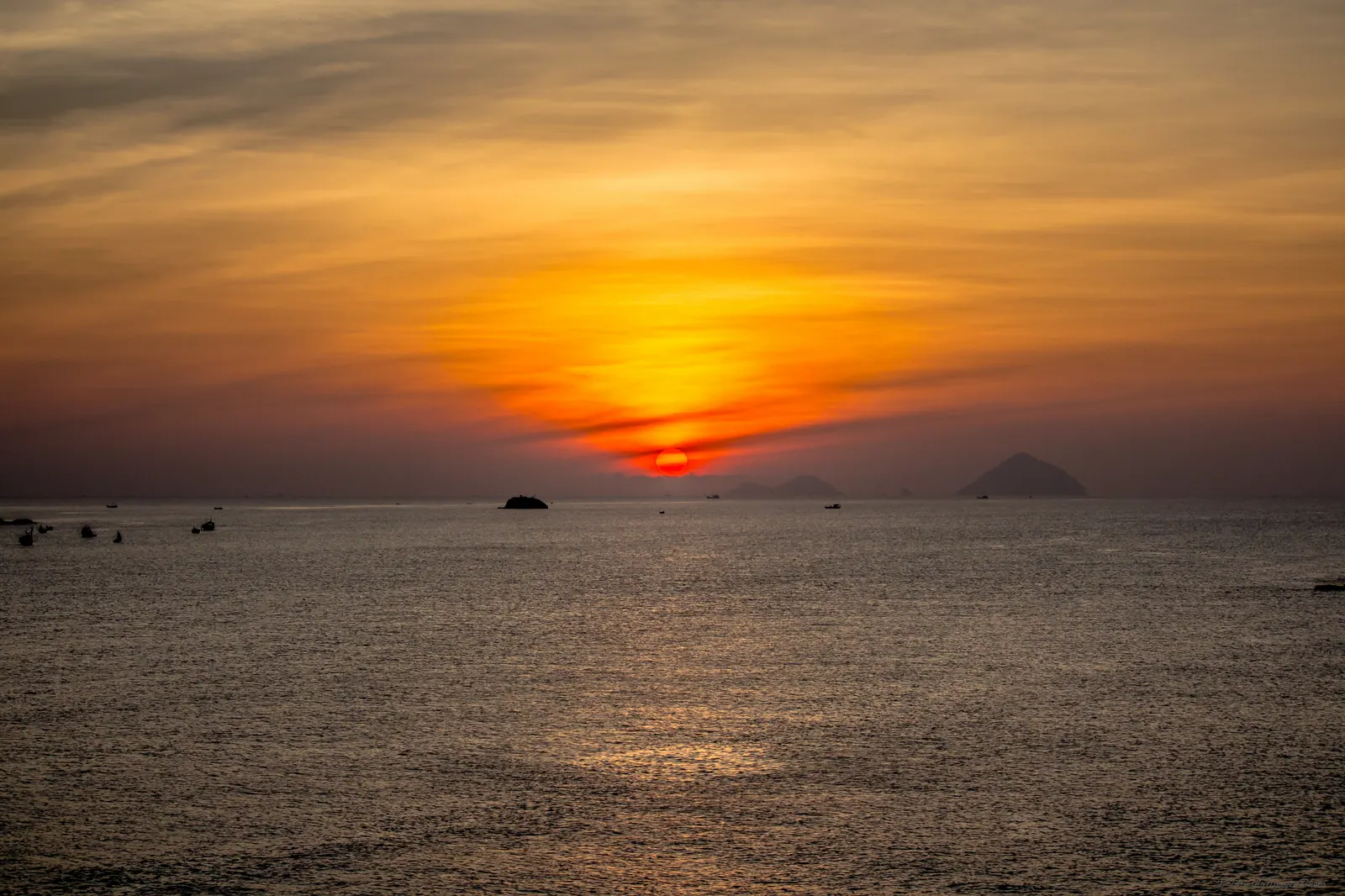
There is no lawful way for a tourist to visit Bình Ba or Bình Hưng in 2026, and there has not been one since 2015. On 4 June 2026 the Khánh Hòa Department of Culture, Sports and Tourism ordered every travel company, tourism business and boat operator in the province to stop organising, advertising, brokering or selling trips to either island. The rule applies to Vietnamese citizens exactly as it applies to foreigners.
So this site will not carry a “how to get to Binh Ba” post, and I would ask you not to go looking for one elsewhere. What follows is what the order actually says, with the document numbers, where the law behind it comes from, what nobody has been able to tell me, and where I go instead when I want an island.
What did the province order in June 2026?
The document is 3689/SVHTTDL-QLDL, dated 4 June 2026, from the provincial Department of Culture, Sports and Tourism. It is addressed to travel companies, tourism service businesses, tourist transport operators and tourism organisations, and the Khanh Hoa Tourism Association was told to pass it to its members.
It tells them to stop organising tours, advertising, brokering or bringing visitors to three places: Binh Ba island, Hòn Chút (the legal name for Binh Hung island) and the Mũi Hời area, all in Nam Cam Ranh commune. It orders every such product removed from promotion, under any form. The People’s Committee of Nam Cam Ranh commune is charged with inspecting and strictly handling anyone who carries on.
The trigger, according to the June coverage in Tuổi Trẻ, Thanh Niên and Kênh 14, was a spate of social media posts selling the islands as untouched and “only for Vietnamese”, and small tours still on sale through social platforms and websites.
Is the ban new?
No, and that is the part most people miss. The department acted on a provincial dispatch of 11 May 2026, number 6207/UBND-KGVX, and on Prime Ministerial Decision 04/2025/QĐ-TTg of 30 September 2025, the regulation on security and safety at the Cam Ranh military base. Article 21 clause 1 of that decision says that, apart from activities allowed under one clause of the 2023 law on defence works, no form of tourism may be conducted or developed in the Mui Hoi, Binh Ba and Hon Chut areas.
That decision replaced Decision 44/2015/QĐ-TTg of 22 September 2015, whose Article 37 clause 4 said the same thing in almost the same words. The province issued reminders in 2022 and again on 11 July 2024. Every guesthouse night and every lobster lunch sold to a tourist on Binh Ba in the past decade was sold against that rule.
| Date | Document | What it did |
|---|
| 22 September 2015 | Decision 44/2015/QĐ-TTg, Article 37 clause 4 | No tourism in the Mui Hoi, Binh Ba and Hon Chut (Binh Hung) areas |
| 11 July 2024 | Khanh Hoa tourism department directive | Reminder: no promotion or organisation of tours to either island |
| 30 September 2025 | Decision 04/2025/QĐ-TTg, Article 21 clause 1 | Replaces the 2015 decision; the same prohibition, renumbered |
| 11 May 2026 | Provincial dispatch 6207/UBND-KGVX | Security and safety in the Binh Hung, Bai Kinh and Vinh Hy areas |
| 4 June 2026 | Document 3689/SVHTTDL-QLDL | Orders all tours, advertising, brokering and visitor transport stopped |
Does it apply to Vietnamese citizens?
Yes. The prohibition is on tourism as an activity, not on a nationality. Kênh 14 reported on 4 June 2026 that the belief that only Vietnamese may set foot on the islands is a misconception, and VN Travel Live wrote the next day that no distinction is made. In December 2024 Sài Gòn Giải Phóng caught a Ho Chi Minh City tour company claiming that only Binh Ba was banned and only foreigners were barred from Binh Hung; the provincial tourism director’s answer was that no company may organise tours to either.
The nationality story survives for two reasons. Foreigners were being refused at Ba Ngòi port before Vietnamese visitors were. And the workaround the authorities complained about in 2024, visitors arriving as somebody’s “family”, is easier to pull off if you speak the language. Neither makes it legal.
What is the legal reason?
Both islands and Mui Hoi lie inside the security belt of the Cam Ranh naval base, which is the Vietnam People’s Navy’s main base and submarine facility. The exception the 2025 decision refers to is Article 18 clause 4 point a of Law 25/2023/QH15, under which opening or expanding a tourism point inside a safety belt requires the written consent of the Ministry of National Defence.
My inference, which no source states: the only lawful tourism on Binh Ba would be a project the ministry has approved in writing, and none has been reported. The same law, in force since 1 January 2025, prohibits recording, filming, surveying, mapping or publishing material about defence works and military zones. That is a criminal-law matter rather than a local rule, and it is why the bay posts on this site carry no photography tips.
What happens if you go anyway?
I do not know, and neither does anyone who has written about it. No article I found specifies a penalty for an operator or a visitor. Three searches in mid-September 2026 turned up no report of an inspection, a fine or a turned-back boat later than the coverage of 4 and 5 June. That silence is not evidence that nothing happens; it is evidence that nobody is reporting it.
I also could not find out what became of the island’s guesthouses (reporting from before the enforcement counted 53 hotels and guesthouses on Binh Ba), or whether the residents’ passenger boats from Ba Ngoi and the Bãi Kính canoes still run for the islands’ own people. My guess is that they do, because no source says they stopped. No source says a tourist may board one either.
What Binh Ba was
I have never been, and I want that on the record. What follows comes from the reporting, not from a visit.
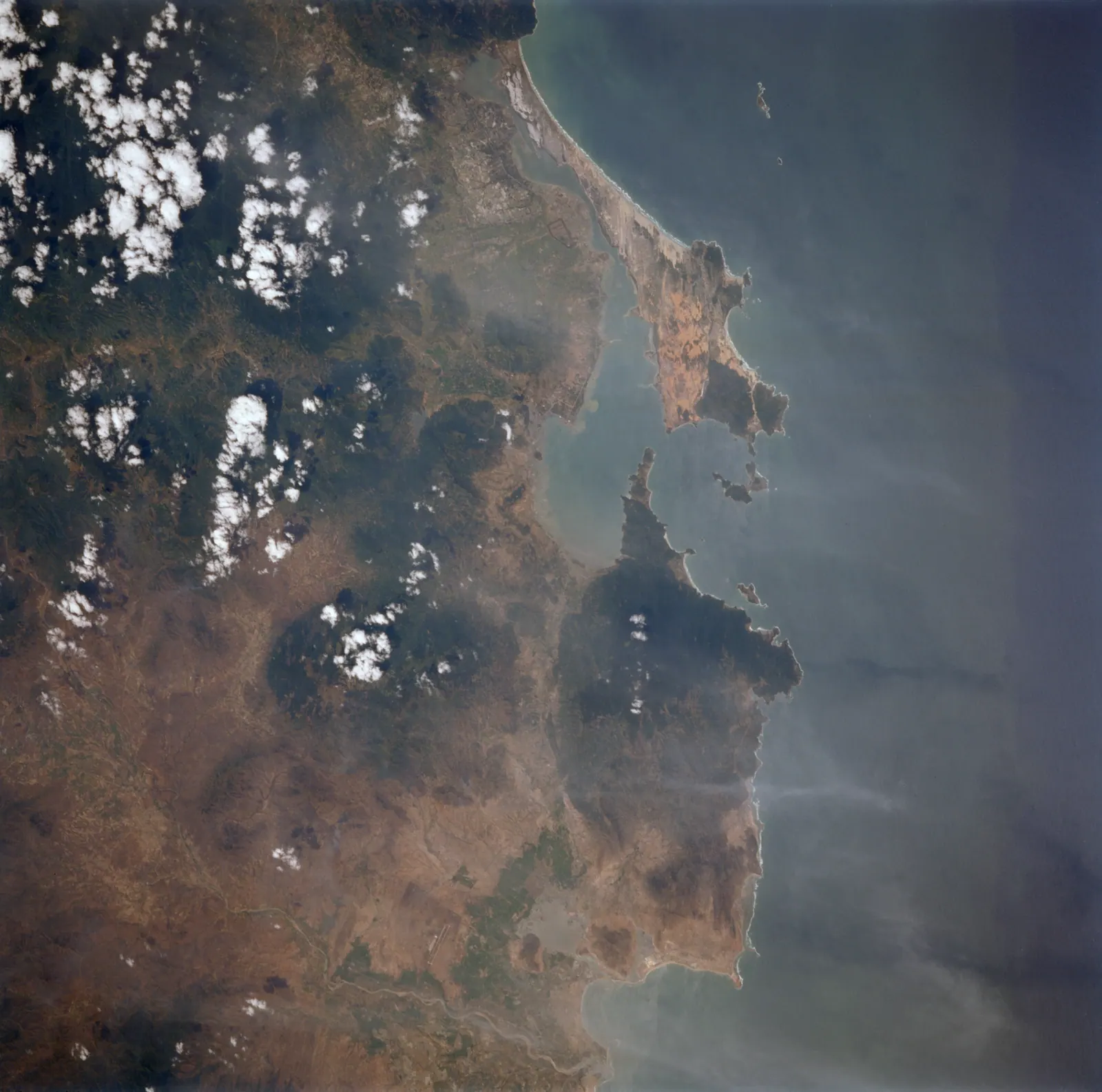
Binh Ba is just over 3 km2 of island at the bay mouth, about 15 km east of Ba Ngoi port, with nearly 5,000 residents. Its economy is lobster. Cage farming started there in the 1990s with a handful of households; by the time the agriculture press counted, the old Cam Bình commune had roughly 90 ha of cages, 58 ha at Binh Ba and 30 ha at Binh Hung, with 469 rafts and nearly 10,000 cages, and about 85 per cent of households in the trade. The lobster built the four and five storey houses and paid for the guesthouses.
Binh Hung is smaller, under 2 km2 about 1 km off the mainland, with roughly 1,800 people, a lighthouse and a pier at Bai Kinh from which the crossing took about five minutes. In July 2024, days after a ban reminder, Zing reported its homestays fully booked mid-week, day tours at 500,000 to 750,000 VND and two-day packages at 1,250,000 to 1,650,000 VND, and most visitors unaware they were breaking a rule. That is the market the June 2026 order was written to close.
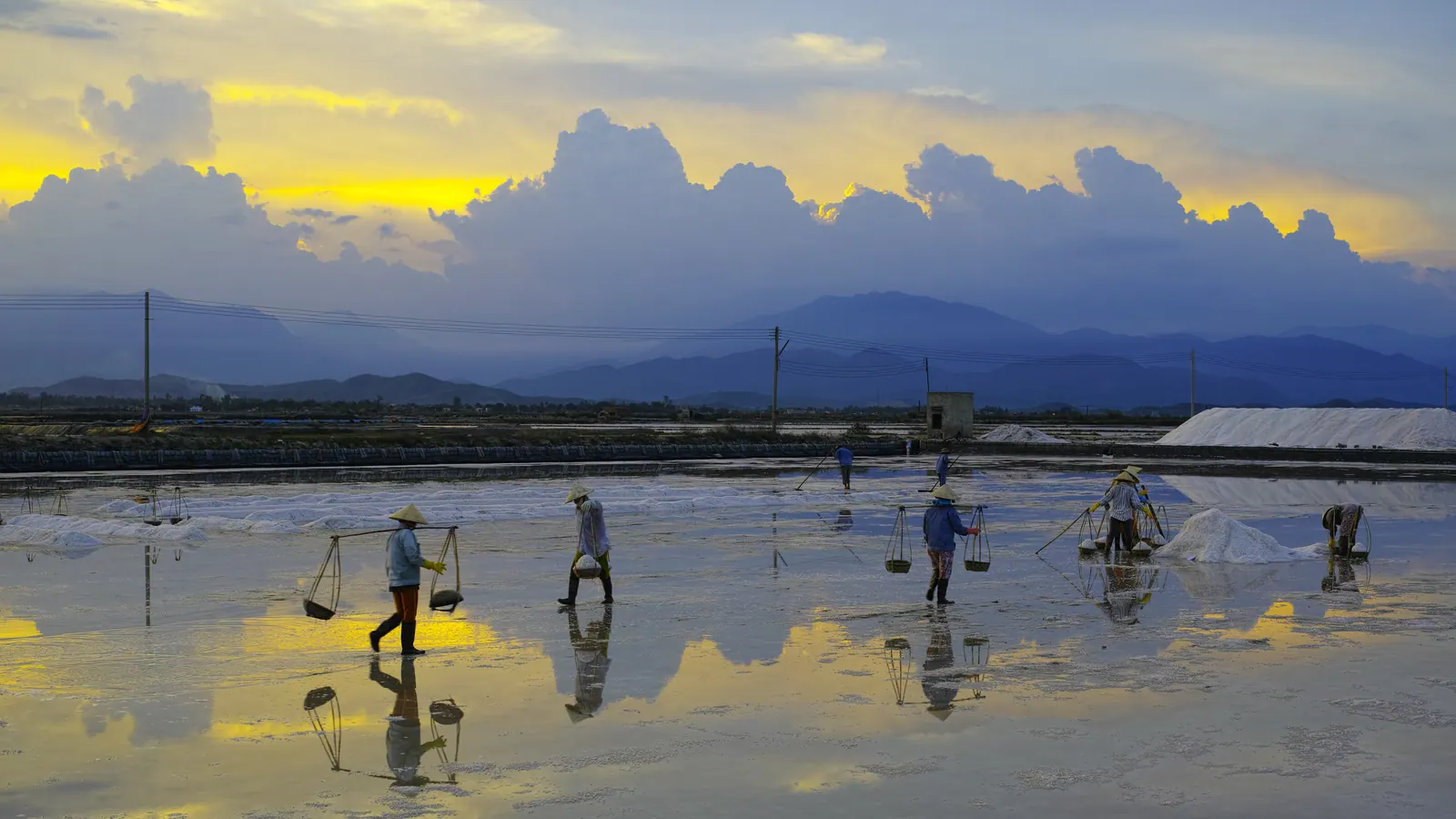
The lobster has not gone anywhere. The salt and lobster road is where I eat it, on the mainland, from the same bay.
What I’d do
- Take Binh Ba and Binh Hung off the list, and say no to any boat, canoe or “family visit” offer, including the Bai Kinh canoe on the coast road and any Vinh Hy boat that offers to add Binh Hung.
- Go to Binh Lap instead: a peninsula on the same bay, reached entirely by road, about 50 km from Cam Ranh airport per a May 2026 guide, and not named in the prohibition. No source I found says it is restricted; no source says where the security belt’s outer edge runs either, so obey any military signage you meet.
- For an island you walk to, the Diep Son tide path in Van Phong bay; for coral from a boat, Vinh Hy.
- Read the islands you can still visit before booking anything with the word island in it.
If you are staying on the Bai Dai strip and want the legal list for that side of the bay, the Cam Ranh Guide’s things to do page keeps it current.