The licence is the whole story, and I treated it as a footnote. Vietnam recognises an International Driving Permit only if it was issued under the 1968 Vienna Convention, by a country that is party to it, within the last three years, and is carried with the home licence; a Korean permit is the one exception, usable for a year under a bilateral agreement in force since 23 July 2023. Since Decree 168 took effect on 1 January 2025 the fine for riding a bike over 125 cc without a valid licence has been 6 to 8 million VND, and between mid-May and the end of June 2026 the province checked 720 foreign riders and fined 210 of them.
Everything else about a year on two wheels here, the roundabouts, the rain, the horn as a greeting, can be learned in a fortnight. The paper cannot. What follows is the law as published, with dates, and then the part I learned by riding.
Which permits count in Vietnam
Vietnam acceded to the 1968 Vienna Convention on Road Traffic on 20 August 2014. The consequence is simple and widely misunderstood: a permit issued under the older 1949 Geneva Convention is not recognised, and the rider holding one counts as unlicensed. The United States, Australia, Japan, China, Canada, New Zealand, India, Ireland and Iceland are not parties to the 1968 convention, so their permits do not count here. Most of Europe and Russia are parties, so theirs do, for three years from issue and only together with the home licence.
South Korea signed the 1968 convention in 1969 and never ratified it, which ought to put a Korean permit in the first group. It is the exception instead: under a bilateral agreement in force since 23 July 2023, a Korean International Driving Permit can be used in Vietnam for one year from the date it was issued.
Residents with a temporary or permanent residence card can convert a foreign licence to a Vietnamese one; the reported cost is 385,000 to 735,000 VND and 5 to 10 working days, and short-stay visitors generally cannot. Licence classes changed on 1 January 2025 too: an A1 licence issued from that date covers bikes up to 125 cc, where it used to cover 175 cc. The Nha Trang Guide page on getting around and the Cam Ranh Guide page on motorbike rental carry the same rules from the visitor’s side.
What Decree 168 fines are
Decree 168/2024/ND-CP was issued on 26 December 2024 and took effect on 1 January 2025, replacing the old penalty framework with sharply higher fines and a points system. The motorbike brackets that matter:
| Offence on a motorbike | Fine under Decree 168 |
|---|
| No valid licence, bike over 125 cc | 6,000,000 to 8,000,000 VND |
| No valid licence, bike up to 125 cc | 2,000,000 to 4,000,000 VND per secondary sources; a 3,000,000 VND fine was reported in Nha Trang in May 2026 |
| No helmet, rider or passenger | 400,000 to 600,000 VND |
| Running a red light | 4,000,000 to 6,000,000 VND |
| Riding against the traffic | 4,000,000 to 6,000,000 VND |
| Phone in hand while riding | 800,000 to 1,000,000 VND |
| Alcohol, up to 50 mg per 100 ml of blood | 2,000,000 to 3,000,000 VND |
| Alcohol, 50 to 80 mg | 6,000,000 to 8,000,000 VND |
| Alcohol, over 80 mg | 8,000,000 to 10,000,000 VND |
| Lending a bike to an unlicensed rider, individual owner | 8,000,000 to 10,000,000 VND |
Secondary sources add a seven-day impound for the licence offences, with storage at 50,000 to 100,000 VND a day. The alcohol limit for riders is zero; the bands are how the fine scales, not a tolerance. And the insurance sources are consistent that a policy excludes a crash while riding without a valid licence, which turns a fine into an uninsured hospital bill.
What changed in 2026
Enforcement against foreigners in Khánh Hòa was light in my first year and is not now. From 1 January to mid-May 2026 the provincial police penalised 123 foreigners for traffic offences, over 323 million VND in fines; from mid-May to the end of June they checked 720 and fined 210, more than 610 million VND in all. The reported sample fines from that campaign were a Russian tourist at 2.5 million for alcohol plus 3 million for no licence, and Russian and Ukrainian riders at 6 million each for no valid licence.
The background is grim: five accidents involving foreigners in the province in 2025, with two deaths, and on 4 May 2026 a 35-year-old Russian rider with 268.8 mg of alcohol per 100 ml of blood caused a fatal collision in Nha Trang. Rental shops still rarely ask for a licence. That does not make the ride legal, and the shop’s owner is liable too if the rider is unlicensed. The rent-or-buy sums, with the deposit and the paperwork, are in renting or buying a bike for a long stay.
The roundabouts and the unwritten rules
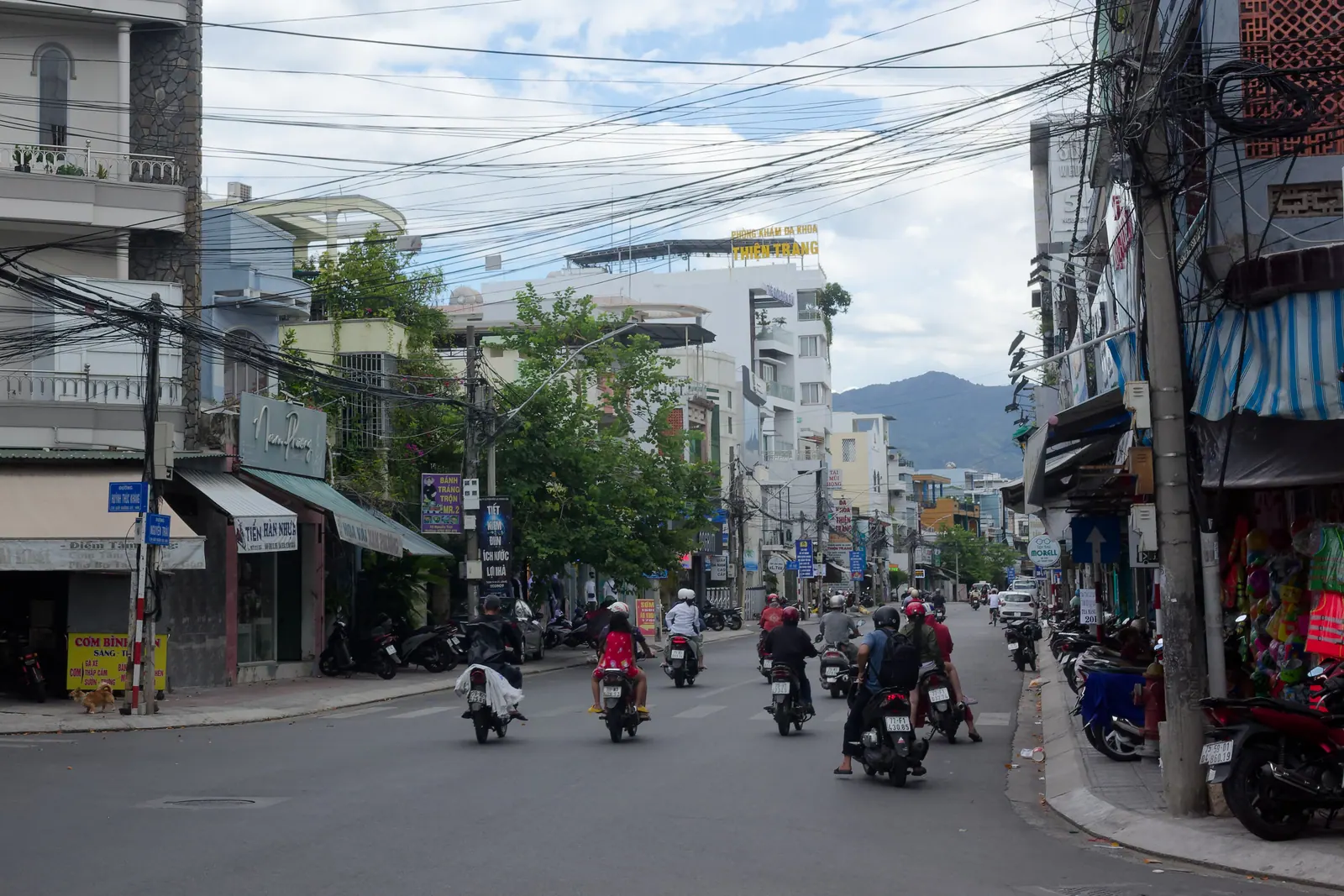
Nha Trang traffic is slower and more forgiving than Saigon’s, and its logic took me about a fortnight. Nobody stops at a roundabout; everyone yields a little, and the bike that keeps a steady line is the one that gets through. A horn is information, not anger: it says I am here, on your left, do not drift. Turning across traffic is done gradually, a metre at a time, and the oncoming stream bends around you if you are predictable and hits you if you are sudden.
Trần Phú, the six-lane beach road, is the exception: it is fast, it is the one place in the city where I have seen cars overtake at speed, and the U-turn gaps are where the near misses happen. I ride it in the right-hand lane and turn off it as soon as I can. Inland, the grid behind the beach and the streets around Xóm Mới are the easy part of the city; the hard part is any junction with a bus in it. The seven-day loop around the province is what the city riding is training for.
The rain months on two wheels
October and November bring 302 and 332 mm of rain to the Nha Trang station in an average year, against 1,280 mm for the whole of it, and they are the months that decide whether a bike is a pleasure or a chore. After the heaviest downpours some low junctions behind the beach hold water for an hour, deep enough to stall a scooter ridden through fast, and the painted road markings turn to glass. A proper jacket beats a poncho; a poncho on a moving bike is a sail.
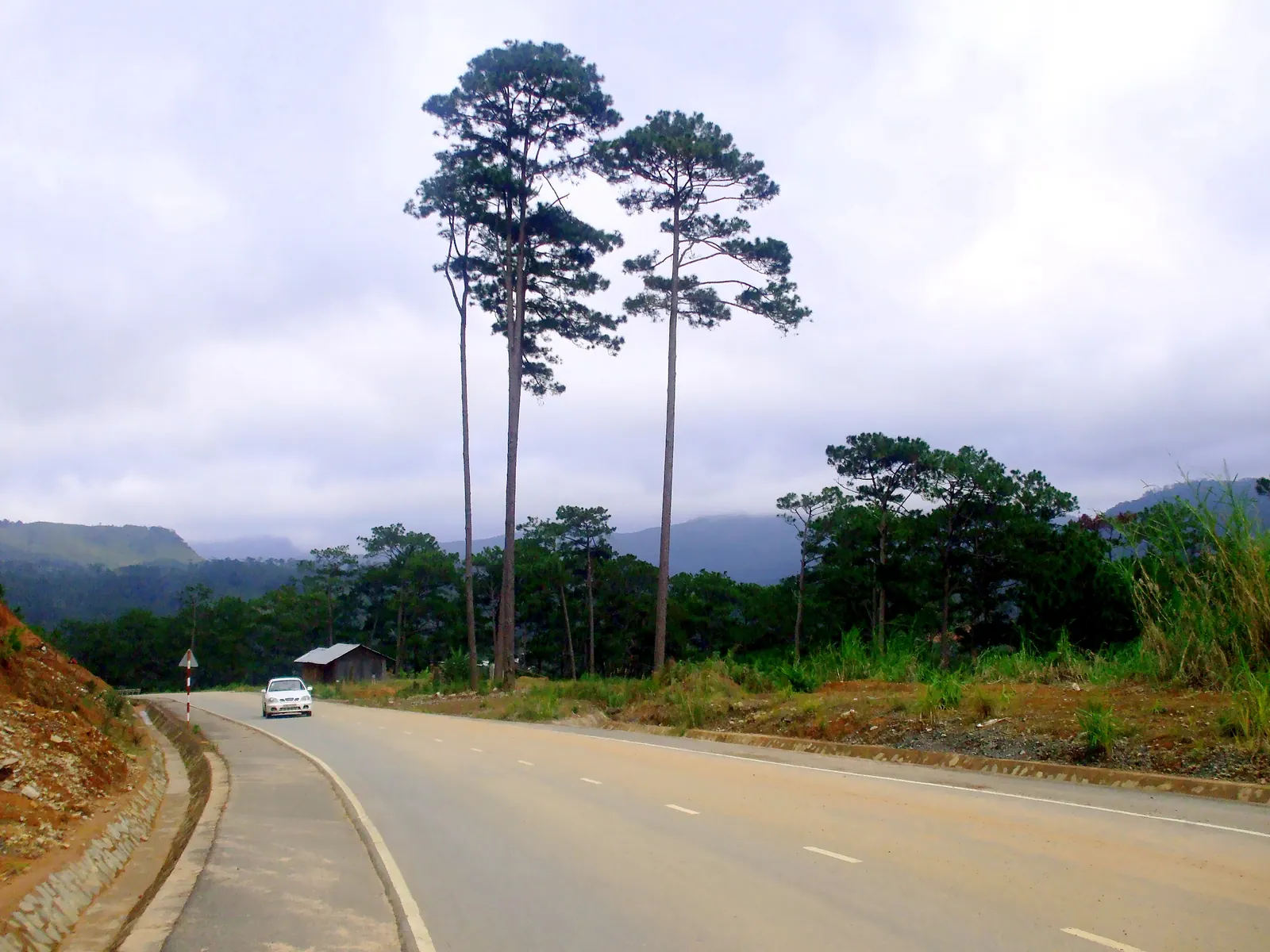
The mountain roads are a different question. The Khánh Lê pass to Da Lat closed after landslides in each of the last two wet seasons and now runs on daytime-only rules, which riding the Khanh Le pass to Da Lat covers with the dates. I do not ride it in the rain months at all.
The two habits that keep me out of trouble
The first is that I never ride after a drink, not one. The limit is zero, the lowest fine band starts at 2 million VND, and the case of 4 May 2026 is the reason the police are stopping foreign riders. The second is that the papers ride with me every time: the home licence, the permit, the registration certificate and the insurance slip, in a dry bag under the seat, not in the flat. A checkpoint in Khanh Hoa is a line of officers on a main road in daylight waving bikes in, and the whole conversation is shorter with the papers in hand.
The helmet is not a habit; it is a given, at 400,000 to 600,000 VND per bare head.
Field note: I have seen more checkpoints on the roads out of the city in 2026 than in the whole of 2025, which is what the figures say too. They sit in daylight, on the main roads, and they are not hidden.
What I’d do
- Settle the paper before the bike: a 1968-convention permit with the home licence, a Korean permit within a year of issue, or a Vietnamese conversion for residents.
- Rent a 125 cc automatic by the month first; the licence class and the fine brackets both split at 125 cc.
- Ride only the inland grid for the first week, early, before the buses, and cross Tran Phu rather than ride along it.
- Add the beach road, then the bridge north, then the road to Diên Khánh, then the province.
- Never after a drink; papers under the seat; helmet on the passenger too.
- Stay off the mountain passes from October to December and read the Khanh Le post before the first dry-season crossing.