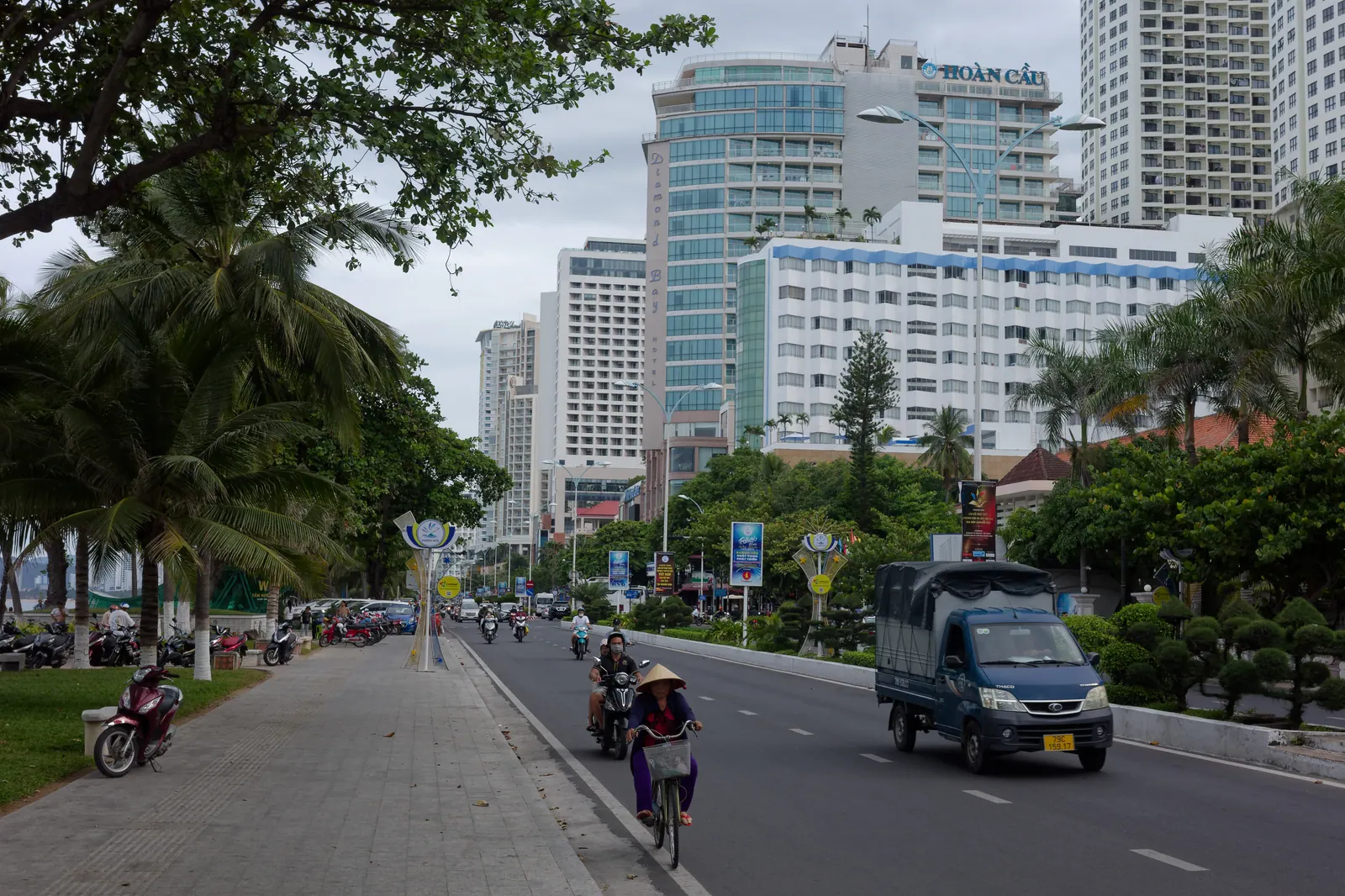
Wet, grey, cheap and still very liveable. That is October and November in Nha Trang in one line. The two months bring roughly half the year’s rain between them, the sea goes rough, the boats stop, and the beach flies a red flag more days than not. The city itself carries on: the cafes, the markets, the mud baths and the noodle shops do not notice the season.
I have now lived through two of each. I would not fly across the world for a beach week in these months. I would, without hesitation, spend them here if I were already in Vietnam and wanted a working town with empty hotels and a mountain road within reach on the dry days.
What the station numbers say
The Nha Trang station normals are the honest baseline. October and November together produce about 634 mm, roughly half of the 1,280 mm the city gets in a year, and they are also the months with the fewest sunshine hours. It is not cold: the daytime high is still 28 to 30 C and the sea stays at 27 to 28.5 C. Nothing about these months is chilly. They are simply wet and dim.
| Month | Rain (mm) | Rainy days | Daytime high | Sea temperature | Sunshine hours |
|---|
| September | 159 | 15.2 | 31.5 C | 29 C | 202 |
| October | 302 | 17.7 | 29.7 C | 28.5 C | 183 |
| November | 332 | 17.6 | 28.2 C | 27 C | 142 |
| December | 153 | 14 | 26.9 C | 26 C | 142 |
For comparison, the Cam Ranh station by the airport, 30 to 35 km south, records 248.8 mm in October and 319.6 mm in November on slightly fewer rainy days. The whole coast shares one calendar; the resort strip does not escape it. The Nha Trang Guide weather page has the full twelve-month table, and I have written up the whole province month by month from two years of getting it wrong.
How the rain actually falls
Seventeen or eighteen rainy days a month does not mean seventeen wet days from breakfast to bedtime. The pattern I have seen most often is a grey morning, a downpour that arrives mid-afternoon or after dark and lasts an hour or two, and then a wet, windless evening. The north-east monsoon is what drives it, and when the monsoon sets in properly you get the other pattern: three or four days of steady, fine rain under a sky the colour of a pavement, which is the stretch that sends people to Da Lat or to the mud baths.
The typhoon window on this coast runs from the start of September to about 10 December. Direct hits are rare; the fringes of storms further north are what usually reach Nha Trang, as a day or two of hard wind and heavy rain in late October and November. In both my autumns the forecast gave several days’ notice. It is a reason to keep plans loose, not a reason to stay away.
What floods and what does not
The honest answer from two seasons is: streets, briefly, and the river. After the heaviest downpours the low streets behind the beach and some junctions in the western quarter hold water for an hour or so, deep enough to stall a scooter if you ride through it fast, and then it drains. I have not seen the beachfront itself under water. What I have seen is the Cai river running brown and high under the Xóm Bóng bridge for days; the Sông Cái basin takes 73 percent of its annual flow between October and December, so that is normal rather than alarming.
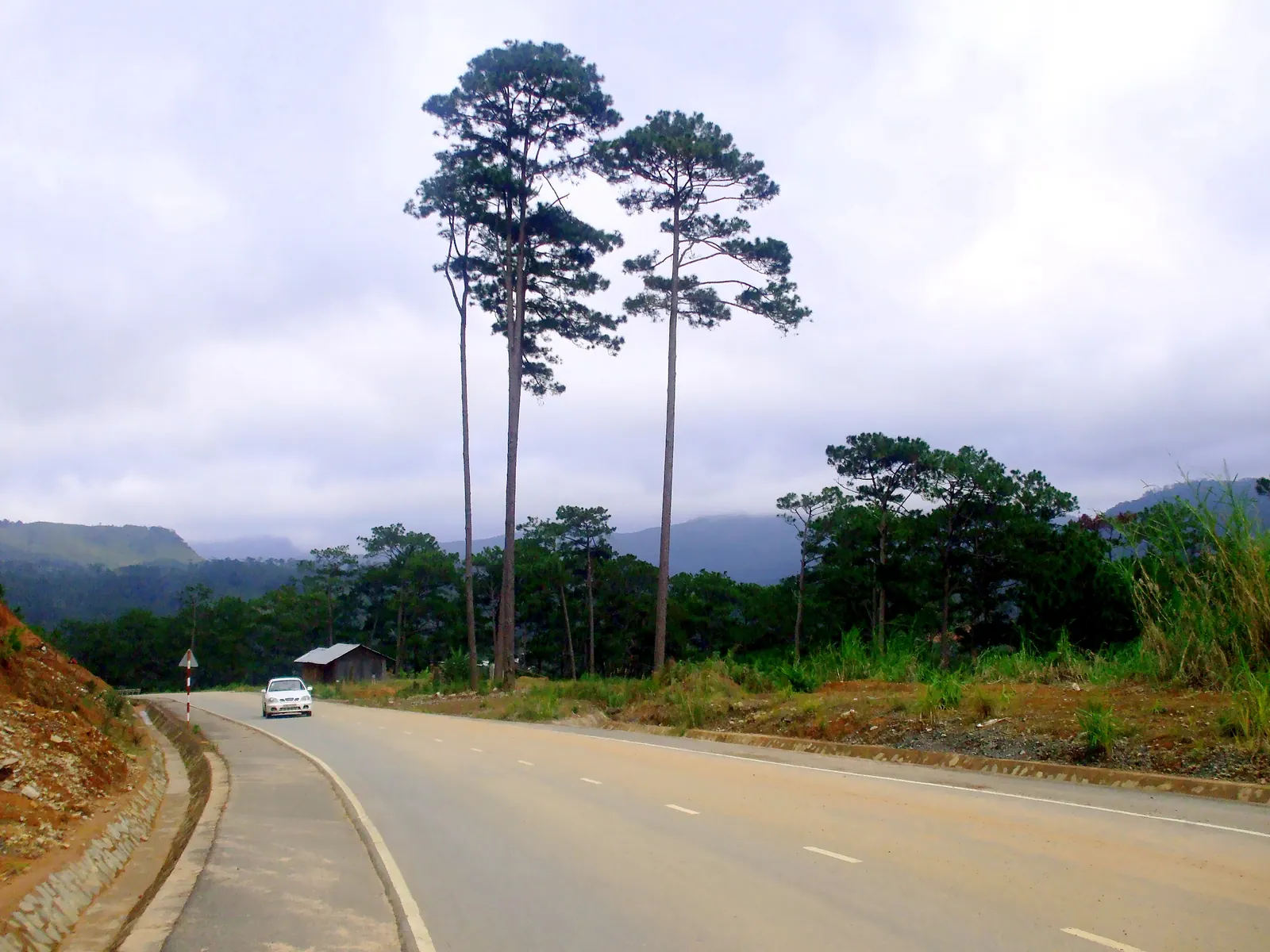
The real problem is inland and uphill. The Khánh Lê pass on the road to Da Lat has closed after landslides in each of the last two rainy seasons: for about a week from 15 December 2024, and for over a month after a rockslide hit a bus on 16 November 2025 and killed six people. Since 13 February 2026 it has been open to all vehicles from 05:00 to 18:00, with repairs to nine slide sites due to finish in October 2026 and night crossings still advised against on 13 September 2026. My notes on riding the Khanh Le pass to Da Lat cover the timing in detail.
What still works in the rain
Almost everything that is not on the water.
- Mud baths. The obvious rainy-afternoon answer. I-Resort charges 200,000 VND for the basic entrance in 2026 and opens 08:00 to 18:00 with ticket sales stopping at 16:30; Thap Ba, the original and plainest, starts at 120,000 VND for fifteen minutes in the communal tub, 07:30 to 17:00. Neither cares whether it is raining, and the hot mineral pools are better in cool weather anyway.
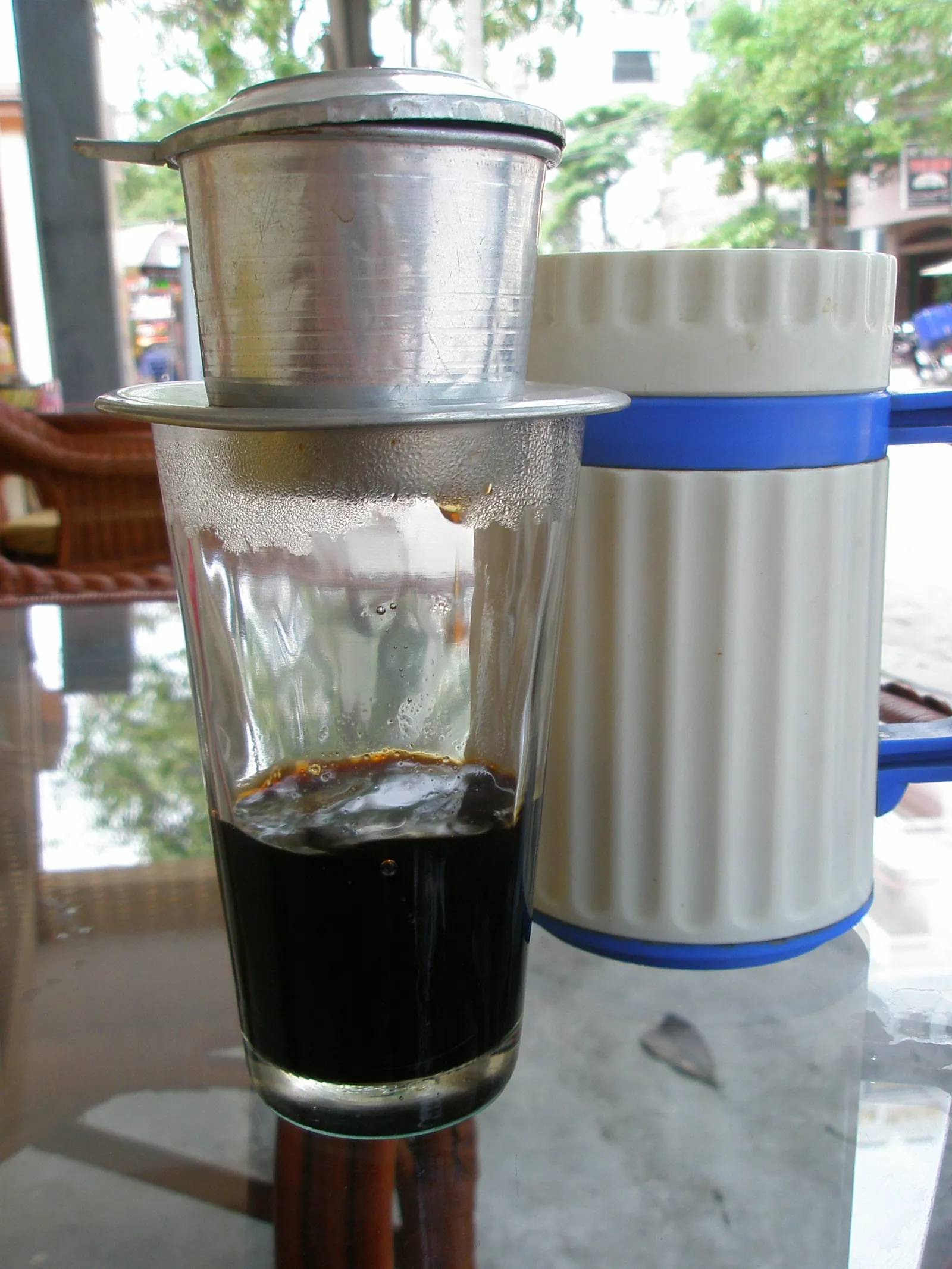
- Cafes. The coffee habit here is a morning one and the rain does not change it; if anything the garden cafes are at their best when the paths are wet. I have written a separate post on how Nha Trang coffee mornings work.
- The citadel at Dien Khanh. Ten kilometres west, gates you can walk through in an hour, no fee. A restoration was about 75 percent complete in September 2026 with a target finish of 31 October 2026, so expect works until then. An afternoon at the Dien Khanh citadel is how I would spend a dry-ish one.
- Da Lat, on a good day. Some 134 to 140 km and 3.5 to 5 hours away over the pass. Go in the morning, in daylight, and only when the pass is open; the forecast decides.
- Kites. November to March is the dependable wind season at Bãi Dài. The wind that ruins the swimming is the point.
What closes
Three things, and they are the three things most visitors come for.
The boats. Operators cancel island trips outright in rough weather from about October to December, and the season the operators themselves quote is January to September. Do not build a week around the four-island tour in November.
The beach. Sources consistently put the rough season at roughly September to January with October and November the worst, and Trần Phú beach is the only city beach with rescue stations staffed from morning to evening. In winter the sea runs high and rip currents form off the Ba Làng embankment, in front of the College of Culture, Arts and Tourism and near Hòn Chồng. Two tourists photographing the waves were swept off Tran Phu beach on 21 December 2024 and one died. A red flag means no swimming; there is no local exception for strong swimmers.
The cable car. The Hòn Tre cable car was shut for planned maintenance from 15 October to 15 November 2024 and suspended again from 28 November 2024, and strong wind closes it at any time of year, when Vinpearl runs its boats instead. If it matters to your trip, check the week you travel.
Should you come?
If you want the beach: no. Come between February and May, when every month has under 70 mm of rain and the sea is at its clearest.
If you want a cheap, quiet base with things to do under a roof, and you do not mind planning around a forecast: yes. October and November are the months when rates fall and the sunshine hours are lowest, and the trade-off is the typhoon window. Bring a proper rain jacket rather than a poncho, keep two dry days in reserve for anything that involves a mountain or a boat, and treat the beach as something to look at.
Field note: the hour after a big afternoon downpour is the best hour of the day in these months. The air is cool, the promenade steams, and half the city comes out to walk on the sand.
What I’d do
- Book a room in the centre rather than on the resort strip; the point of the city in the wet season is that you can walk to everything.
- Check the forecast the night before and keep the one dry morning for the citadel, or for Da Lat if the pass is open and you leave at first light.
- Give a wet afternoon to I-Resort or Thap Ba, at opening if you can.
- Swim only when the flag is green and a lifeguard tower is in sight, and expect that to be a minority of days.
- Eat inland: the noodle streets around Xóm Mới market do not close for rain.
- Come back in March if you want to see what the beach is for.