The Diên Khánh citadel is a Vauban-style fort built in 1793, ten kilometres west of Nha Trang on National Route 1, and in September 2026 it is a building site with four gates you can still walk through. A restoration that began in early 2025 was about 75 percent complete on 10 September 2026, and the project board says the contractors aim to finish everything before 31 October 2026. I would go now for the gates and again in the new year for the walls.
There is no fee and there are no opening hours, or at least I have never found either published, because the inside of the citadel is the town’s streets. An hour covers the gates, the rampart and the moat. Eat bánh ướt afterwards, or better, before.
What is the Dien Khanh citadel?
It is the fort Nguyễn Ánh, the future emperor Gia Long, had built in 1793 after beating the Tây Sơn at Diên Khánh, and it is laid out in the Vauban style, the French bastioned plan of the period. Vietnamese Wikipedia gives the numbers: about 36,000 m2 inside an earthen rampart 2,693 m round and about 3.5 m high, with a moat 3 to 5 m deep and 20 to 30 m wide. Tuổi Trẻ rounds the interior to 3.5 ha, which is near enough the same figure.
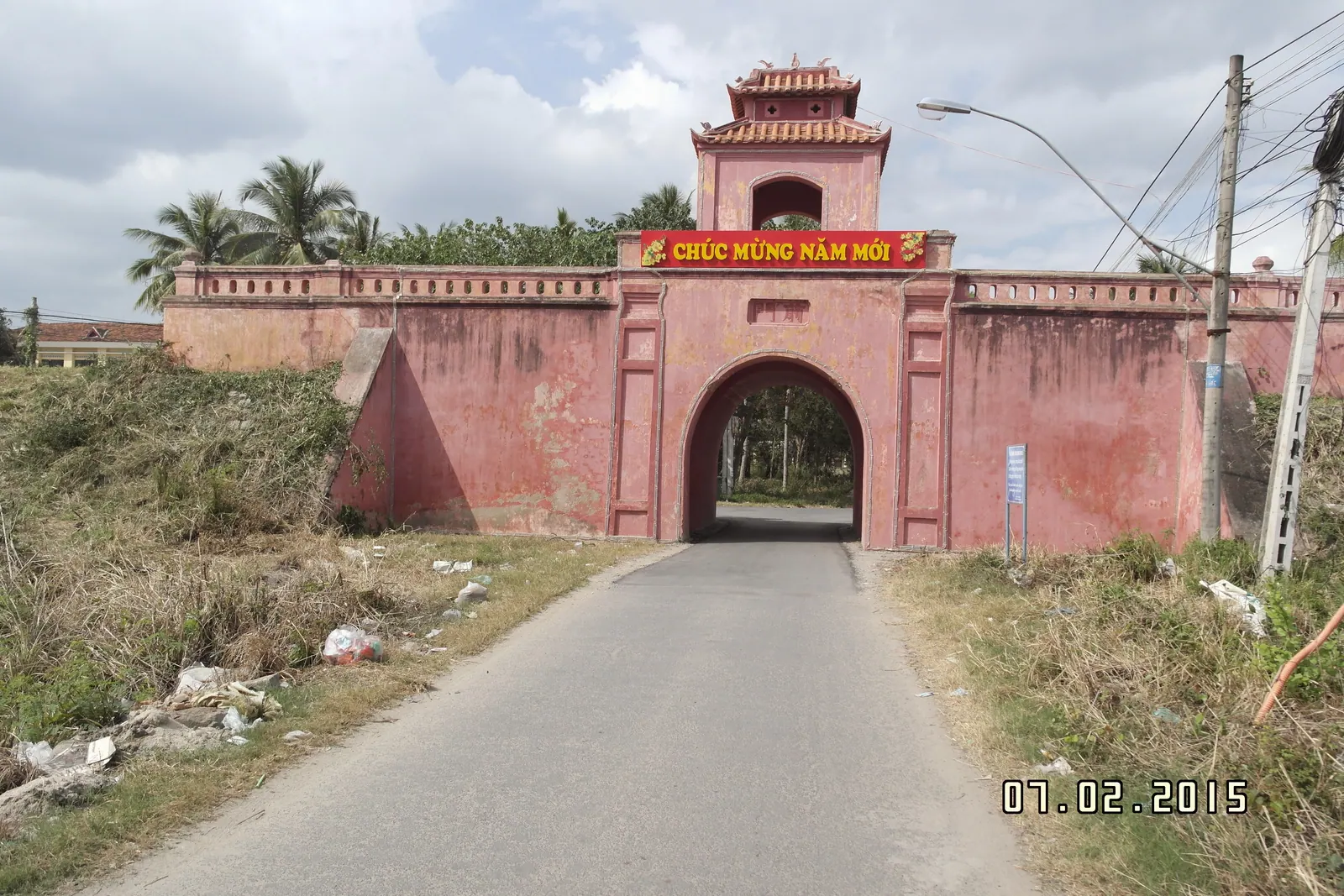
Six gates were built and four survive: Đông (east), Tây (west), Tiền (front, on the south side) and Hậu (rear, north). The left and right gates were sealed in 1823. From 1802 to 1945 the province was run from inside these walls, which is why the town and not the beach was the capital for most of the Nguyễn period; the short history of Khanh Hoa has the sequence of names the province went through in that time.
It was ranked a national historical and cultural relic in 1988. In May 2025 the culture ministry agreed with the province to prepare a dossier for special national relic status, which is the top tier.
What is being restored, and when does it finish?
Before the works, the district offices and a football field sat inside the walls, and the ramparts were the kind of grassy bank you could ride past without noticing. The restoration approved in 2024 at nearly 167 billion VND, and reported by Nhân Dân at over 225.5 billion VND in September 2026, has twelve components: rebuilding 2,500 m of earthen wall with a crest over 4 m wide, a 2.6 m brick walkway along the top, a new 2,000 m road 6 m wide at the base, an arched bridge over the moat, dredging and waterproofing the moat, small parks around the gates, and lighting.
The timeline slipped. The contractor was selected in late January 2025 and completion was then expected by the end of November 2025. On 10 September 2026 Nhân Dân reported the project about three-quarters done, and on 13 September the director of the provincial project management board said the aim was to finish every item before 31 October 2026. These were the board’s figures on 14 September 2026:
| Component | Complete, September 2026 |
|---|
| Moat dredging | 95 percent |
| New pump station | 95 percent |
| Concrete roads | 95 percent |
| The four gates | 95 percent |
| Storm drainage | 95 percent |
| Earthen walls | 80 percent |
| Brick walkways and parks | 70 percent |
The bridge at the Rear Gate was still being built, and the new ramparts had no grass on them before the rains. Nearly 7.5 ha had to be cleared from 122 households to make room, and over 7.2 ha had been acquired by September 2026. My own reading is that the deadline is possible for the gates and the roads and optimistic for the grass.
How do you walk it?
Start at whichever gate you reach first and go round. The gates are the reason to come: arched gateways with a watchtower pavilion on top, painted, and standing on the town’s streets, so that at least one arched passage still has the town’s motorbikes going through it, which is the detail I like most. On the restored sections a brick walkway runs along the crest of the rampart, and you can walk from a gate along the top with the moat on one side and the town’s back gardens on the other.
Give it about an hour. The light is best early or late, when the red of the gates is warm and the pavilions throw a shadow; at midday it is flat and the earth banks are hot to stand on. Until the works are signed off, expect fenced sections, trucks and the odd closed stretch of walkway, and a rampart that is bare earth rather than lawn. I have not found any of it policed; I have simply walked round what was open.
Field note: the moat is the surprise. On paper it is a ditch; on the ground it is 20 to 30 m across, and now that it has been dredged it reads as water again rather than reeds.
How do you get there from Nha Trang?
Ride west out of the city on đường 23 tháng 10, which becomes National Route 1 and runs straight into Diên Khánh town; the distance is 10 km, and the gates are on the town’s streets, not in a park. On a motorbike it is a short ride on a busy road; a Grab car does it without fuss. I park beside whichever gate I start at, on the street like everyone else.
There is no visitor centre, no ticket booth and no map board that I have seen, so the four gates are the itinerary. If you want a fixed point, the east gate faces the city and is the natural place to start.
What else is in the town?
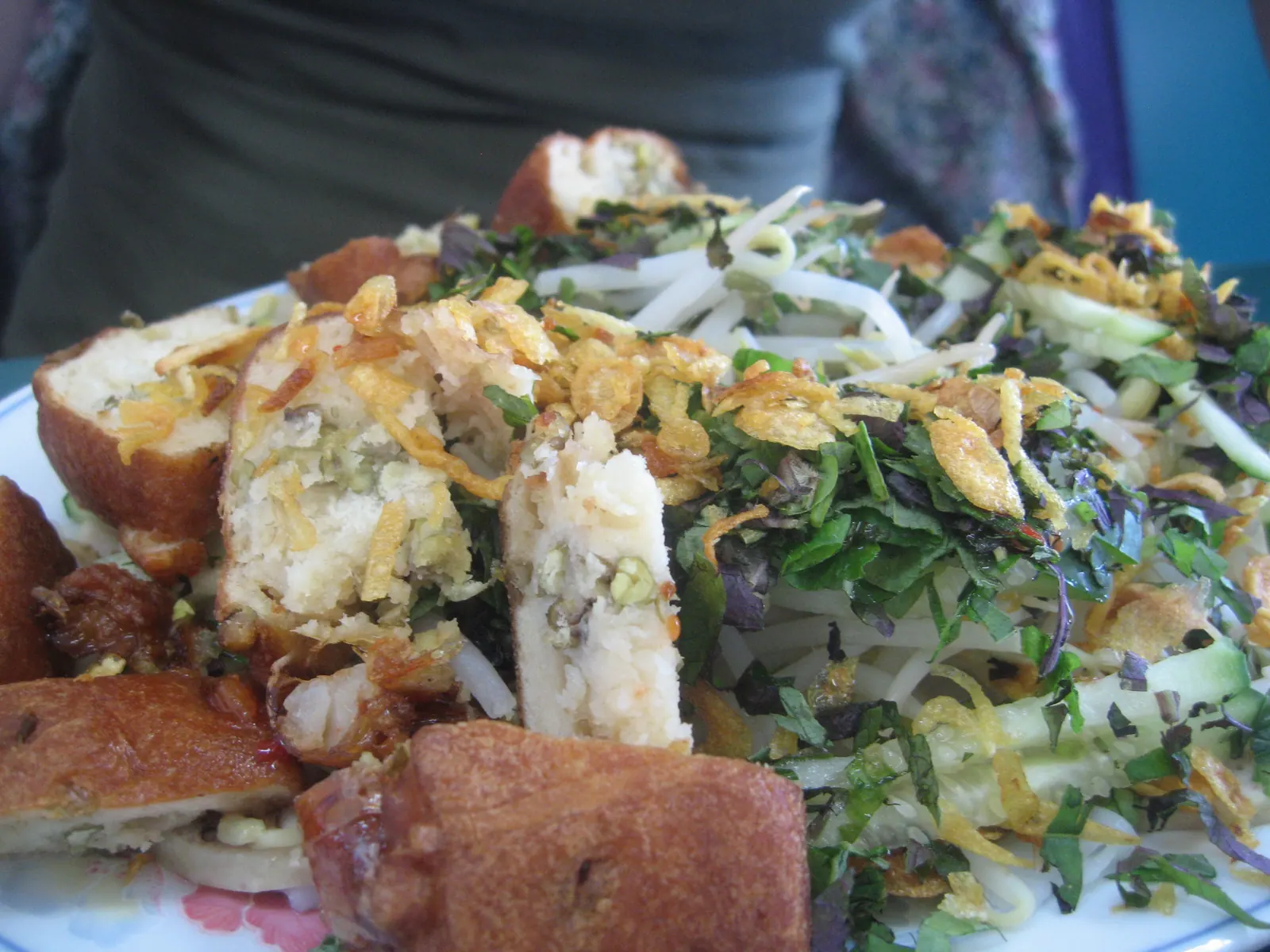
Diên Khánh was a district of 336.2 km2 with 142,706 people at the 2019 census, and since 1 July 2025 it has been six communes with no district above them, but the town is still the town. The bánh ướt street is on National Route 1A in Phú Khánh Trung, a strip of small eateries serving one thin steamed rice sheet per plate until you say stop; I wrote it up in bánh ướt in Dien Khanh, and it is a breakfast, so the honest version of this afternoon starts at seven in the morning.
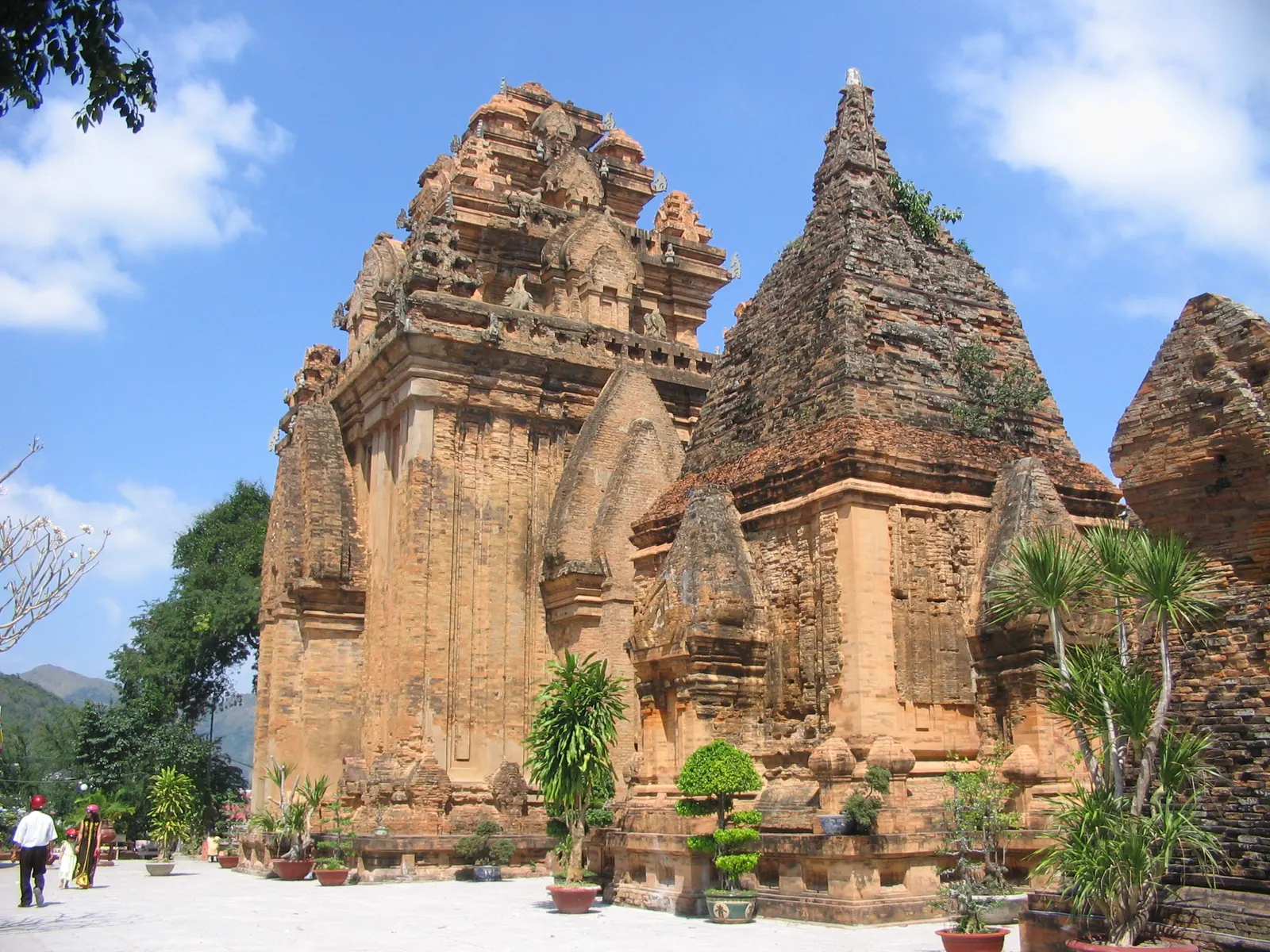
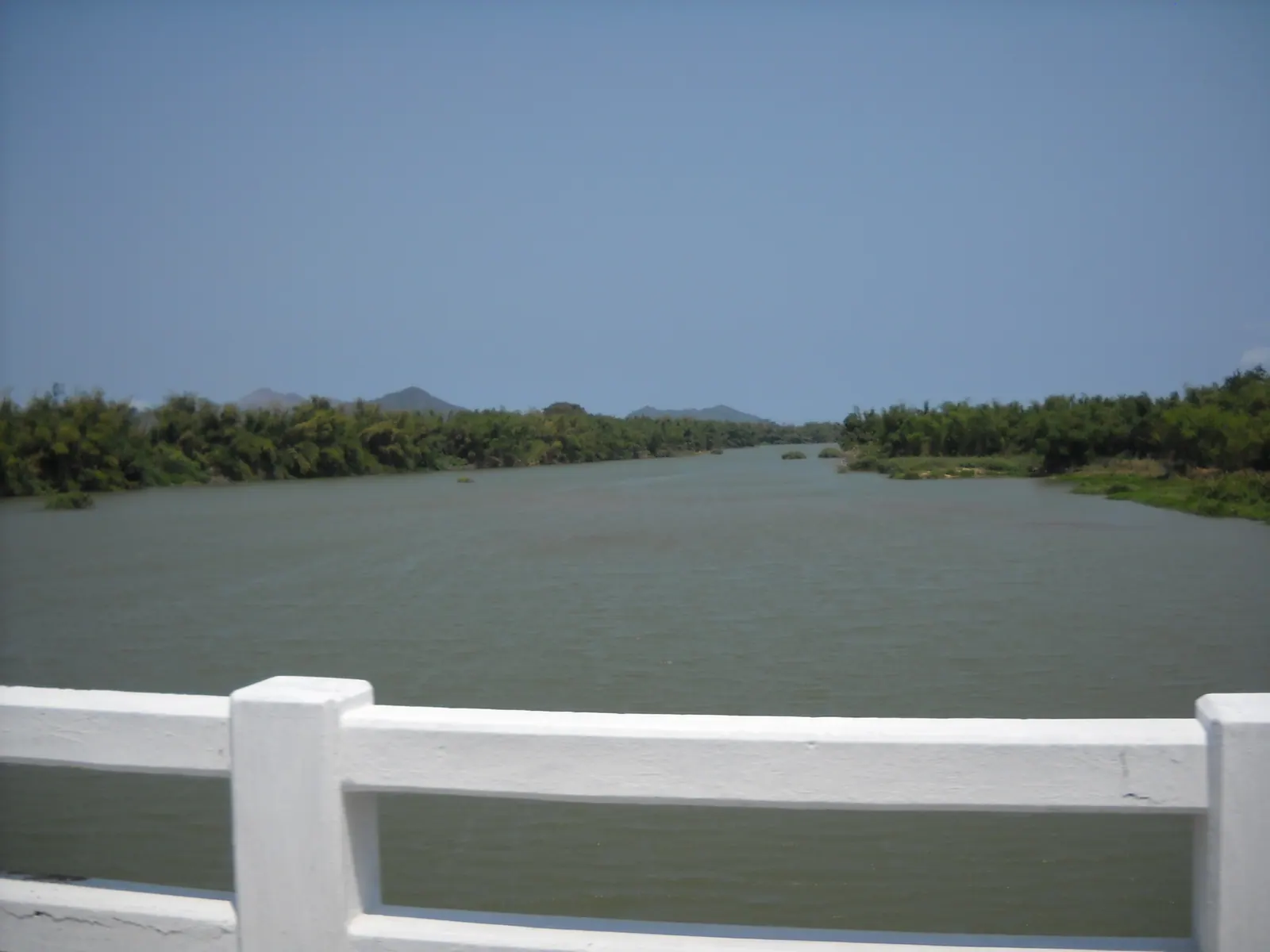
North of the town in Diên Điền commune is Am Chúa, the hill shrine where the province’s goddess story begins, reached by more than a hundred stone steps; that is Am Chua and Thien Y A Na. And the flat land between the town, Diên Điền and the Cái river is rice, which is the Dien Khanh countryside loop if you have the motorbike and the rest of the day.
What I’d do
- Leave Nha Trang about 15:30 on a dry day, west on 23 tháng 10. You are in the town by 16:00.
- Park at the east gate. Walk through it, then along the rampart walkway as far as the works allow, and round to the front gate.
- Cross the town to the west and rear gates. Look at the moat from the bridge if it is finished.
- Back at the east gate for the last light on the pavilion. Home before dark, because National Route 1 after dark is not where I want to be on a scooter.
- Come back another morning for bánh ướt, or do it the other way round: eat at seven, walk the gates at eight while it is cool, and be back in the city for the beach by ten.
If the restoration finishes on time, the version from November 2026 has grass on the ramparts, lights on the gates and a bridge at the rear; if it slips again, the gates are still there.