Am Chúa is a small shrine on Đại An hill in Diên Điền commune, north of the citadel town of Diên Khánh, reached by more than a hundred stone steps, and it is where the story of Thiên Y A Na begins. She is the goddess worshipped at the Po Nagar towers in Nha Trang, and the local tradition, recorded on a stele of 1856 at the towers, says this hill is where she grew up with her adoptive parents. The towers honour her after she became a deity; Am Chúa is her childhood.
I have never found a fee or opening hours for it. Go early in the morning for the climb, or on the first three days of the third lunar month for the festival, which fell on 17 to 19 April in 2026 and, by the published lunar calendar, falls on 7 to 9 April in 2027.
Who is Thiên Y A Na?
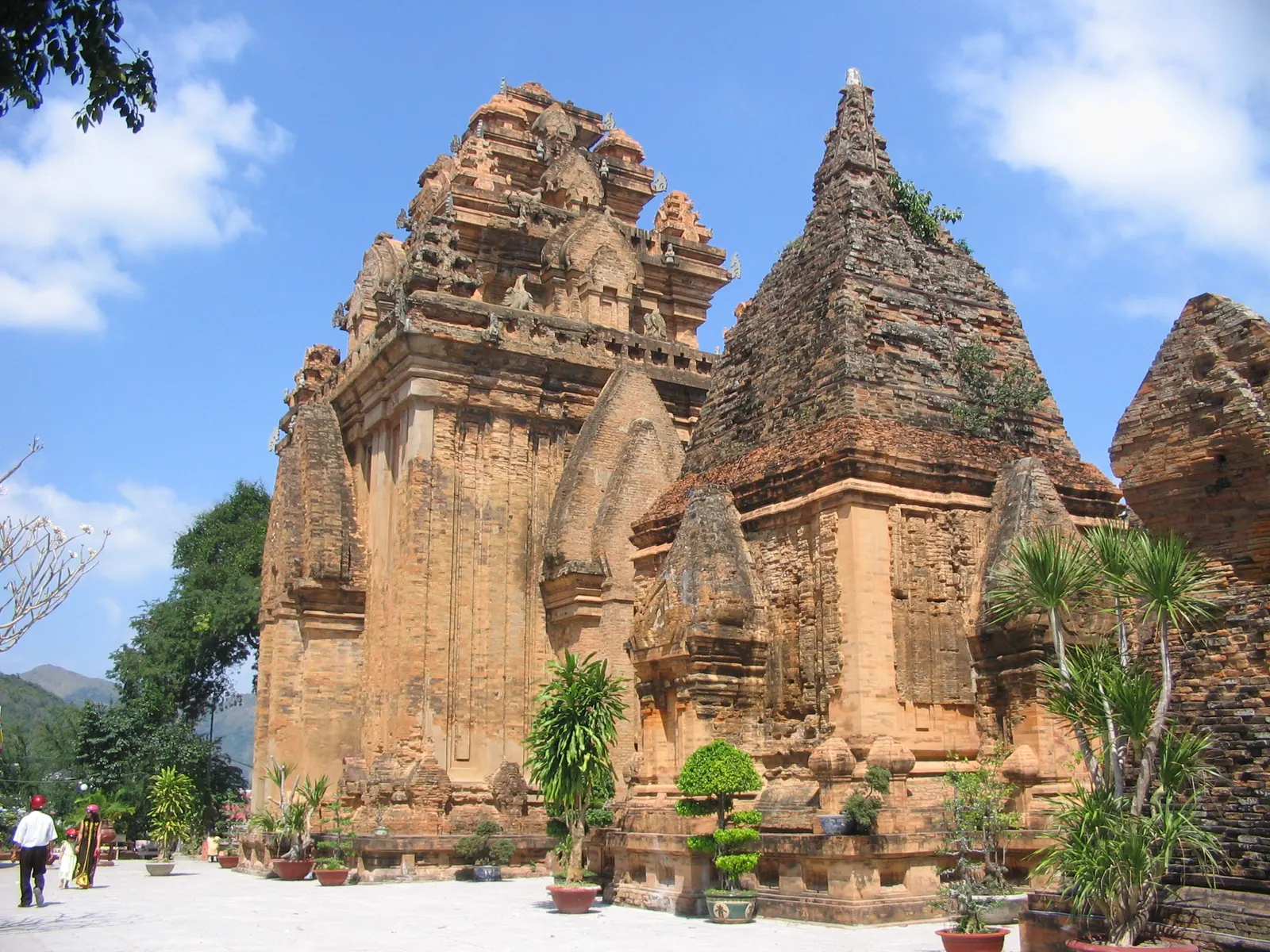
She is the Vietnamese form of Po Nagar, the mother goddess of the Cham, whose temple on the hill above the Cái river mouth in Nha Trang was founded some time before 781 and built on into the 13th century. When Vietnamese settlers took over the coast in the 17th century they took the goddess with the temple, and she became Thiên Y A Na, or Thiên Y Thánh Mẫu, the Holy Mother, venerated as the mother of the region who taught the people farming and how to live. Under the Nguyễn dynasty she was given an official title and the province’s own officials led her rites, which is a mark of how far a Cham deity had been folded into the Vietnamese state.
The province’s history is that fold, repeated: the short history of Khanh Hoa has the dates, from Kauthara to the arrival of the Nguyễn lords’ troops in 1653. The Cham are still here, further south around Phan Rang, with their own towers and their own festival; that is a Cham day in Phan Rang, and it is the other half of this story.
What is the legend, and what is at Am Chúa?
Told as legend, then. The hill has a second name, núi Dưa, melon hill, and the local telling starts in a melon garden on it, where an old couple found a girl and raised her as their own. She grew up here; the rest of the story, the part with the sea and the north and the return, is on the 1856 stele and at the shrine, and I will not retell it badly. What matters for the visit is the geography the legend sets: childhood on this hill above the rice plain, apotheosis on the hill above the river in the city, and the two shrines have been paired ever since.
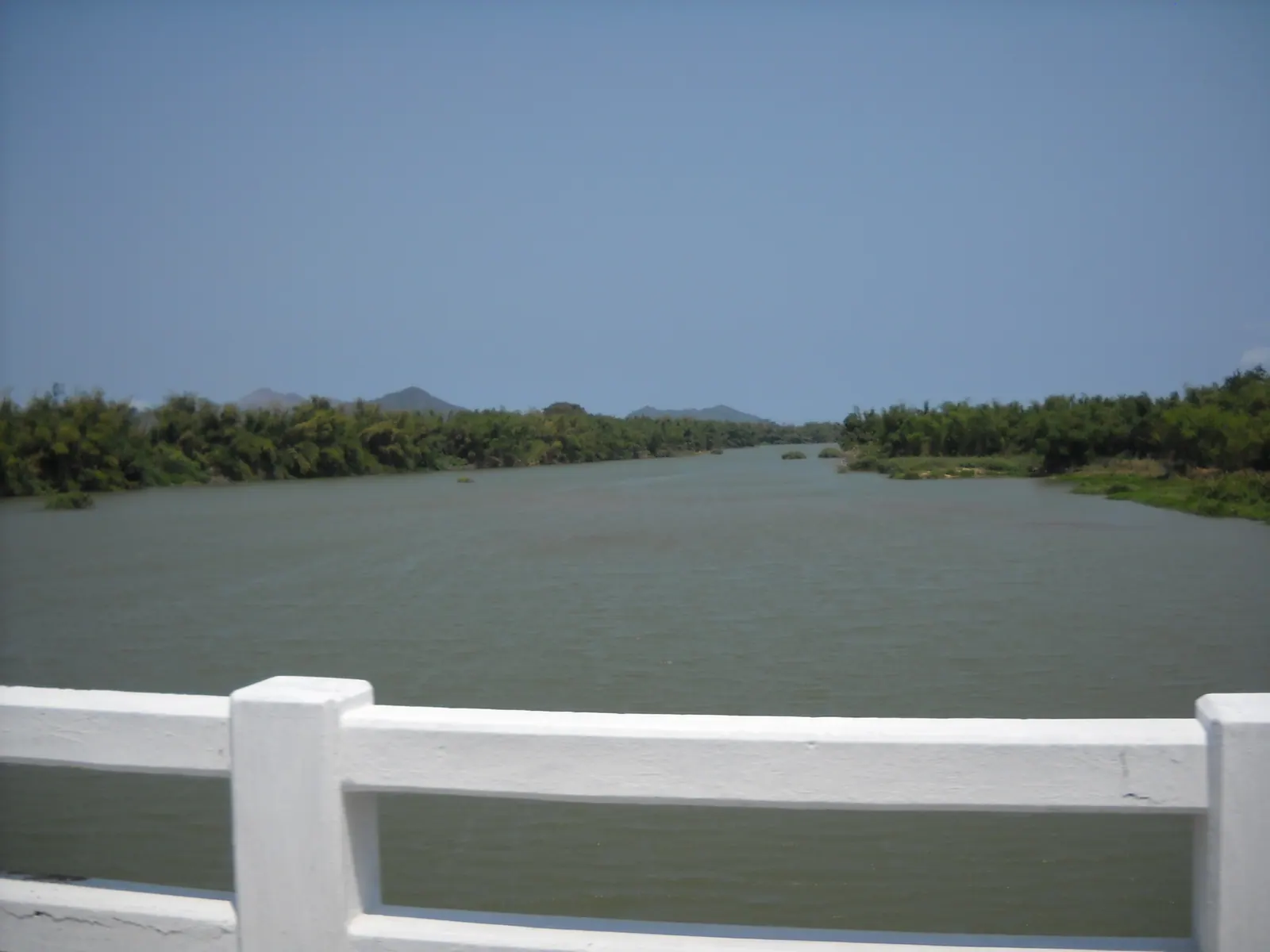
Am Chúa itself is a shrine on the hilltop, reached by more than a hundred stone steps from the lane below. Nobody knows when it was first built; the provincial women’s union page that describes it says as much, and I am not going to guess. It was ranked a national historical and cultural relic in 1999. Allow about an hour including the steps, and expect a quiet place with incense burning on an ordinary morning, the fields of Diên Điền flat and green or gold below depending on the month, and the hills of the Cái valley to the west.
Field note: the steps are the visit. They are steep enough that I stop twice, and the shrine at the top is small enough that the climb takes longer than the looking. Bring water; I did not find anything to buy at the top on my visits outside the festival.
When is the Am Chúa festival?
The first three days of the third lunar month, every year, organised in 2026 by the Diên Điền commune People’s Committee. Pilgrim delegations bring incense and flowers, there is the traditional tế ceremony, the khai sắc Thánh Mẫu rite, and hát văn singing and múa bóng dance by the pilgrim groups, which Vietnamese Wikipedia says preserves more of the old ceremonial forms than any other festival in Khanh Hoa. The Po Nagar festival at the towers follows on the 20th to 23rd of the same lunar month, recognised as national intangible heritage in 2012, with its water procession, robe-changing for the goddess, palanquin procession and floating lanterns. In other words, the third lunar month starts with the goddess’s childhood and ends with her towers, three weeks apart.
| Festival | Lunar dates | 2025 | 2026 | 2027 |
|---|
| Am Chúa | 1st to 3rd of the 3rd month | 29 to 31 March | 17 to 19 April | 7 to 9 April, by the published lunar calendar |
| Po Nagar towers | 20th to 23rd of the 3rd month | not in my notes | programme 5 to 11 May, opening the evening of 6 May (lunar 20/3) | 26 to 29 April |
The rite at the towers is the four lunar days; the province wraps it in a longer programme, which is why 2026 runs seven days around an opening that falls on the first of them. The 2027 dates are converted from a published lunar calendar; as of September 2026 the province had not announced a 2027 programme for either, so check nearer the time.
How does the city end work?
The Po Nagar towers are about 2 km north of the centre of Nha Trang on Cù Lao hill, across the Xóm Bóng bridge, and they are a working temple, not a ruin: shoes off in the tower shrines, shoulders and knees covered, robes lent at the gate if you arrive from the beach. The main tower stands about 25 m and holds a 1.2 m stone image of the goddess with ten arms. Entry was 30,000 VND for an adult and 15,000 VND for a child in 2026, and it takes 45 minutes to an hour; go before 08:30 or after 16:00 and the tour buses from the cruise terminal are somewhere else.
Done in the right order, the two make one story in one day: Am Chúa in the morning for the childhood, the towers in the late afternoon for the goddess, with the citadel and the town’s bánh ướt in between.
How do you get to Am Chúa?
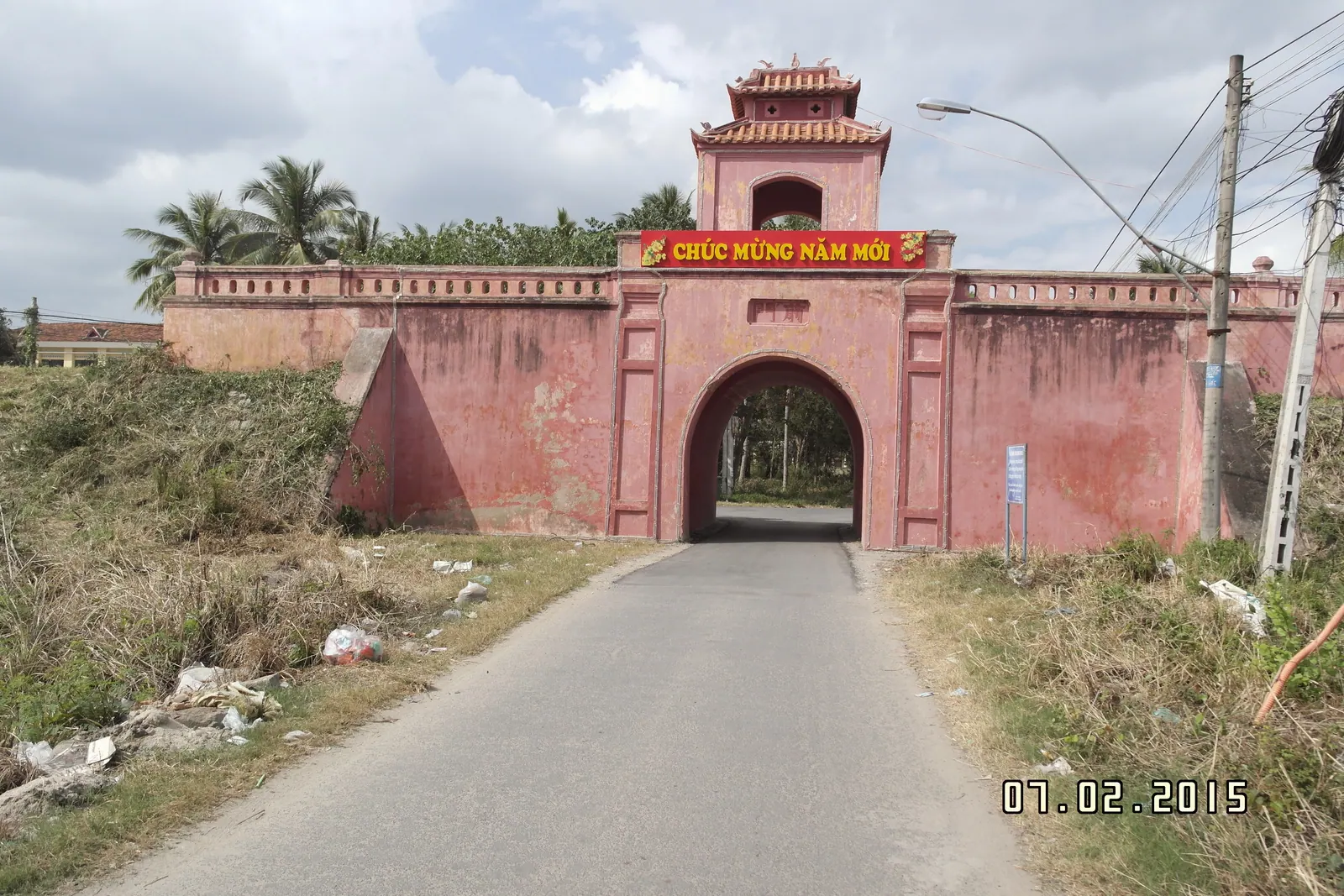
West from Nha Trang on đường 23 tháng 10, which becomes National Route 1 and runs into Diên Khánh town at 10 km; the citadel is there, and an afternoon at the Dien Khanh citadel covers it, restoration and all. From the town go north into Diên Điền commune, which kept its name in the July 2025 reform and absorbed Diên Sơn and Diên Phú. The access lane is mapped on OpenStreetMap as Đường vào Am Chúa, and on the ground it is the lane that ends at the foot of a wooded hill with the steps going up. I have no fetched road distance for the last stretch from the town, so I will only say it is a short ride through rice, the same rice as the Dien Khanh countryside loop.
There is no fee I have found, no ticket booth, and no hours posted that I have seen. It is a shrine; dress as you would for the towers, and step aside for anyone carrying offerings up.
What I’d do
- Leave Nha Trang at 06:30, west on 23 tháng 10; bánh ướt on the strip before Diên Khánh town at 07:00.
- The citadel gates at 07:45 while it is cool, an hour at most.
- North into Diên Điền for Am Chúa by 09:00: the steps, the shrine, the view, and down again before the sun is on the stone.
- Back to the city by the river road for lunch and a rest through the heat.
- Po Nagar after 16:00 for the goddess’s other home, then the Xóm Bóng bridge below it for the boats and the towers in the last light.
On a festival year, swap the order and give the third lunar month its due: Am Chúa on its first three days, the towers on its last four, and the fields between them at whatever stage the rice has reached.