One day is enough for the three Cham sites of Phan Rang, and the order matters more than the pace. Po Klong Garai, the tower group on its hill about 6 to 7 km west of the centre, opens at 07:30 by the travel-site hours I have and is at its best in that first hour, before the heat and the buses. Bàu Trúc, the pottery village about 10 km south on QL1, works through the morning. Mỹ Nghiệp, the weaving village 2 km beyond it, is a weekday-morning place too, so it goes third and lunch goes late.
The only ticket is at the towers, a travel-site figure of 20,000 VND in 2026. The villages have never charged me to walk in. What they ask instead is that you buy something, which is the fair price of watching a craft that is short of young hands.
Who are the Cham of Phan Rang?
This is Panduranga, the southernmost principality of old Champa, and Vietnamese Wikipedia traces the name Phan Rang to it. The Cham still live in villages across the plain, and the towers are not a ruin: they are opened, the statue inside is bathed and dressed, and the community climbs the hill in white and colour every autumn for Katê. That is the frame for the whole day. You are a guest in someone’s working religion, not a visitor to a museum.
The coast to the north was Kauthara, whose temple to the goddess Po Nagar stands above Nha Trang; I have put the dates in a short history of Khanh Hoa. The Cham of Phan Rang call her Po Inư Nưgar and keep a temple to her at Hữu Đức, where the Kate procession begins, and the Vietnamese took the same goddess over as Thiên Y A Na, the one honoured at Am Chua. Since 1 July 2025 all of this has been Khanh Hoa province on paper, which changed the addresses and nothing else; the merger post has that side.
Po Klong Garai: what you see and what it costs
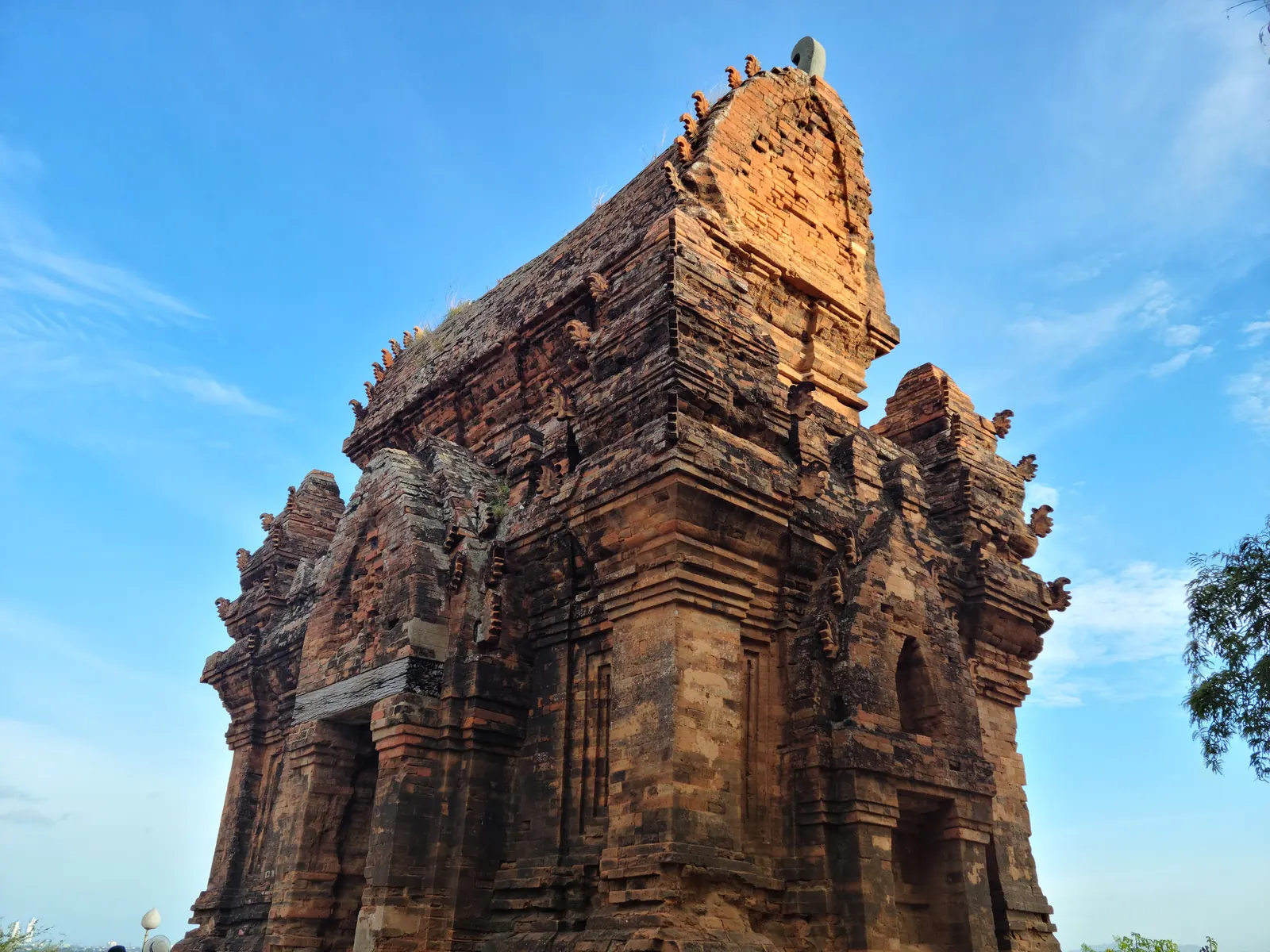
Three brick towers on Đồi Trầu in Đô Vinh ward, built in the late 13th to early 14th century and the best-preserved Cham group in the country. The main tower holds the mukhalinga that represents King Po Klong Garai himself. It was listed as a national monument in 1979, raised to special national monument on 22 December 2016, and two objects from the site were declared national treasures in January 2024.
| Structure | Height | Note |
|---|
| Main tower (kalan) | 20.5 m | The sanctuary, with the king’s mukhalinga inside |
| Fire tower | 9.31 m | The roofed side building |
| Gate tower | 8.56 m | The entrance on the east |
No official page I found gives a price. A 2026 travel site lists 20,000 VND for adults and 10,000 for children, an electric car up the hill at 25,000 VND return, and hours of 07:30 to 17:30 daily, at 52e Bác Ái street in Do Vinh ward. The hill is short and I walk it. It is also unshaded, which is the second reason to be there at opening. Cover shoulders and knees, keep your voice down inside the kalan, and if a ceremony is under way, stand well back and put the camera down until it is over.
When is Kate, and should you go then?
Kate is the biggest festival of the Brahmanist Cham and has been national intangible heritage since 20 June 2017. It opens on the first day of the seventh month of the Cham calendar, which falls between late September and late October: 2 October in 2024, when the main ceremony at Po Klong Garai carried the king’s vestments up the hill and three days in the villages followed, and 21 October in 2025. That year the goddess’s costume was carried from Huu Duc to Hậu Sanh on 20 October, the towers opened at about 08:30 to 09:00 on the 21st after a start at about 07:00, Po Rome tower had its day on the 22nd, and the villages and families took 23 to 25 October. The rites are receiving the costume, opening the tower, and bathing and dressing the statue, to the Gi Nang and Paranung drums and the Saranai.
The 2026 date had not been announced anywhere I could find by mid-September 2026; by the calendar rule it will be October, and the provincial culture department publishes the plan a few weeks ahead. If you go on the day, be on the hill before 07:00, because by mid-morning it is packed. If you would rather watch than be crowded, the procession the day before is the better view and the easier place to be a respectful outsider.
Bau Truc: pottery without a wheel
About 10 km south of Phan Rang on QL1, just past the Phước Dân crossroads in what is now Ninh Phước commune. Vietnam’s national tourism board calls it one of the oldest pottery villages in Southeast Asia, traces the craft to Po Klong Chan, and counts over 500 households with about 85 percent in pottery; I have seen lower counts elsewhere and cannot say which is right.
The technique is the reason to come. There is no wheel. The clay, mixed with fine sand from the Quao river, sits on a fixed base and the potter walks backwards around it, shaping with her hands, a bamboo ring and shells. The pieces are fired in the open for 12 to 14 hours overnight and rubbed with cashew-shell extract while still warm, which gives the reddish-brown surface with its black smoke marks. On the evening of 29 November 2022 UNESCO inscribed the art of Cham pottery on its List of Intangible Cultural Heritage in Need of Urgent Safeguarding, and the word urgent is doing real work: the craftspeople are ageing and few young people take the trade up.
You can watch from the workshops and the cooperative building, and you can try a piece with an artisan guiding your hands. I never found a published price for a session, so ask first. A community-tourism model with a pottery market and Cham performances was being prepared in October 2025; I have not seen it running and cannot say whether it has opened. Buy a pot. It is the point.
Field note: the potter does not turn the pot; she turns herself, one slow circle after another, and the pot rises in the middle of the room as if it had chosen its own shape. It took me a while to see what was odd about it: nothing moves but her.
My Nghiep: the looms
Two kilometres beyond Bau Truc, about 12 km from central Phan Rang in the former Phước Dân township, is the brocade village that pairs with it. Cham tradition dates the craft to the 6th century and credits the goddess Po Yang Inu Nagar with it; the modern revival is more precisely dated, to 1992, when Thuận Thị Trụ set up the Inrahani workshop. Everything is still done on wooden looms, from separating and soaking the cotton through dyeing, spinning and combing to the weaving itself, and one traditional cloth takes two to three days. The provincial culture department proposed it for the national heritage list in 2017.
Visitors watch, hear the stories, and can try a few passes on a loom or weave a small souvenir. Travel sites say entry is free and the village keeps hours of 07:00 to 17:00, which I have not been able to confirm on any official page; nobody has ever charged me to walk in. Weekday mornings are when the looms are working. I found no published price list for the cloth, so ask at the loom.
How do you move between them?
| Stop | From central Phan Rang | Source |
|---|
| Po Klong Garai | About 6 to 7 km west, off the Da Lat road | Vietnamese Wikipedia, travel site |
| Bau Truc | About 10 km south on QL1 | Vietnam national tourism board |
| My Nghiep | About 12 km south, 2 km beyond Bau Truc | VietnamPlus |
| Phan Rang from Nha Trang | 95 km by QL1 | Vietnamese Wikipedia |
A motorbike makes the day simple: towers first, back through town, south on QL1 to the two villages. Without one, a taxi from the centre to the villages and back is the practical answer. From Nha Trang it is 95 km each way, which is a long day trip; I sleep at Ninh Chử and start from there. Eat between the stops: bánh căn, which VnExpress calls the Cham dish of Phan Rang, is the breakfast to have before the towers, and the dry-country food post has the lamb and goat for the evening.
What I’d do
- Sleep at Ninh Chu or in Phan Rang. Banh can in town at first light.
- Po Klong Garai at 07:30 when it opens. Walk up; an hour is enough, longer if you sit.
- Back through the centre and south on QL1 to Bau Truc by late morning, while the shaping and the firing are under way. Watch, try, buy.
- My Nghiep, 2 km on, for the looms. Ask before photographing anyone at work.
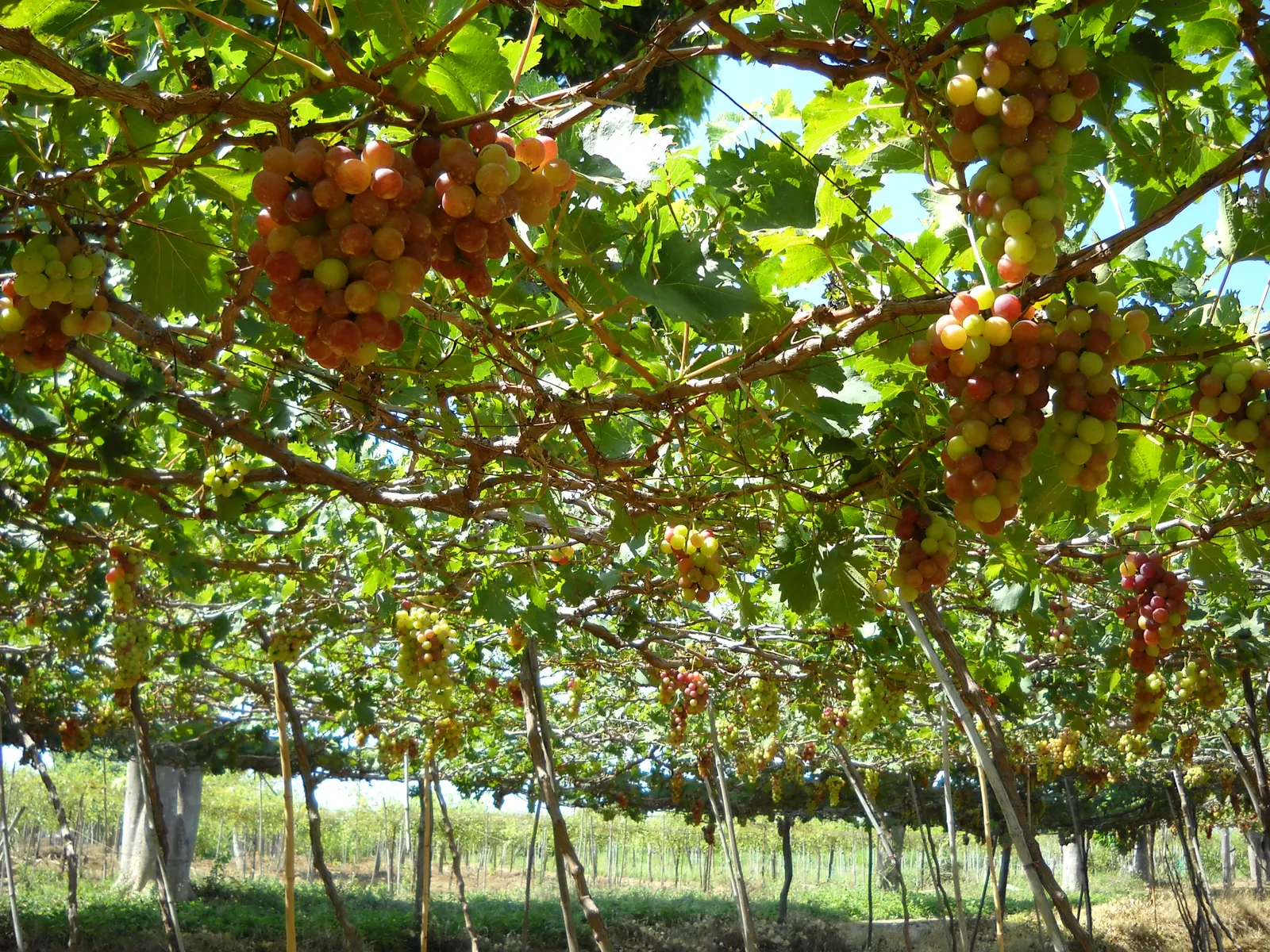
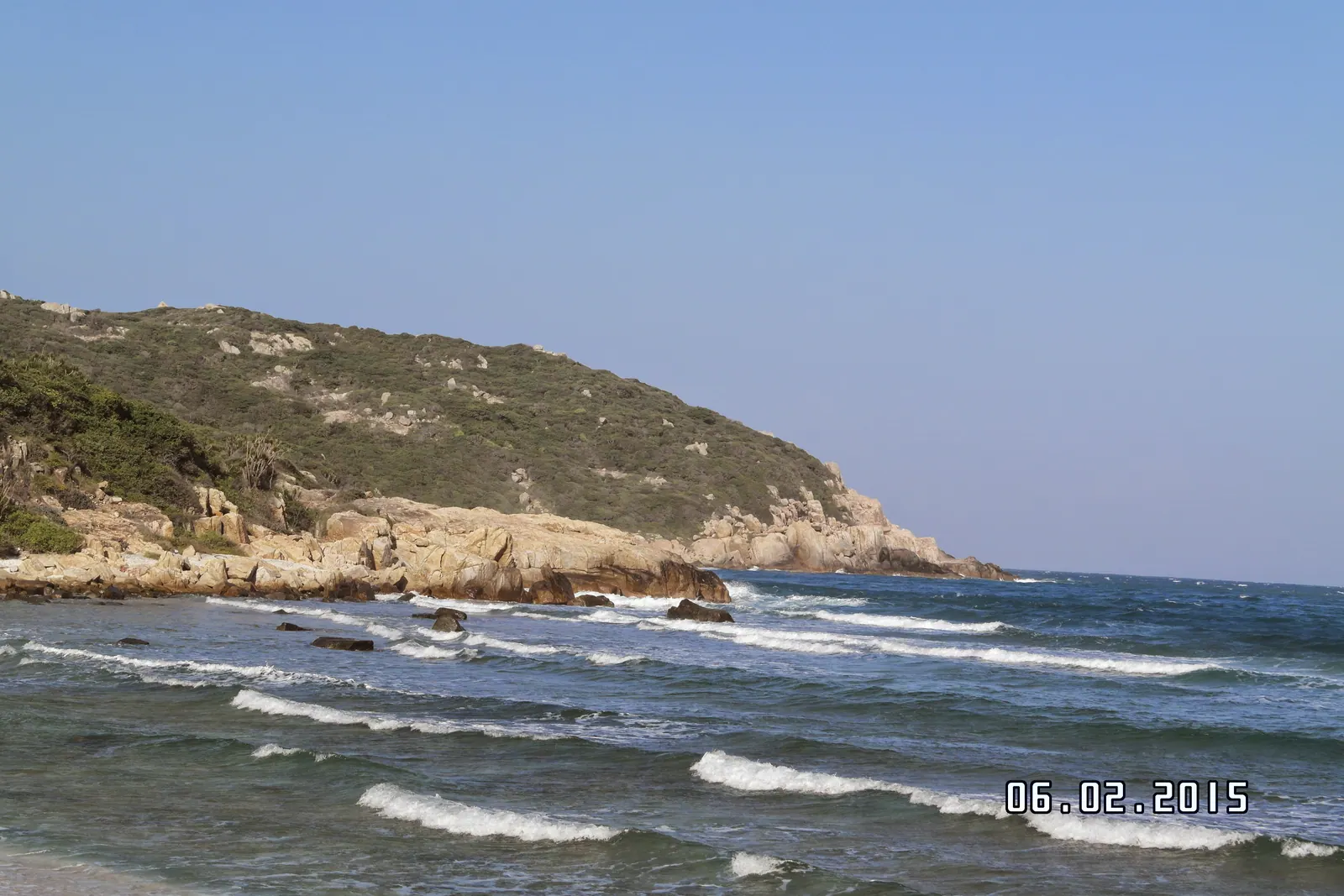
- Late lunch in Phan Rang, and the grape gardens or Ninh Chu beach for what is left of the afternoon.
If your dates fall in October, check the Kate plan the week before; if they fall on the day itself, be on the hill before seven and give the towers to the people they belong to.