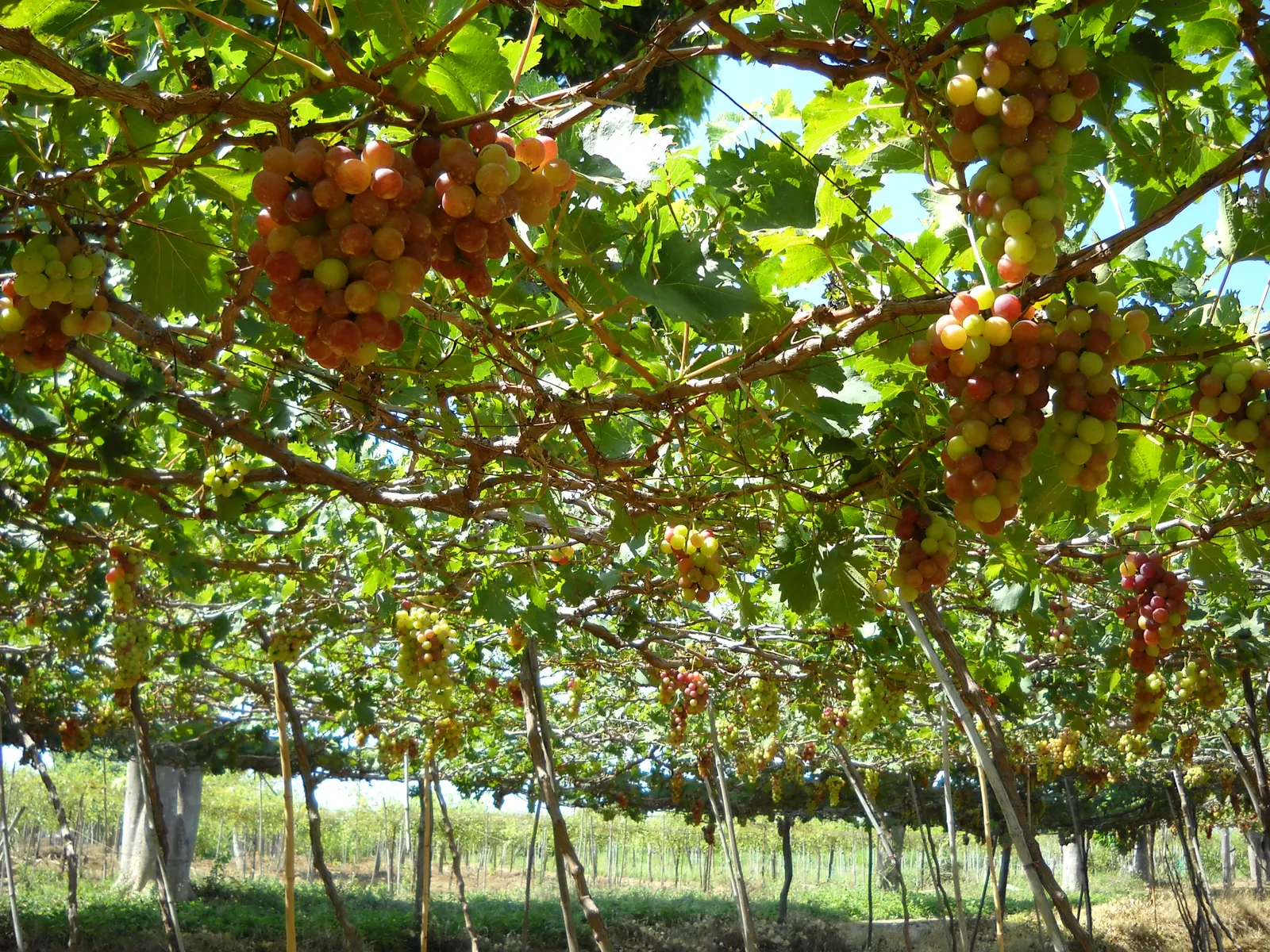
The grapes are worth the stop. The wine, with a caveat I will come to, mostly is not. That is the honest answer after more visits to the trellises of Thái An and the farms south of Phan Rang than I can justify, and it is not a complaint about the place: the vines are real, the fruit is good, and the gardens at Thai An are free to walk from 07:00 to 18:00, with grapes at the gate for 40,000 to 50,000 VND a kilo in 2025.
What you should know before you buy a bottle is that most rượu nho sold in the gardens is made on the farm from table grapes. It is sweet, it tastes of grape and sugar, and it is closer to a cordial than to anything a wine list would recognise. The serious wine grapes grown here mostly leave for the wineries of Lâm Đồng. Buy the grapes, the raisins and the green apple instead.
Why do grapes grow here at all?
Because it does not rain. The Phan Rang station’s normals give 838.5 mm of rain a year and 3,029 hours of sunshine, the driest and sunniest figures in Vietnam, and vines put up with that better than almost anything else the plain could grow. The old Ninh Thuận is the country’s grape region: over 1,000 ha of vines producing 26,000 to 28,000 tonnes a year, by a report in April 2026, with Vĩnh Hải commune, where Thai An is, holding about 200 ha. An older travel-site figure from 2020 puts the area at about 2,200 ha; the sources disagree and I quote the newer press figure.
The trellises are the sight. Rows of vines trained over head-high frames with the fruit hanging underneath, the ridge of Núi Chúa behind, and a landscape that looks like nowhere else in the country. If you are riding the Nui Chua coast road, Thai An is on it, between the salt flats and Hang Rái.
Which varieties, and when do they crop?
| Variety | What it is | Where the name comes from |
|---|
| Red Cardinal | The traditional red table grape | Every source, 2016 to 2026 |
| NH01-48 | Green table grape bred at the Nha Hố institute | Travel site, 2020; press, 2026 |
| NH01-152 | Pink seedless table grape | Travel site; press, 2025 |
| NH01-26, NH04-102, NH01-205, NH01-16 | Newer table selections | Press, 2025 and 2026 |
| NH02-90 | Red wine grape, a Syrah selection | VietnamPlus, 2021 |
| NH02-97, NH02-37 | Red and white wine grapes in trial | VietnamPlus, 2021 |
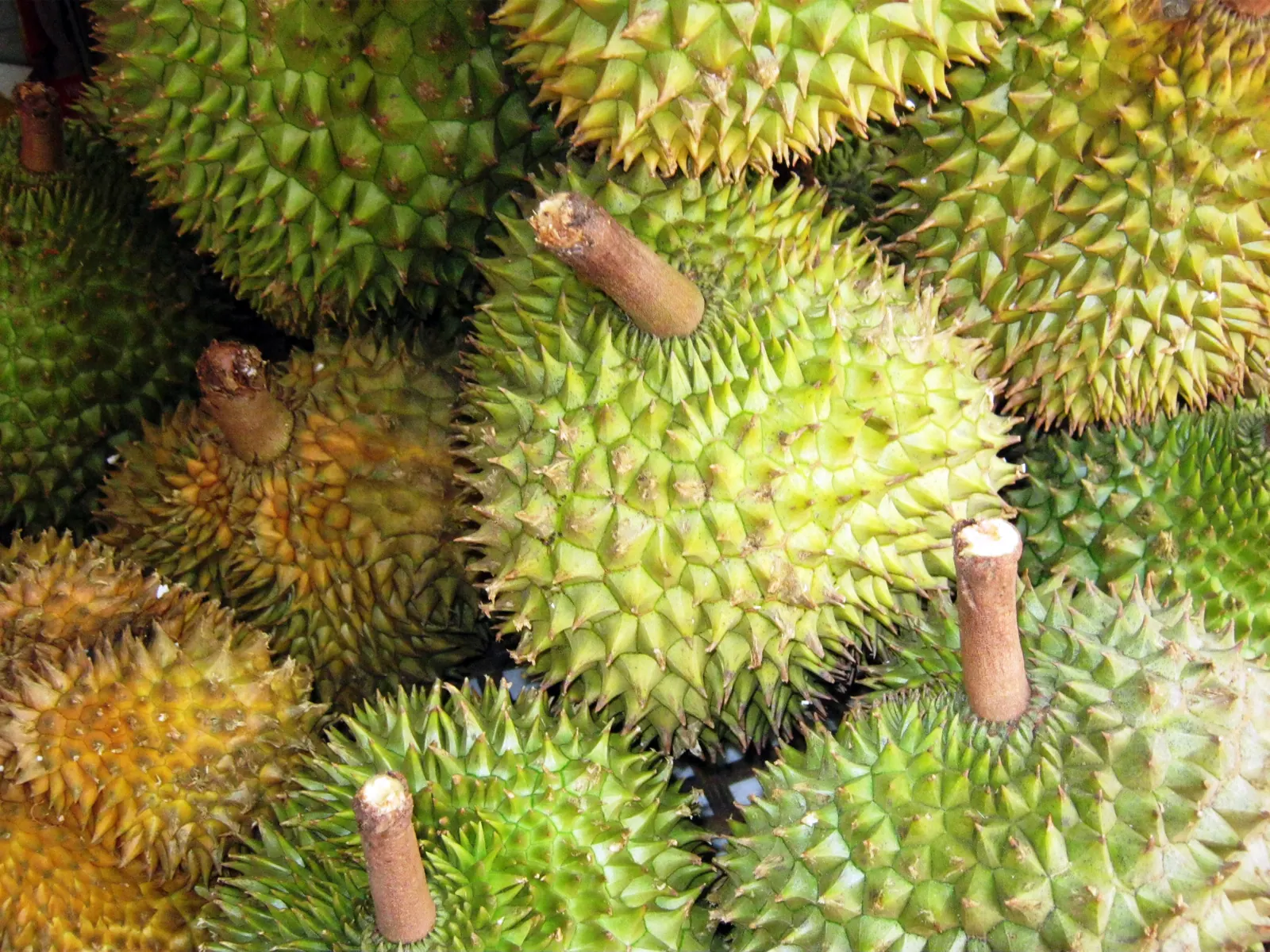
The press reports describe three crops: the main one in April to May, a second in August to September and a third in December to January, timed for Tết. A travel site frames it as three seasons, spring-summer from April to June being the largest, autumn from August to October and winter from November to January, and puts the sweetest fruit in August and September after the full summer sun. It also says the green NH01-48 gives three crops a year and Red Cardinal four, each harvest cycle lasting one to one and a half months. So there is nearly always something on the vine, but a visit in early March or early July can find the rows bare and the growers pruning. The fruit calendar puts the grapes beside the mangoes and the durian.
What does a visit cost?
At Thai An, nothing to walk in: the gardens open daily from 07:00 to 18:00 and charge for what you take away. Grapes at the gate were 40,000 to 50,000 VND a kilo in the 2025 report. A travel site quotes red at 20,000 to 40,000 and green at 60,000 to 80,000, undated, which tells you the price moves with the colour and the season; a 2020 orchard price was 25,000 VND a kilo. Picking your own is charged separately from walking the rows, so agree the rate per kilo before you cut anything. Syrup, wine, raisins and jam sit on the table by the gate.
Ba Mọi’s farm at Phước Thuận, south of Phan Rang, is the other named vineyard: free to enter by the April 2026 report, with 13 varieties, ten of them table and three wine, and a wine tasting. If wine is the thing you want to try before buying, that is where to do it, and it pairs with the Cham sites on the same side of town.
What does the wine taste like?
I will separate the two things sold under the name. The bottles in the gardens are farm products from table grapes: sweet, light on the palate, with the grape flavour up front and sugar behind it, and no structure to speak of. I keep one for guests who want to say they have drunk Vietnamese wine, and I do not open it otherwise. There is no snobbery in that. It is a different drink, and the growers do not pretend it is anything else.
The other thing is the wine-grape programme. In 2021 VietnamPlus reported about 40 ha of true wine varieties, led by NH02-90, a Syrah selection giving 16 to 18 Brix of sugar, 5 to 8 grams a litre of acid and 12 to 14 percent alcohol, grown for Ladofoods and Vĩnh Tiến in Lam Dong. Those grapes go north into Da Lat wine, and I found no independent assessment of what they become. So the honest tasting note is this: the grapes here can make wine, the gardens mostly do not, and nobody I could find has judged the result blind.
Field note: the tasting at a garden is a thimble of the sweet stuff and a plate of grapes, and the grapes win every time. Ask for the green ones if they are on; the crunch is the point.
What should you buy instead?
Grapes, in August or September if you can choose the month. Raisins, which travel and keep. The syrup, if you like things sweet. And the green apple, táo xanh, the small crisp jujube grown under nets around Phan Rang and at Thai An itself, whose main season runs through the second to fourth lunar months, usually March to May. Orchard prices in the guide I have were 25,000 to 30,000 VND a kilo for the common táo gió and 35,000 to 50,000 for the larger táo bom, with dried apple at 180,000 VND a kilo. It is the fruit I take home more often than the grapes.
The other things this dry country does well are on the table rather than the vine: lamb, goat and salt is the post for that, and a lamb dish cooked with grapes is where the two meet.
What I’d do
- Come in August or September, or in April to May for the biggest crop, on a weekday.
- Thai An in the morning on the way up DT702, when the gardens open at 07:00: walk the rows, buy a kilo, taste the wine if it is offered, and buy the raisins.
- Hang Rai and Vinh Hy for the rest of that day.
- Ba Moi’s farm at Phuoc Thuan on another day, with the Cham towers and villages, for the proper comparison of varieties and the tasting.
- Green apple from a roadside stall between March and May, and dried apple to take home.
If the rows are bare when you arrive, the growers are between crops; ask when the next one comes on and plan the return. With harvest cycles of one to one and a half months and three or four crops a year, the wait is never long.