Hòn Bà is the coldest place in Khanh Hoa you can reach in a morning: a 1,578 m peak about 30 km from Nha Trang as the crow flies and about 60 km by road, where Tuoi Tre measured 17 to 20 degrees on the summit in June 2024 while the coast was in the thirties. On top is a rebuilt wooden house where Alexandre Yersin ran a research station from 1915.
The catch is access. Since a pilot scheme opened at Tết 2024, visitors go up with a tour organised through a travel company, the provincial travel association or the reserve management board, not on their own, and I could not find a single published statement from 2025 or 2026 on whether the 37 km summit road is open, closed or restricted. I have been up once, with a group, in the dry season of 2025. Everything below is either from that day or from a source with a date on it.
What is up there?
The reserve was established on 15 December 2005 and covers 20,978.3 ha across the four former districts that meet at the peak: Khánh Vĩnh, Khánh Sơn, Cam Lâm and Diên Khánh. Wikipedia’s count is 592 species of vascular plants and 255 animal species, and the forest changes as you climb, from dry scrub above the Suối Dầu reservoir to wet, mossy forest near the top, with the cloud sitting in it.
Yersin’s house is the reason most people go. He set up the station from 1915 at about 1,500 m to grow cinchona and other medicinal plants, and the province has rebuilt his wooden house on the original foundation: photographs and documents on the ground floor, his desk, wooden chairs and bed upstairs. In February 2024 Tuoi Tre reported that it was being restored as a national historical site. It is small, and it is the whole point; there is no cafe, no viewing platform, nothing to buy.
How cold is it, and how wet?
Cold enough that everyone in my group was in a jacket by the top and I wished I had gloves. The only figure I trust is Tuoi Tre’s 17 to 20 degrees on the summit in June 2024, the hottest month on the coast; travel sites quote similar ranges, but none of them comes from a weather station, so I will not repeat them as fact. Wikipedia calls the reserve cool and humid all year and locals call it the second Da Lat, which is fair for the temperature and generous for everything else.
Wet is the harder question. The mountain sits in the Sông Cái basin, which takes 73 percent of its annual flow between October and December, and one agency page says plainly to avoid October and November. The month-by-month guide to the province has the coastal rain figures; add cloud to whatever it says, because the summit was in mist by mid-morning on a day that was clear at the reservoir.
| Figure | Source |
|---|
| Summit | 1,578 m | Vietnamese Wikipedia |
| Reserve | 20,978.3 ha, established 15 December 2005 | Vietnamese Wikipedia |
| Yersin’s station | from 1915, at about 1,500 m | Vietnamese Wikipedia |
| Road to the summit | 37 km from Suoi Dau | Vietnamese Wikipedia |
| Distance from Nha Trang | about 60 km by road, about 30 km as the crow flies | Vietnamese Wikipedia |
| Summit temperature | 17 to 20 degrees, June 2024 | Tuoi Tre |
| Entrance fee | 30,000 VND per person, undated agency page | alphatravels.vn |
Can you ride up on your own?
Not under the rules I could find. At Tết 2024 the provincial Department of Agriculture and Rural Development and the reserve management board opened a pilot in which visitors had to go up with tours organised by travel companies or the travel association rather than independently, with an evaluation due by 15 May 2024. In June 2024 Tuoi Tre reported that registration ran through members of the Khánh Hòa Travel Association, a company called Kong Forest, which runs an open-air bus up the mountain, or the management board itself. The province’s stated targets for 2029 are over 10,000 visitors a year, 1,000 of them international, with over 30 percent staying overnight.
What happened after June 2024 is not in anything I could fetch, and I would rather say that than guess. My own day up there, with a group in the dry season of 2025, says the tour arrangement was still running then and the road was open that morning; it says nothing about this week. No page I fetched from 2025 or 2026 mentions a closure, a reopening, opening hours or a change to the tour-only rule. The fee I have seen quoted is 30,000 VND per person, from an undated travel-agency page, and I never found it on an official one. Before you plan a day around the summit, ask a tour operator in Nha Trang whether the road is open that week.
How does the road go?
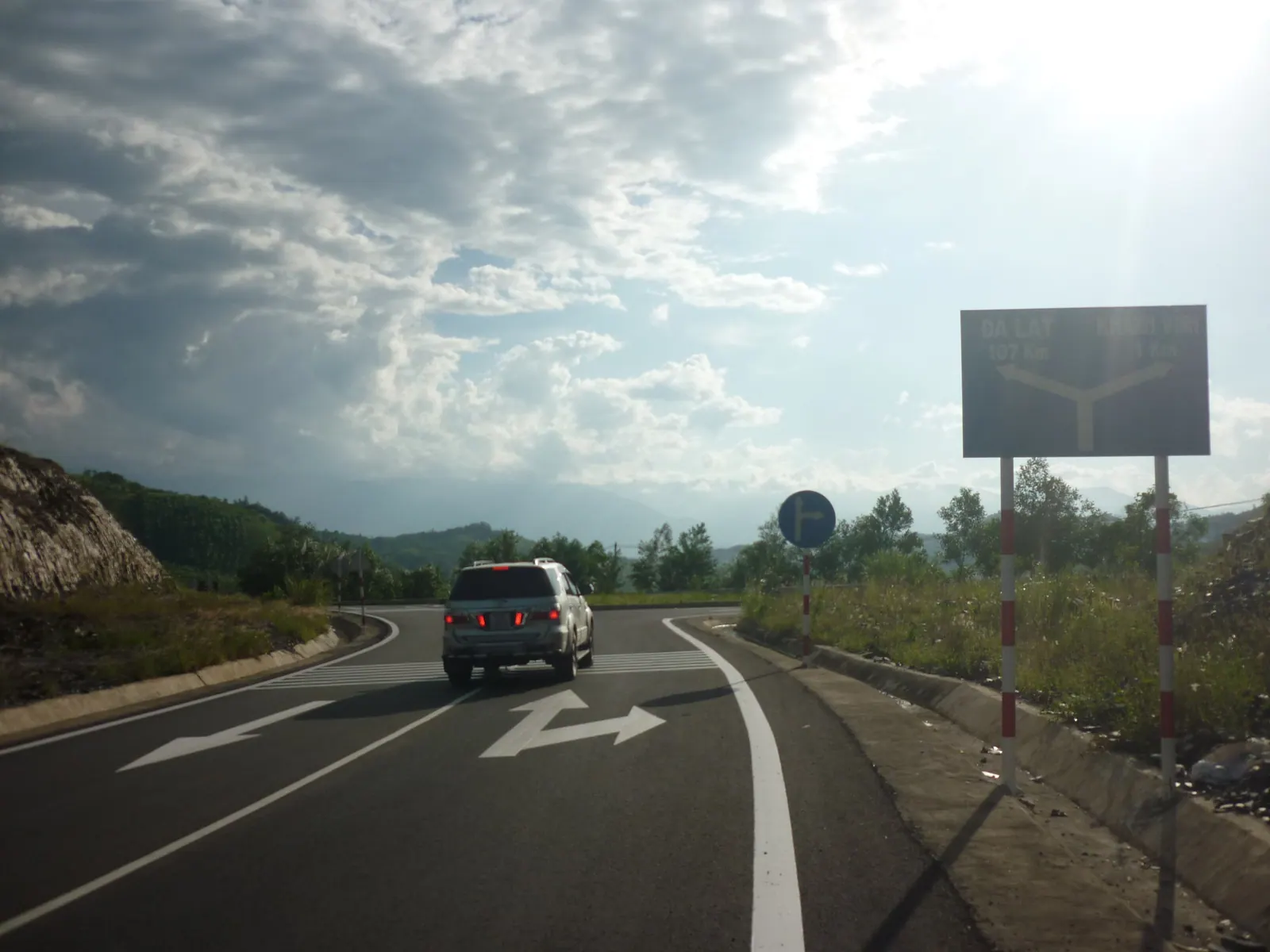
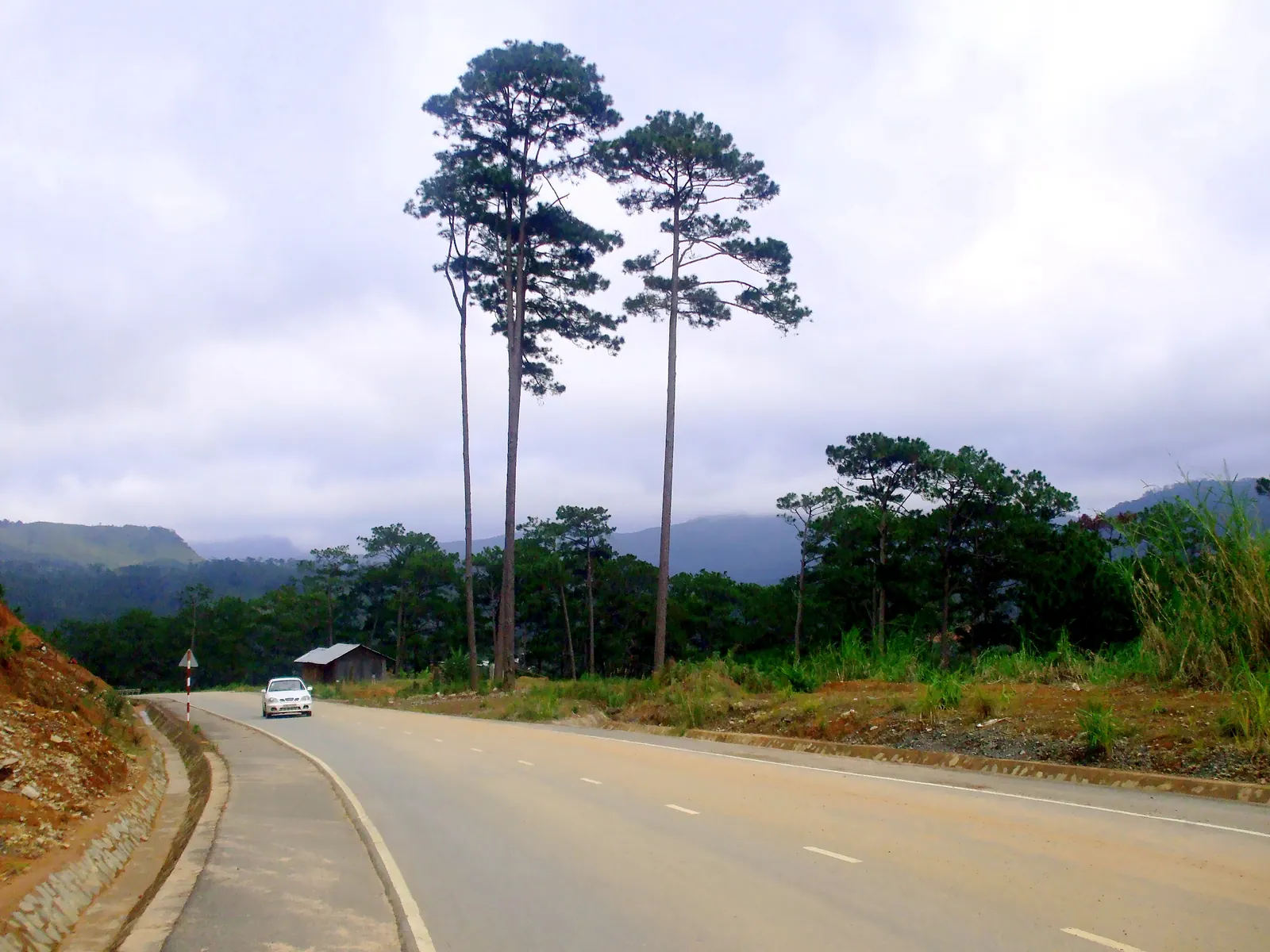
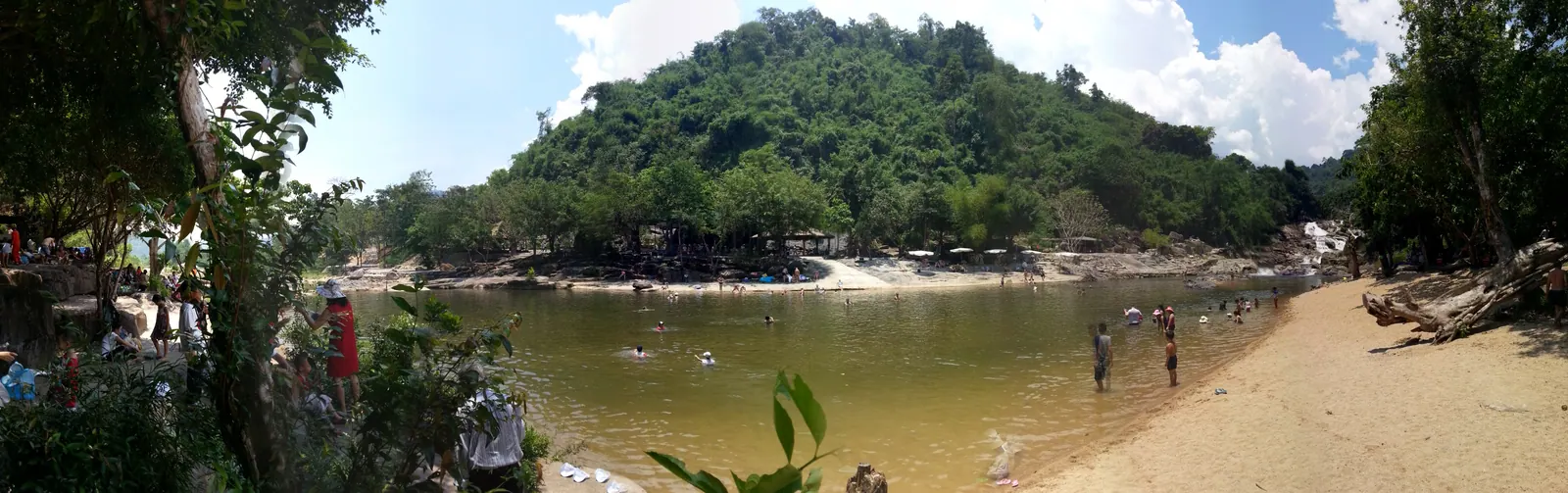
You turn inland off National Route 1 at Suối Dầu in former Cam Lâm and follow the summit road for 37 km of hairpins. One agency times the climb at about an hour; on the tour bus it felt longer, because the driver slowed for every bend and the cloud came in near the top. The Suoi Dau reservoir at the bottom is an irrigation lake used for picnics and camping, and it is the part I go back to on my own bike: you can ride to the lake and to Yersin’s tomb nearby without a tour, and I have, on quiet weekday mornings.
Yersin himself is the other half of the story. He settled in Nha Trang in 1891, bought land at Suoi Dau in 1896 (the English Wikipedia dates the concession to 1897), built the Hon Ba station in 1915, died in Nha Trang on 1 March 1943 and was buried at Suoi Dau as he had asked. The short history of Khanh Hoa puts him in order with everything else. The museum in his old office at the Pasteur Institute on Tran Phu, 20,000 VND in 2026 and closed over lunch, on Saturday afternoon and all day Sunday, is the place to start if you cannot get a tour.
How does it compare with the Khanh Le pass?
Hon Ba is the smaller, colder, quieter day. The Khánh Lê pass to Da Lat climbs to about 1,700 m on a national highway you can ride yourself whenever it is open; Hon Ba is a dead-end road to a house in the cloud, with a tour bus and a rule. If you have one mountain day and you want to ride, take the pass. If you want to stand somewhere that feels like a different country two hours from the beach, and you can find a tour, take Hon Ba.
Field note: the reservoir road at Suoi Dau has the last coffee. After that there is nothing until the summit house, and the house sells nothing. Eat before you go up, and carry water; the cold makes you forget to drink.
What I’d do
- Ring or message a Nha Trang tour operator and ask two things: is the summit road open this week, and which day is the bus running. Do not ride to Suoi Dau expecting to go up alone.
- Pick a dry-season weekday, January to April if you can, and go early; cloud was on the summit by mid-morning on my visit.
- Take a jacket, gloves, a rain shell and water. Tuoi Tre’s 17 to 20 degrees is the summer figure, and winter mornings will be colder.
- On the way, stop at the Suoi Dau reservoir and at Yersin’s tomb; both are reachable on your own bike, no tour needed.
- If there is no tour running, do the Yersin museum in the city and ride the reservoir road for the forest, and save the summit for another visit.